The Board Game Industry's Biggest Growth Engine Isn't Kids—It's Collectors, Cafés, and Online Retail.
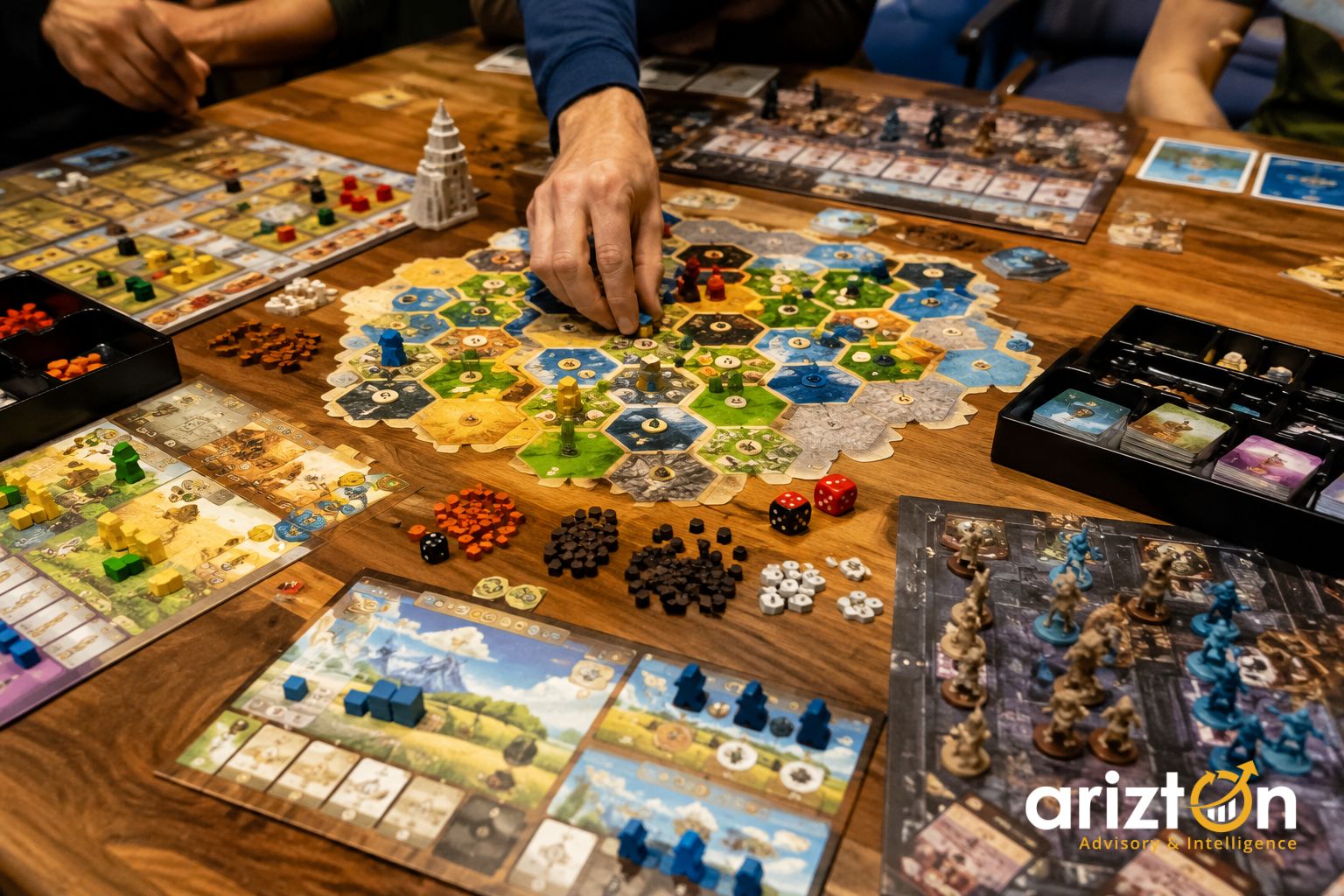
Ask most people who board games are for, and they'll picture a family huddled around a table on a rainy weekend. That picture is out of date. Walk into a board game café on a Thursday night and you'll find groups of adults ordering drinks, learning a new strategy title from staff, and coming back the following week for the expansion. Adults now account for roughly one-quarter of U.S. toy sales, and their purchasing is no longer tied to a single household occasion — it spans hobby collecting, nostalgia, gifting, and pure social entertainment.
The board games market was valued at USD 21.5 billion in 2025 and is projected to reach USD 39.46 billion by 2031, growing at a CAGR of 10.65%. That growth isn't being carried by one format or one age group — it's being pulled forward by premium strategy titles, licensed collectibles, café-led discovery, and a fast-growing online channel that's giving niche publishers a shot at shelf space they'd never get in a physical store.
Why Are Adults Now the Biggest Buyers in the Board Game Market?
Adult purchasing decisions are driven by personal choice rather than family guidance, which gives this segment a far wider demand base than any younger group. Some games are bought for weekend gatherings, travel, or workplace events; others are chosen for regular personal use and deeper hobby involvement. That variety gives adult buyers a wider price range and stronger repeat-purchase behavior than any other segment in the category.
Key Insight: Adults now account for roughly one-quarter of U.S. toy sales — a clear sign that play has expanded well beyond childhood and into a recurring, personally-funded leisure habit.
Know More: https://www.arizton.com/market-reports/board-games-market
Is the Table-Top Games Market Still Winning on Product Type?
Yes, and by a wide margin. The table-top games market held roughly 30% share in 2025 — the largest of any product segment, spanning simple family titles through complex strategy games. Refreshed editions, expansions, and upgraded components keep giving buyers new reasons to return to games they already own. Hasbro's 2025 Monopoly refresh, which added three expansion packs alongside a redesigned classic board, is a clean example of how a legacy brand stays relevant purely by giving collectors something new to chase.
Theme is where the sharper growth story sits: fantasy board games are expanding at a CAGR of 11.69%, outpacing the category average as fictional worlds, ongoing storylines, and community engagement pull players deeper into franchises. Go On Board's The Witcher: Legacy became Gamefound's most-funded tabletop crowdfunding campaign of 2025 — proof that established fantasy IP still converts attention into dollars faster than almost anything else in the category.
Do Board Game Cafés and Conventions Still Matter in a Digital-First World?
More than ever, because a lot of these games are genuinely hard to sell without trying them first. Draughts London, a board game café and lounge, gives players access to over 1,000 curated titles alongside food and drinks — turning a social night out into a repeat-purchase funnel. SPIEL Essen backs that up at scale: 220,000 visitors, 948 exhibitors from 50 countries, and 1,716 new releases in 2025 alone. For titles that need explanation before purchase, live demonstration is still doing work that an online listing simply can't.
Digital tools are complementing rather than replacing that physical experience. Hasbro's Monopoly App Banking uses a mobile app to handle payments and mini-games while players stay on a physical board — cutting setup friction without pulling anyone away from the table.
Why Is the Online Board Games Market Growing Faster Than Retail Shelves Can Keep Up?
Retail shelf space is finite; the internet's isn't. The online board games market is the fastest-growing distribution channel because buyers now expect wider assortment, easy comparison, and access to titles that may never show up in a nearby store. That matters most for niche games, expansions, and imported editions from smaller publishers who depend entirely on digital visibility to find their audience. Czech Games Edition's March 2026 pre-orders for Codenames: Critical Role Adventures and upgraded components for SETI and Lost Ruins of Arnak show exactly how direct online sales support both new-release visibility and add-on purchases.
Bottom Line: Large online marketplaces win on convenience — search, reviews, pricing, and fulfillment in one journey — which is precisely why the channel is outgrowing physical retail even as in-store discovery still drives the initial sale.
What's Actually Driving Growth in the US Board Games Market?
North America accounted for over 32% of global share in 2025, and the US board games market sits at the center of that lead. The region combines a broad mass-market base with a mature hobby and collectible ecosystem — large publishers, deep retail reach, licensed product lines, and a convention circuit that keeps buyers engaged year-round. Gen Con 2025 alone drew nearly 72,000 attendees and more than 575 exhibitors, a scale that reflects just how established North America's publisher-retailer-player pipeline has become.
Strategic Takeaway
The board games market is on track to nearly double by 2031, but the more useful read isn't the topline number — it's who's actually buying and where they're finding new titles. Adults have become the category's primary growth engine, fantasy IP is converting attention into crowdfunding records, and the online channel is starting to matter as much as the café down the street. Publishers that can combine strong game identity with reliable manufacturing, retail relationships, and digital discovery are the ones best positioned to turn rising global interest into franchises that last.