The Coconut Water Industry at a Crossroads: APAC Supply Meets US Demand
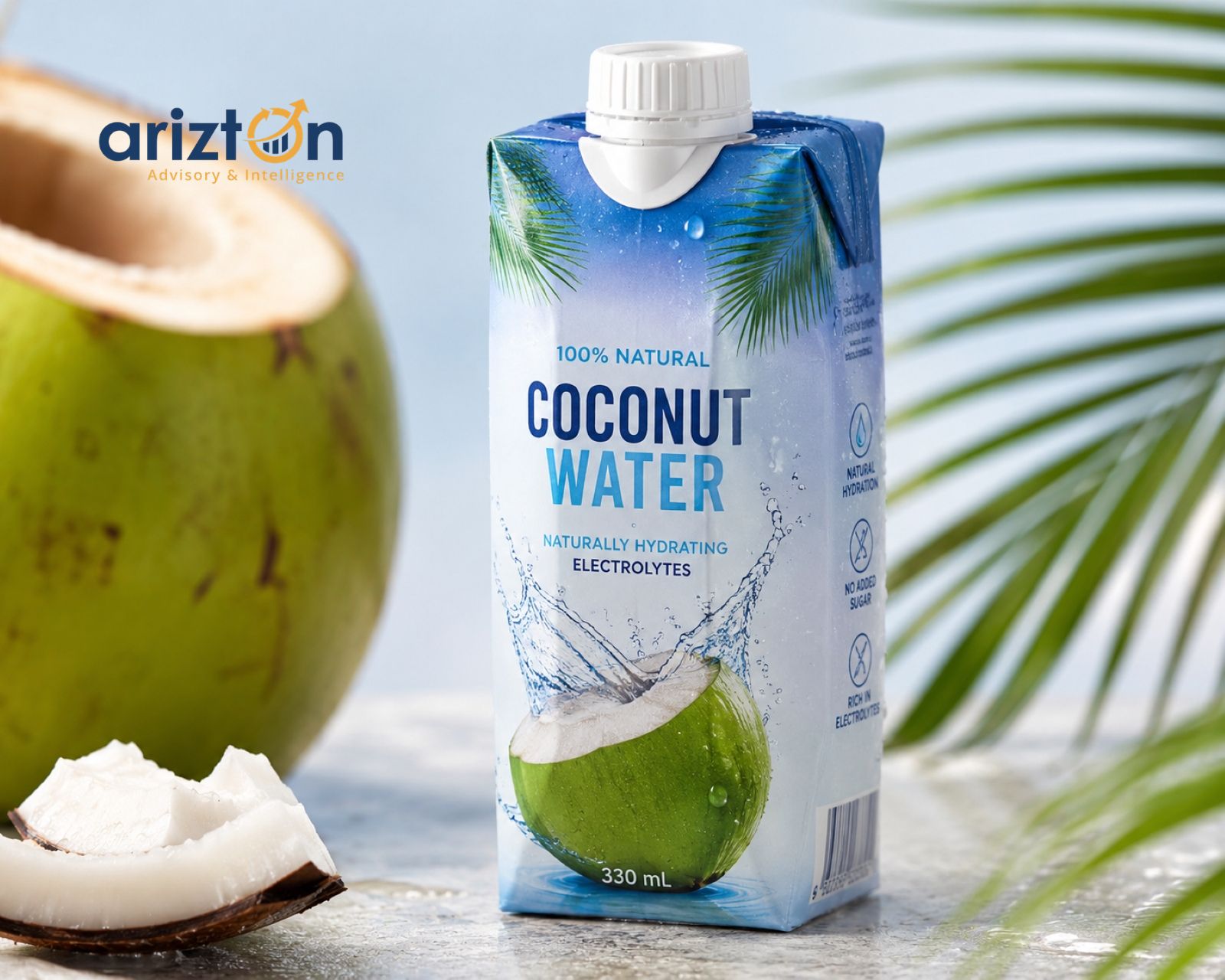
A decade ago, coconut water was a specialty item tucked into the health-food aisle. Today, it sits beside sports drinks and cold-pressed juices in mainstream grocery chains, gas stations, and gyms across North America. That shift didn't happen by accident; it's the result of a broader consumer pivot away from sugary sodas and artificial sports drinks toward clean-label, naturally hydrating alternatives. And while Asia-Pacific still leads on volume thanks to its coconut-growing base, it's the United States that is increasingly setting the pace for innovation, premiumization, and category growth in the coconut water market.
Why Is the Packaged Coconut Water Market Growing So Fast Worldwide?
The coconut water market is expanding at a CAGR of 15.25% between 2025 and 2031, driven by rising health and wellness awareness, growing fitness participation, product innovation, tourism-linked consumption, and the expansion of modern retail and e-commerce. Consumers in both developed and emerging economies are replacing carbonated soft drinks and sugar-heavy juices with beverages seen as minimally processed and naturally rich in electrolytes. This is precisely the consumer logic reshaping demand in North America, where coconut water has moved from a wellness niche into everyday hydration.
What Is Driving the US Packaged Coconut Water Market Forward?
The US packaged coconut water market has grown steadily over the past decade as consumers shift away from sugar-sweetened beverages in favor of naturally hydrating, electrolyte-rich alternatives. Even though coconut water still accounts for less than 1% of the total US beverage market, the category keeps expanding, led by brands like The Vita Coco Company, Harmless Harvest, and Goya Foods. Vita Coco alone commands roughly 42% of the US coconut water market, a figure that underscores just how mainstream the category has become. Because domestic production is minimal, the US market runs largely on imports from Thailand, Brazil, and Vietnam, with Vietnamese exporters such as Rita Food & Drink Co., Ltd. scaling up OEM manufacturing and logistics through southern Vietnam into ports like Los Angeles, Long Beach, and New York/New Jersey to keep pace with rising coconut water market demand.
Recent brand activity shows how competitive the US landscape has become. Tom Brady and Gopuff's June 2026 launch of Good Nut — a premium organic coconut water brand using Vietnamese coconuts, including the category's first certified organic chocolate variant — signals how celebrity-backed, premium positioning is entering what was once a fairly commoditized category. Meanwhile, ITC's July 2026 entry into carbonated coconut beverages with B Natural Coconut Cola shows the innovation spilling into adjacent formats entirely.
Know More: https://www.arizton.com/market-reports/coconut-water-market-size-analysis-2025
How is the North America Organic Coconut Water Market Reshaping Category Growth?
The North America organic coconut water market is where much of the category's premiumization is happening. US and Canadian consumers are increasingly drawn to organic, sustainably sourced, and clean-label beverages, pushing manufacturers like Vita Coco, Harmless Harvest, C2O, and Coco Libre to expand their organic portfolios and adopt eco-friendly packaging. Natural Grocers' launch of its 100% Pure Organic Coconut Water in February 2025, followed by Good Nut's premium organic launch in June 2026, both point to a US organic coconut water market that rewards sourcing transparency and sustainability credentials as much as taste or price.
Packaging choices reflect this same sustainability push. Paperboard packaging is the fastest-growing format, expanding at 15.34% CAGR, as brands such as Harmless Harvest and O.N.E. Coconut Water adopt recyclable cartons that align with environmentally conscious purchasing habits — a trend especially pronounced among North American consumers.
US consumption now shapes global brand strategy — from celebrity-backed premium launches to organic sourcing standards — even though the US itself contributes less than 1% of total beverage volume.
APAC Still Dominates the Coconut Water Supply Chain
Asia-Pacific isn't just the historical home of coconut water — it remains the market's largest region by share, accounting for roughly 34% of global revenue in 2025. That dominance comes from decades of established coconut cultivation and processing infrastructure across countries like Thailand, Indonesia, the Philippines, and Vietnam, which together supply the raw material for nearly every major brand sold worldwide, including the US labels people assume are "American" products. Rising domestic consumption in China and India adds a second growth engine on top of the region's export role, while rapid urbanization and rising disposable incomes are turning APAC into a genuine consumption market in its own right — not just a production base.
But that supply base is under real strain. The 2023–2024 El Niño event disrupted harvests across Southeast Asia, and by 2025 Philippine desiccated coconut prices had climbed to $2,400–2,650 per metric ton, while Sri Lankan prices exceeded $3,200 per ton following drought losses. Aging plantations and the geographic concentration of production in a handful of countries mean that even modest weather disruptions ripple through pricing worldwide — including for the US brands and retailers now driving so much of the category's premium growth.
Which Trends Are Fuelling Coconut Water Market Demand Among Younger Consumers?
Sports hydration is one of the clearest growth channels in the coconut water drinks market. Vita Coco's partnership with UK sports agency Nxtstride and its January 2026 expansion of athlete and youth sports sponsorships — aimed at pushing annual sales past $1 billion — illustrate how brands are chasing the same audience that once defaulted to conventional sports drinks. ZICO's athlete-led "Unmatched Campaign" follows a similar playbook. At the same time, functional innovation is diversifying the category beyond pure hydration: CocoGoodsCo's Prebiotics Coconut Water, Karma Water's Pineapple Coconut Probiotic Water, and Thai Coconut Public Company's Hydaily — fortified with L-theanine and goji berry extract, with BCAA and creatine variants in development — all target consumers who want functional benefits layered onto a familiar base.
The coconut water industry is also diversifying by product type. Natural (pure) coconut water still holds around 74% market share in 2025, reflecting strong demand for minimally processed, additive-free hydration. But the flavored segment is growing quickly as brands like Vita Coco and Coaqua expand their line-ups to attract younger consumers and create new occasions for consumption beyond post-workout recovery.
Conclusion
The global packaged coconut water market is on track to more than double from USD 4.97 billion in 2025 to USD 11.66 billion by 2031, but the story increasingly runs through North America. Even as Asia-Pacific supplies the raw coconuts and holds the largest regional share at 34%, it's US consumer behavior — the shift away from sugary drinks, the appetite for organic and functional formulations, and the willingness to pay a premium for sustainably packaged, celebrity-backed brands — that is dictating where the category goes next. As long as US demand keeps outpacing domestic supply, expect global producers to keep designing their innovation pipelines with American shelves in mind.
Related Reports

Global Packaged Coconut Water Market Research Report 2026-2031
PUBLISH DATE: 2026-10-27

U.S. Coconut Water Market - Focused Insights 2024-2029
PUBLISH DATE: 2024-07-14