What Is Driving the Growth of the Electric Vehicle Battery Technology Market?
Why EV battery demand keeps climbing
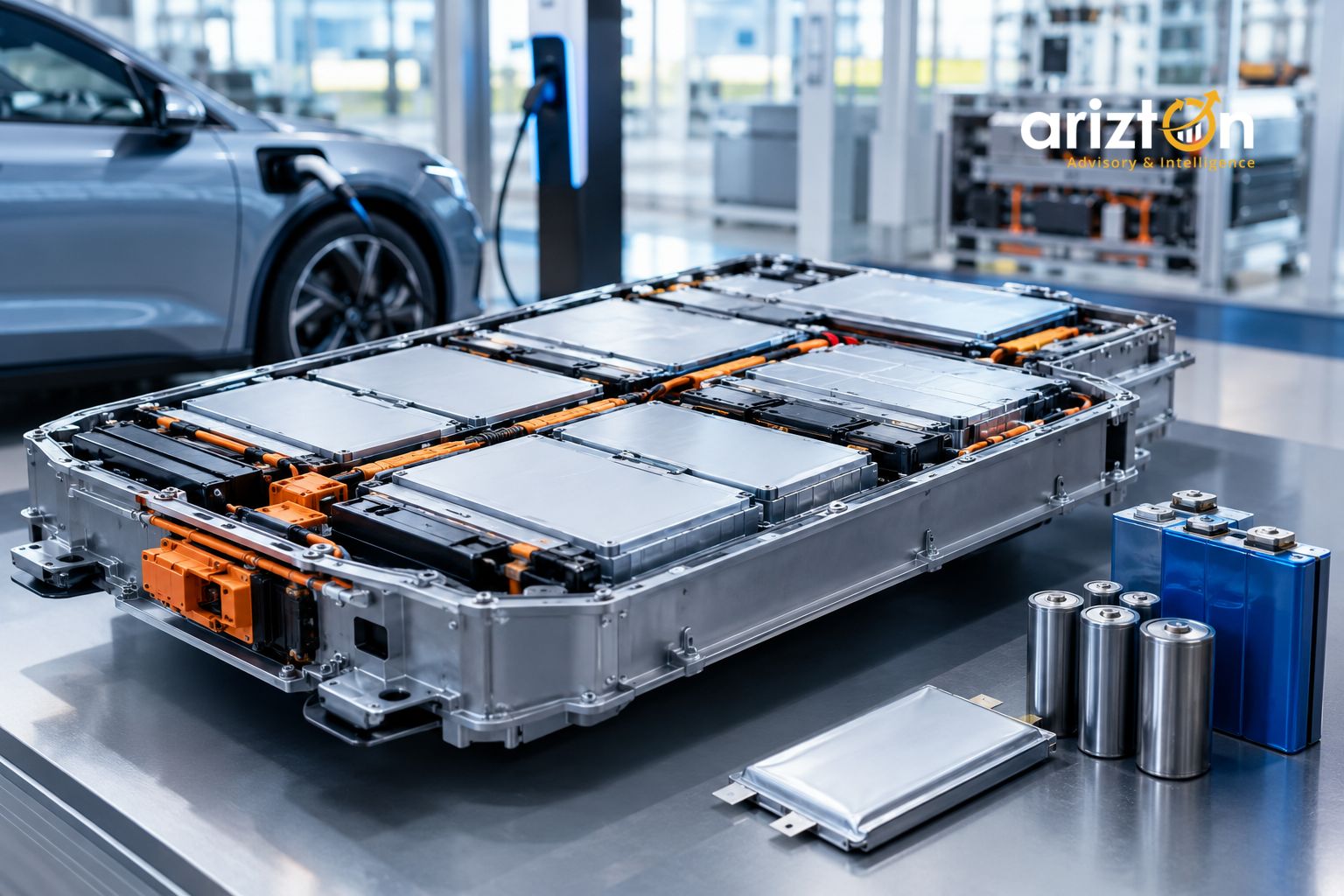
Governments are accelerating the shift to electric mobility through incentives, subsidies, emissions regulations, and charging infrastructure programs. Consumers are adding momentum, motivated by lower operating costs, environmental concerns, and improved driving range. Battery demand now covers passenger cars, electric buses, motorcycles, scooters, and light commercial vehicles.
The opportunity: With demand spread across so many vehicle types, EV battery suppliers can choose the segment that best fits their strengths. Manufacturers in North America and Europe are also investing in domestic production capacity, which opens opportunities in regional supply chains.
Get the full picture: Explore the EV battery technology market report
Battery Chemistry Is Diversifying: Know Which Technology Fits Where
Sodium-ion batteries are gaining attention for selected electric mobility applications. Raw material availability, cost advantages, cold-weather performance, and safety make them attractive where extreme energy density is not the main requirement.
Solid-state batteries are a major research focus, aiming to improve energy density, safety, charging performance, and efficiency. Continued development could widen their use across passenger and commercial EVs.
Where to focus: China leads lithium-ion production, particularly LFP, while Western automakers and battery makers focus on localized production and diversified chemistries. Knowing which chemistry suits which application helps you target R&D and investment where it counts.
Not sure which chemistry fits your portfolio? Talk to analysts.
Gigafactories: Where EV Battery Supply Is Being Secured
Gigafactories produce battery cells and packs at GWh-scale capacities, giving manufacturers economies of scale. Automakers and battery companies are building them to secure supply, lower costs, support regional manufacturing, and meet growing EV demand. Joint ventures between automakers and battery makers are increasingly common, supported by manufacturing incentives, localization requirements, and clean-energy investment programs.
Why timing matters: Capacity is being locked in now. Companies that engage early with the players building it are better placed to become long-term partners.
See what's inside before you decide: Request the EV battery market sample
Policy Is Funding the EV Battery Value Chain
The U.S. Inflation Reduction Act, the EU's Net-Zero Industry Act, and China's new energy vehicle support programs are driving investment across the EV battery value chain. Zero-emission targets and announced timelines to reduce or phase out internal combustion vehicle sales are encouraging automakers to raise EV production.
These policies create opportunities for battery manufacturers, component suppliers, raw material companies, recycling firms, and charging infrastructure providers.
The advantage: With government backing, entering or expanding in the EV battery market carries a clearer demand signal.
Want to know where policy support meets your business? Talk to our team.
Thermal Safety: The Challenge That Defines Battery Technology Priorities
Higher energy density and faster charging increase heat generation in battery systems. Thermal runaway, battery fires, recalls, and performance degradation can hurt manufacturers and vehicle companies. Developers are responding with better cell designs, battery management systems, cooling technologies, and safer chemistries. Maintaining performance and longevity under extreme temperatures remains a top priority.
Where solutions win: Products that improve safety, cooling, and durability speak directly to the industry's most pressing technical need.
LFP Leads With About 53% of the Market
Among LFP, NMC, and Others, LFP holds approximately 53% of the market. It offers thermal stability, safety, long cycle life, and comparatively low production costs, which suit mass-market passenger EVs, buses, taxis, and commercial fleets. A growing focus on total cost of ownership and scalable manufacturing continues to support its adoption.
Where the volume is: For cost-sensitive and fleet-focused segments, LFP is the chemistry to watch.
Light-Duty EVs: The Fastest-Growing Segment at 8.84% CAGR
Light-duty EVs are forecast to grow fastest during the forecast period. Electric scooters, motorcycles, and compact delivery vehicles are driving adoption, particularly in emerging economies, and battery-swapping networks are expanding in India and several Southeast Asian markets.
Growth potential: Rapid expansion here creates added demand for battery packs and related technologies, and it makes electric mobility accessible to more consumers and commercial operators.
Planning to enter the light-duty segment? Talk to analysts.
BEVs Drive Passenger Battery Demand; PHEVs Gain Where Charging Is Limited
Expanding charging infrastructure, higher energy density, longer range, and falling battery costs are supporting BEV adoption. Automakers are signing long-term battery supply agreements to secure capacity, while fast charging and battery management continue to improve. PHEVs are gaining traction in markets with limited charging infrastructure.
What buyers want: Long-term supply agreements show that automakers value dependable battery partners. PHEV growth offers an additional route in markets still building charging networks.
Regional Outlook: Asia-Pacific Dominates, the West Is Building
Asia-Pacific accounts for over 65% of the global EV battery technology market, supported by strong EV manufacturing ecosystems, large-scale battery production, urbanization, and supportive policies. China is a major production hub, especially for LFP, with BYD and Contemporary Amperex Technology Co. Limited holding significant production and export capabilities.
North America is seeing growing domestic battery investment backed by incentives and localization policies. Europe is developing its ecosystem, with Germany, France, and the UK among the key markets.
Choosing your region: Asia-Pacific offers scale, while North America and Europe offer growth in emerging domestic supply chains. The right pick depends on your strengths.
Choosing the right region is a strategic call. Talk to our team.
Deals Defining the Competitive Landscape
- November 2024: Contemporary Amperex Technology Co. Limited and Stellantis announced a USD 4.3 billion joint venture EV battery plant in Spain, with construction scheduled for late 2025 and over 4,000 direct jobs expected.
- April 2025: Harbinger partnered with a battery supplier to support medium-duty electric vehicle battery deployments.
- November 2025: LG Energy Solution signed a five-year agreement with Rivian to supply advanced 46-series EV batteries.
The signal to read: Partnerships, localized manufacturing, and next-generation batteries are shaping competition. Following these moves shows where investment is going and where partnership openings may appear.
What's Next for EV Battery Technology
Continued EV adoption, manufacturing localization, chemistry diversification, and charging advances will shape the market ahead. LFP should stay important for cost-sensitive applications, sodium-ion could gain ground in selected segments, and solid-state continues to attract significant research and investment. Gigafactory growth and regional supply chains are likely to reshape the competitive landscape.
Rising electric mobility demand, government support, manufacturing investment, and technology innovation are creating significant opportunities across the global EV battery technology market.
Position yourself before the market shifts: Download your free EV battery market sample
We can help you with your strategy. Connect with us.