The $524 Billion Question: Why Green Building Materials Market Demands Attention
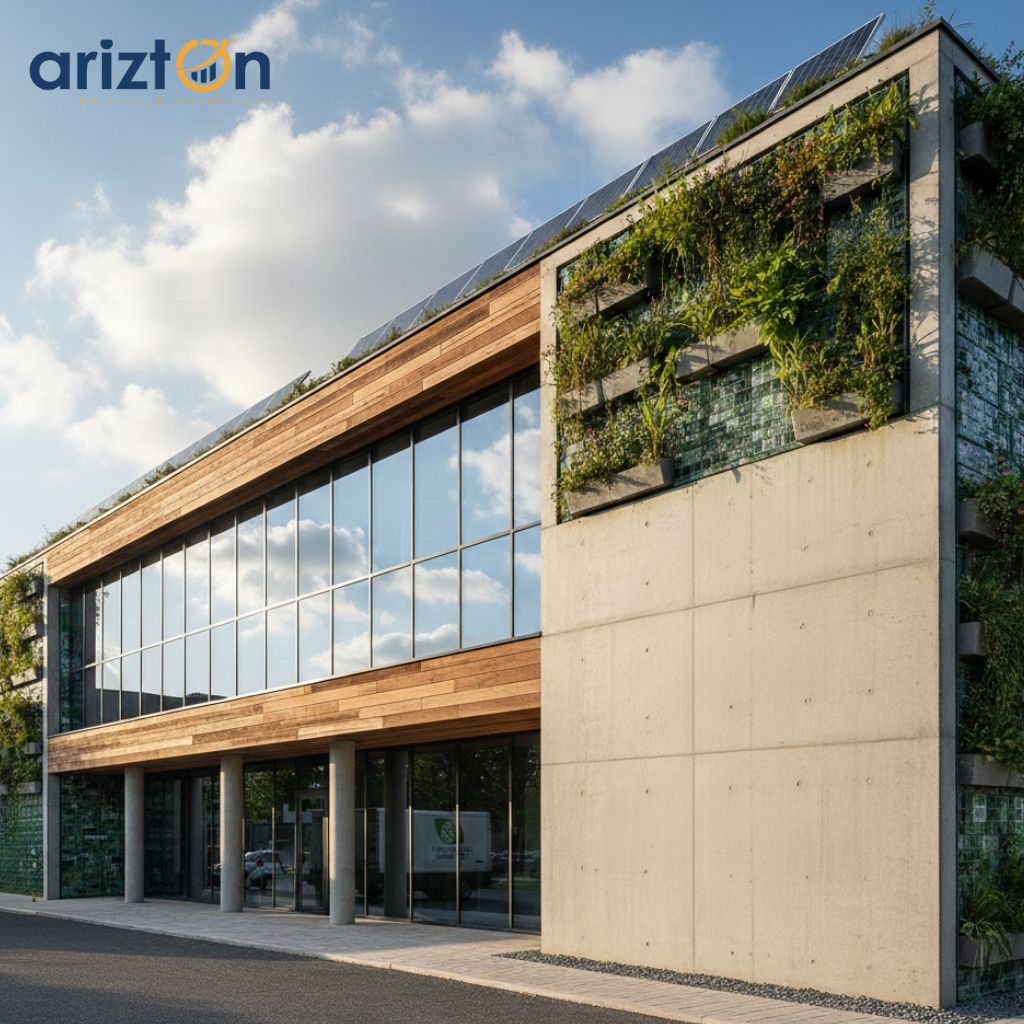
The construction industry is entering a pivotal phase as both consumers and businesses demand measurable environmental accountability. This shift is fueling the adoption of materials and design practices that lower a building’s overall carbon and energy footprint. According to Arizton, the green building materials market was valued at USD 316.94 billion in 2024 and is projected to reach USD 524.17 billion by 2030, growing at a CAGR of 8.75%. Reinforcing this market momentum, the United Nations’ 2030 Agenda, which targets a 30% reduction in building energy intensity per square meter by 2030 under the Paris Agreement, is pushing engineering and construction companies to integrate circular, resource-efficient, and low-impact solutions.
The Market Reality: Numbers That Demand Attention
The green building materials market size has grown from USD 316.94 billion in 2024, driven by more than environmental goodwill. Three forces are converging:
- Regulatory pressure – International standards like LEED, BREEAM, and the International Green Construction Code are no longer aspirational. They're mandatory in major markets, fundamentally redefining what "building code compliance" means.
- Economic efficiency – Green materials increasingly deliver better ROI through reduced energy costs, longer lifecycles, and lower maintenance requirements.
- Market demand – Consumers and businesses now factor sustainability into purchasing decisions, making green certification a competitive advantage rather than a cost center.
Market Drivers: Adoption Beyond Compliance
Several forces push adoption beyond regulatory compliance:
- Consumer demand for sustainability: Buyers now prioritize eco-friendly alternatives, pushing brands to use ethically sourced materials, reduce waste, and lower carbon emissions. This trend drives green building materials market trends globally.
- Regulatory Standards: Strict energy-efficiency standards and government investment in high-rise and residential projects are driving adoption, particularly in emerging regions such as the GCC, Latin America, and Brazil green building materials market.
- Multi-benefit of bio-based materials: Renewable materials reduce carbon emissions, conserve resources, and transform agricultural byproducts into valuable construction inputs. Companies producing eco-friendly construction materials internationally are leading this innovation.
The ROI Revolution: Turning Waste into Profit
The construction sector is moving beyond sustainability rhetoric toward measurable returns. Firms now use recycled steel, reclaimed wood, crushed concrete, and industrial byproducts like steel slag to cut costs. These materials reduce dependence on expensive virgin resources while eliminating costly waste disposal, solving two problems simultaneously.
Real projects prove the concept works. Walplast's HomeSure Waterproof Putty and WallEx Self-curing Plaster show how manufacturers can deliver premium performance using recycled raw materials. Self-healing concrete goes further, repairing its own micro-cracks, extending lifespan while slashing maintenance budgets. Builders deploy this technology today, not tomorrow.
Companies achieve lower material costs, reduced waste expenses, and buildings that earn valuable green certifications. The circular economy generates measurable returns.
Material Innovation: Creating Market Advantage
Advanced technologies are accelerating the transition beyond incremental improvements:
- 3D printing enables precision material usage, minimizing waste while expanding design possibilities.
- Bio-based materials from bamboo, hemp, and agricultural waste offer renewable alternatives without performance compromises.
- Smart insulation systems and energy-efficient windows deliver measurable reductions in operational costs, driving growth in the APAC building insulation material market.
Regional Market Dynamics: Where Growth is Happening
- North America leads with mature certification systems and stringent energy efficiency regulations, focusing on high-performance insulation, low-VOC products, and energy-efficient windows.
- Europe, particularly the Germany green building materials market, emphasizes bio-based materials and building renovation, supported by aggressive sustainability targets and regulatory frameworks.
- Asia-Pacific, including the APAC construction materials market, represents the high-growth frontier. Rapid urbanization, government green construction initiatives, and rising environmental awareness are driving explosive demand.
- Latin America and the Middle East, including the GCC green building materials market, are emerging markets where bio-based aggregates and carbon-neutral building initiatives signal substantial future opportunities.
Market Fragmentation Creates Strategic Opportunities
The green building market analysis shows the market remains highly fragmented, with numerous regional and international players competing for share. This dynamic competition is fueling faster innovation and specialization across the value chain.
As customers demand smarter, more efficient materials, vendors are under pressure to deliver constant R&D-driven improvements. Specialized players are seizing green building market share by addressing niche sustainability and performance needs more effectively than broad-based competitors.
Industry leaders illustrate this evolution: CertainTeed continues to set benchmarks in low-VOC, energy-efficient building systems, while Kingspan has strengthened its global footprint with the acquisition of Steico SE, expanding its portfolio of sustainable insulation and high-performance building envelopes. These companies are widely recognized as some of the leading brands in the market.
The $524 Billion Question
The green building materials market isn’t thriving simply because it’s “eco-friendly”, it’s thriving because it makes economic and strategic sense. It delivers better-performing buildings, lower operational costs, and greater long-term value.
The UN’s 2030 Agenda, calling for a 30% reduction in building energy intensity, isn’t just an environmental goal. It’s a roadmap of where regulation, investment, and opportunity are converging.
The real question for the construction industry isn’t whether to go green, it’s how quickly you can make it part of your competitive strategy.
About Us:
Arizton Advisory and Intelligence is an innovative and quality-driven firm that offers cutting-edge research solutions to clients worldwide. We excel in providing comprehensive market intelligence reports and advisory and consulting services.
We offer comprehensive market research reports on consumer goods & retail technology, automotive and mobility, smart tech, healthcare, life sciences, industrial machinery, chemicals, materials, I.T. and media, logistics, and packaging. These reports contain detailed industry analysis, market size, share, growth drivers, and trend forecasts.
Arizton comprises a team of exuberant and well-experienced analysts who have mastered generating incisive reports. Our specialist analysts possess exemplary skills in market research. We train our team in advanced research practices, techniques, and ethics to outperform in fabricating impregnable research reports.
Contact Us
Call: +1-312-235-2040
+1 302 469 0707
Mail: [email protected]
Contact Us: https://www.arizton.com/contact-us.