Hong Kong's High-Density Data Center Advantage: Built for AI. Connected to Asia.
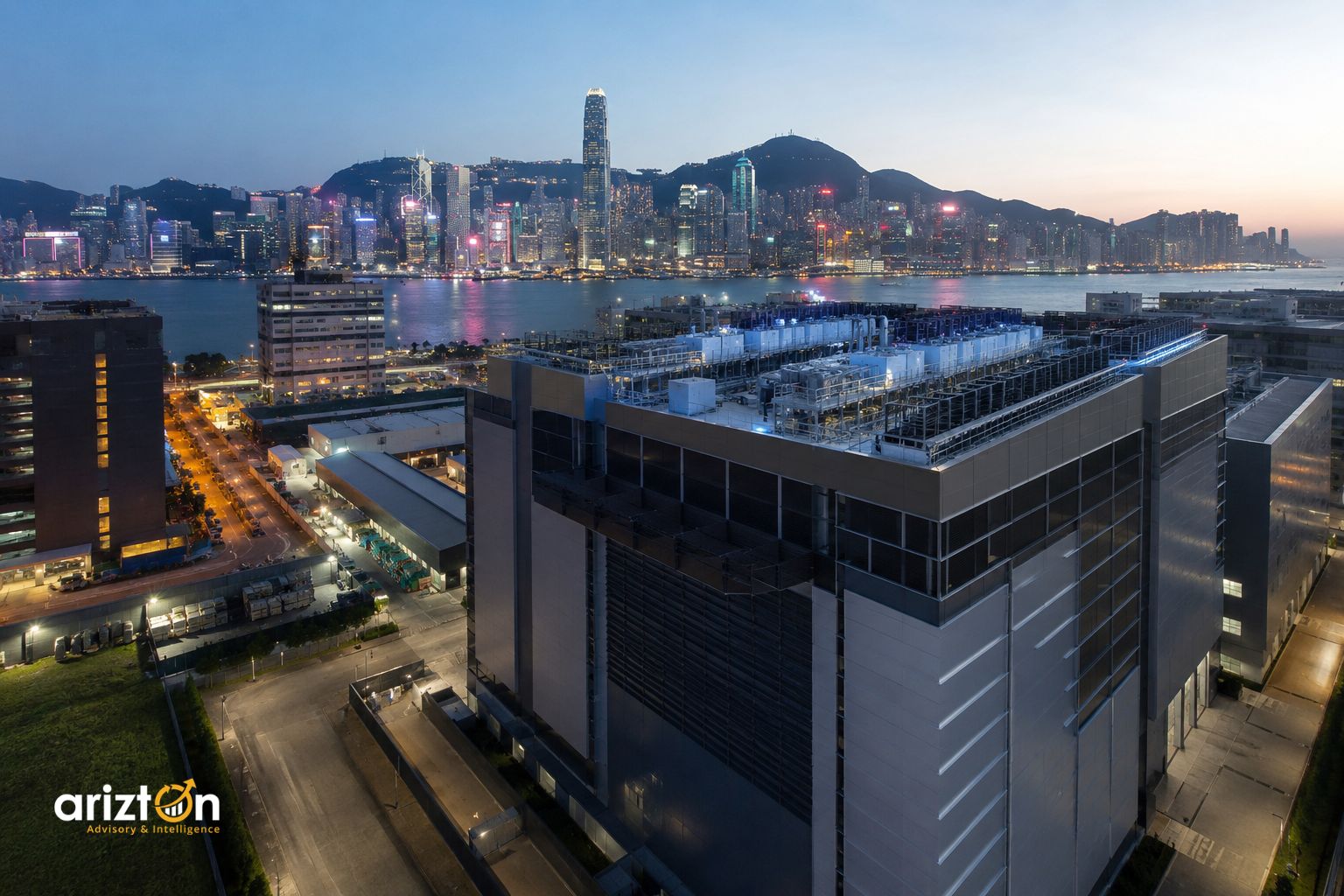
In the high-stakes world of digital infrastructure, Hong Kong is rewriting the rules of the game. Despite space constraints and sky-high real estate costs, the city is rapidly transforming its data center footprint to support the next era of technology.
By the numbers, Hong Kong’s colocation market is projected to soar from USD 1.57 billion in 2025 to USD 2.75 billion by 2031, growing at a steady CAGR of 9.79%. Driven by a massive influx of artificial intelligence (AI) workloads and high-performance computing (HPC) demands, the city’s data centers are shifting from simple storage boxes to dense, high-powered digital engines.
Why Hong Kong? The Sovereign Advantage
For global and mainland enterprises alike, Hong Kong offers a perfect storm of structural and financial advantages. As a Special Administrative Region (SAR) of China, it operates with a unique level of economic agility:
- Zero Customs Duties & Tariffs: Importing advanced server hardware, switches, and cooling infrastructure is friction-free.
- No VAT or GST: Operating costs are structurally lower without value-added or goods and services taxes.
- Carrier Neutrality & Submarine Cable Density: Blessed with direct access to critical subsea fiber networks, the city offers some of the lowest latencies in the Asia-Pacific region.
The Core Shift: Enterprise Cloud & The AI Supercycle
Enterprise digital transformation is no longer a slow-moving trend; it is an active migration. To slash operating costs and maximize resource efficiency, businesses are transitioning complex workloads out of traditional on-premise setups.
Case in Point: In April 2025, Hong Kong's Airstar Bank migrated its entire digital banking workload to Tencent Cloud to optimize resource efficiency and scale securely.
However, the real game-changer is the AI Supercycle. AI training and inference require massive computing power, leading to an unprecedented evolution in rack specifications.
To support these high-power loads, major operators like Equinix, DayOne, and SUNeVision are actively retrofitting and building facilities capable of handling over 50 kW per rack.
The Engineering Frontier: Direct-to-Chip Liquid Cooling
Air cooling simply cannot keep up with a 50 kW rack. To prevent servers from throttling or failing, colocation providers are implementing advanced thermal management systems.
For example, the Global Switch facility in Tseung Kwan O has integrated direct-to-chip liquid cooling. By circulating specialized dialectic fluid directly over the processing unit, these facilities achieve dramatic reductions in Power Usage Effectiveness (PUE) while running the world’s most demanding GPU clusters.
The Green Transition
As power densities climb, so does the scrutiny on carbon footprints. Data center operators are bridging the gap by partnering directly with local utility companies to source green energy.
In late 2024, SUNeVision set a major industry precedent by signing a six-year renewable energy certificate contract with CLP Power and Green Valley Landfill. This guarantees that their massive MEGA campus is directly backed by local, traceable green power.
Market Dynamics & The Competitive Field
The competitive landscape is a healthy mix of established global giants, dominant local operators, and eager new entrants.
The Incumbents
- SUNeVision Holdings (The local heavyweight with unmatched network density)
- Equinix & Digital Realty (Global interconnection giants)
- China Mobile, China Unicom, & China Telecom (Mainland connectivity powerhouses)
- AirTrunk, Vantage Data Centers, & BDx (Hyperscale specialists)
The New Challengers
Attracted by high yields, new players are investing heavily in Hong Kong's digital real estate. Names like Mapletree, Runze Technology, ESR, Chinachem Group, and TPG Angelo Gordon are actively positioning themselves to capture upcoming wholesale demand.