From Standalone to Portable — Which Neonatal Ventilators Are Winning the NICUs?
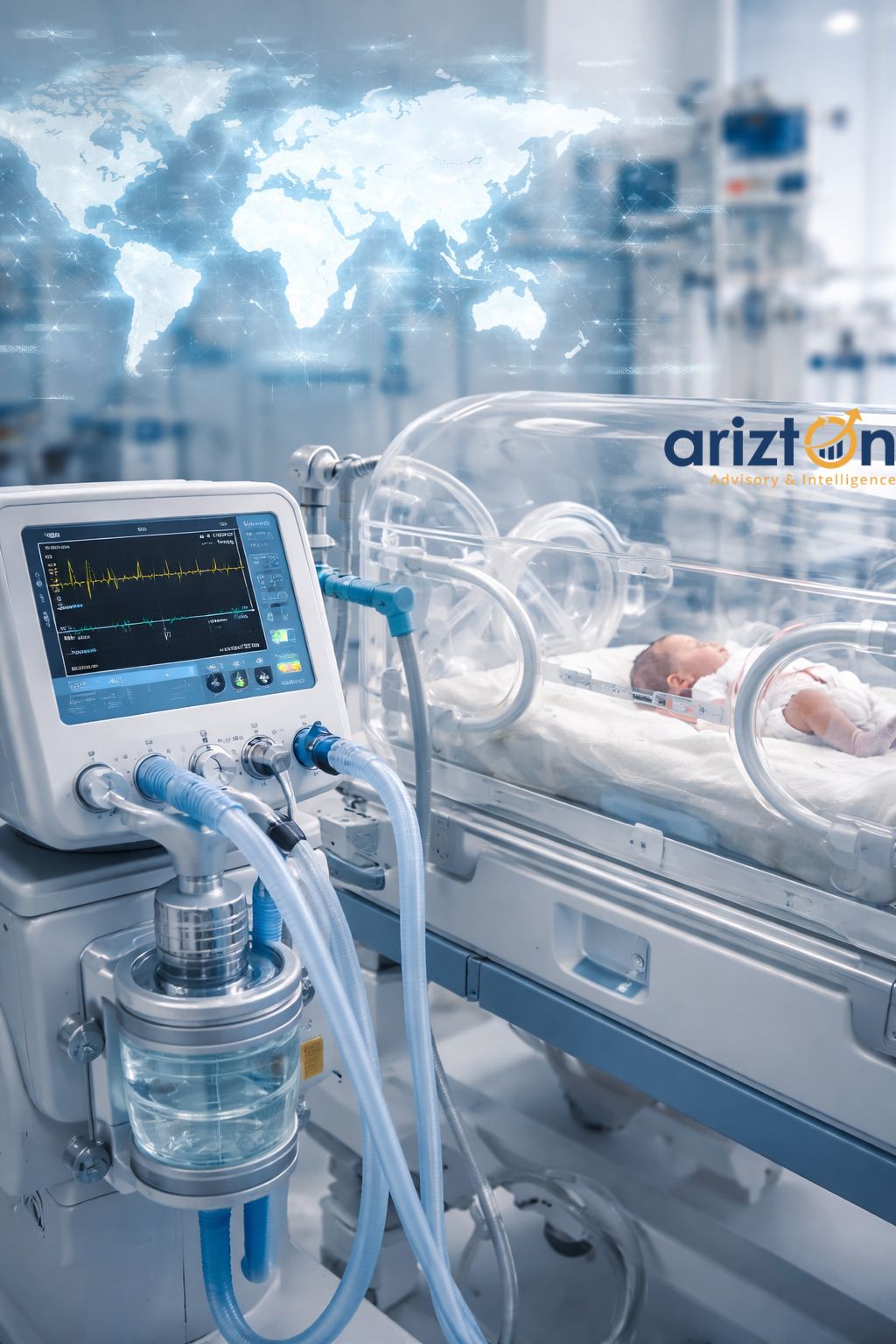
Every year, approximately 15 million babies are born prematurely around the world — and that number, according to the World Health Organization, continues to climb. Behind each of those births is a race against time, where underdeveloped lungs and fragile airways make access to advanced neonatal respiratory support not a luxury but a matter of survival. It is this stark clinical reality that sits at the heart of the global neonatal ventilators market — and why investors, hospital procurement heads, and medtech companies alike are paying close attention to where it is headed.
The global neonatal ventilators market was valued at USD 450 million in 2025 and is projected to reach USD 590.40 million by 2031, expanding at a CAGR of 4.63% during the forecast period. This growth is being powered by rising preterm birth rates, an increasing incidence of neonatal respiratory distress syndrome (RDS), and improving survival rates among extremely low birth weight infants — all of which are sustaining consistent demand for advanced NICU equipment across both established and emerging healthcare markets.
Why NICU Equipment Demand Is Rising — and Where the Capital Is Flowing
The investment case for neonatal medtech is grounded in demographics and public health policy converging at the same moment. Preterm infants face significantly higher risks of respiratory distress, underdeveloped organ systems, and long-term complications — almost all of which require immediate NICU admission and sustained ventilatory support. As preterm birth rates continue to rise globally, so does the structural demand for the devices and consumables that sustain these infants through their most vulnerable weeks.
Government initiatives have become a significant accelerant. Across Asia-Pacific, Latin America, and Africa, national programmes are funding maternal-child healthcare upgrades and NICU expansions at a pace not seen in previous decades. The World Health Organization and UNICEF are actively encouraging public healthcare facilities to procure cutting-edge ventilators, improving the availability of neonatal respiratory care equipment in hospitals that previously lacked it. In India, programmes like Rashtriya Bal Swasthya Karyakram (RBSK) and Ayushman Bharat are strengthening intervention and referral systems while rapidly scaling remote NICU monitoring and tele-NICU models. In 2025, Abu Dhabi’s government approved the establishment of a world-class medical city dedicated entirely to women’s and children’s health — a single-country signal of the broader regional commitment.
In the United States, CDC data shows NICU admission rates rose from 8.7% in 2016 to 9.8% in 2023 — a nearly 13% increase in seven years — translating directly into higher procurement demand for neonatal devices and respiratory disposables across the country’s hospital network.
Corporate investment is also accelerating the landscape. In 2025, GE HealthCare announced a $2.3 billion acquisition of Intelerad, a leading medical imaging software provider, to strengthen AI-powered enterprise imaging across hospital, outpatient, and ambulatory care settings. Meanwhile, Philips formed strategic alliances with four major critical care firms — Getinge, Drager, Hamilton Medical, and B. Braun — to optimise clinical workflows. These moves signal that the largest players in healthcare technology see neonatal and critical care convergence as a long-term strategic priority, not a niche opportunity.
Know More: https://www.arizton.com/market-reports/neonatal-ventilators-market
How Neonatal Ventilators Work — and What Neonatal RDS Treatment Looks Like Today
Neonatal ventilators are specialised medical devices designed to support or replace breathing in newborns whose lungs are underdeveloped or compromised. Unlike adult ventilators, these systems must deliver extremely precise, low-volume breaths — often just a few millilitres — to avoid barotrauma and lung injury in airways that can be extraordinarily fragile. Every parameter, from breath rate to pressure and oxygen concentration, must be calibrated for the specific clinical status of each infant.
Neonatal Respiratory Distress Syndrome (RDS) is one of the most common and serious conditions these devices treat. RDS occurs when the lungs lack sufficient surfactant — the substance that keeps the tiny air sacs, or alveoli, open. Without it, the lungs partially collapse with each breath, making normal breathing severely laboured or impossible. Preterm infants are especially vulnerable because surfactant production typically accelerates only in the final weeks of gestation. The treatment approach combines surfactant therapy with ventilatory support: the ventilator manages the work of breathing while the lungs continue to mature in the NICU environment.
“Modern NICU respiratory care is no longer about simply keeping an infant breathing — it is about synchronising the ventilator so precisely with the infant’s own effort that the lungs learn to work on their own terms.”
The most advanced expression of this philosophy today is Neurally Adjusted Ventilatory Assist (NAVA) a technology that uses diaphragm electrical activity (Edi) monitoring to synchronise ventilator breaths with the infant’s own neural breathing signals. Rather than delivering breaths on a fixed programme, NAVA responds in real time to the electrical impulse the infant’s brain sends to its diaphragm. Getinge’s Servo-type ventilators use both NAVA and Edi monitoring to evaluate diaphragm function continuously, enabling individualised weaning from mechanical ventilation that has been shown to improve outcomes and shorten NICU stays.
Non-Invasive vs Invasive Neonatal Ventilation — and Why the Distinction Matters
One of the most consequential clinical and commercial divides in this market sits between invasive and non-invasive ventilation — and the direction of travel is clear. Non-invasive neonatal ventilators hold the largest global market share and are expected to maintain their dominance as clinical protocols increasingly prioritise lung-protective strategies and reduced intubation risk.
Invasive ventilation requires an endotracheal tube — a tube inserted directly into the infant’s airway — to deliver full respiratory support. It remains essential for the most critically ill neonates who cannot breathe independently, providing complete ventilatory control when non-invasive approaches are insufficient. However, intubation carries inherent risks: airway injury, infection, and ventilator-associated lung complications are all known concerns that have pushed clinicians to favour less invasive options wherever possible.
Non-invasive modes — including nasal CPAP, BiPAP, high-flow nasal cannula therapy, and nasal intermittent positive pressure ventilation (NIPPV) — deliver respiratory support through nasal interfaces rather than an inserted tube, preserving the infant’s spontaneous breathing and significantly reducing the risk of ventilator-associated complications. These modes help maintain stability, reduce the work of breathing, and enable safer, lung-protective respiratory care for preterm and critically ill neonates. Leading manufacturers are now building next-generation systems that combine multiple support modalities in a single platform, allowing seamless transitions based on the infant’s changing clinical status. Hamilton Medical’s HAMILTON-C6 Neo ventilator, designed specifically for neonatal ICUs with enhanced lung-protective ventilation modes, is one of the most cited examples of this integrated approach.
In 2024, Hamilton Medical also launched a new NIV mask portfolio for non-invasive ventilation, featuring a wide range of interchangeable elbows designed for different NIV therapy options — reflecting the growing clinical demand for flexible, patient-specific non-invasive solutions.
Standalone vs Portable NICU Ventilators — Different Tools for Different Care Settings
Beyond the invasive versus non-invasive distinction, the market is also divided by mobility — and both segments are growing for distinct reasons. Standalone ventilators hold a significant market share, preferred in hospital settings for their robust functionality, high reliability, and ability to support long-term ventilation needs. These full-featured, fixed-position systems offer comprehensive multi-mode support, advanced monitoring, and integration with NICU information systems, making them the default choice for managing the most complex neonatal cases requiring extended respiratory assistance.
Portable ventilators, on the other hand, are witnessing strong growth driven by the rising adoption of home care, ambulatory clinics, and community health centres. Designed with battery operation, lightweight builds, and integrated non-invasive modes, portable devices enable safe infant transport between care settings and continuity of care outside traditional NICUs. For preterm or sick neonates who need ventilation support during inter-hospital transfers or in remote and emergency scenarios, portable ventilators are often the only viable option. As healthcare systems in emerging markets expand their reach beyond urban hospital centres, the demand for portable neonatal ventilators is expected to accelerate further.
North America Leads, Asia-Pacific Accelerates
North America is the dominant regional market, with the United States holding approximately 87% of the regional share in 2025. This position is supported by advanced healthcare infrastructure, high institutional delivery rates, and strong adoption of technology-enabled neonatal care. The CDC data cited above — showing a 13% rise in US NICU admission rates between 2016 and 2023 — gives this dominance a clear structural foundation.
Europe represents the second largest neonatal ventilators market globally, valued at USD 104.74 million in 2025 and projected to reach USD 133.37 million by 2031 at a CAGR of 4.11%. The region is characterised by a clear shift towards non-invasive, automated, and lung-protective respiratory technologies, driven by rising preterm birth rates, supportive government and NGO initiatives, and the adoption of universal ventilator platforms. Approximately 500,000 babies are born prematurely in Europe each year, affecting roughly 10% of all births — making neonates the largest child patient group on the continent. Germany is the largest revenue contributor with over 15% market share, underpinned by a strong domestic OEM base and well-funded hospital systems, while the UK is the fastest-growing country market, supported by active clinical research, large NHS centralised procurement cycles, and the recently introduced legislation providing up to 12 weeks of statutory neonatal care leave — reflecting a growing national commitment to NICU infrastructure investment.
Know More: https://www.arizton.com/market-reports/europe-neo-ventilators-market
The Asia-Pacific region is the fastest-growing market, expanding at a CAGR of 7.31% during the forecast period. China is the largest contributor in APAC, while India is the fastest-growing individual country market, driven by government-backed programmes that are rapidly scaling NICU access and neonatal care infrastructure. Countries such as Brazil, Mexico, Argentina, the UAE, and Saudi Arabia are also investing meaningfully in healthcare systems, and their impact on neonatal equipment procurement is expected to grow significantly over the coming years.
Three Forces Reshaping the Neonatal Ventilator Industry
The first is the broad shift towards non-invasive and hybrid ventilators. Integration of NIPPV, nasal CPAP, and high-flow nasal cannula into single, multi-mode systems is enabling seamless clinical transitions based on the infant’s moment-to-moment respiratory status. This design evolution is reducing the need to switch between separate devices, improving workflow efficiency in NICUs, and lowering the incidence of ventilator-associated injury. The growing availability of these systems from major manufacturers is a key reason non-invasive ventilation now commands the largest global market share.
The second force is the increasing adoption of NAVA and smart respiratory management tools. Healthcare systems are increasingly recognising the clinical and economic value of NAVA-enabled platforms — shorter NICU stays, better weaning outcomes, and lower complication rates all translate into measurable cost and quality-of-care benefits. Leading companies are incorporating NAVA into their high-end respiratory product lines as a clear market differentiator.
The third is the rise of remote monitoring and digital integration. In 2024, Getinge AB launched Servo TwinView, a web-based platform that allows clinicians to monitor ventilator metrics from a distance — a direct response to the growing demand for telehealth-integrated NICU workflows. As tele-NICU models expand in countries like India and across sub-Saharan Africa, the ability to monitor and adjust neonatal ventilation remotely is shifting from a premium feature to a clinical expectation.
In 2025, Drager expanded its neonatal care division by incorporating BiliPredics — an advanced predictive software tool developed by NeoPredics — signalling the broader industry pivot towards AI-augmented, data-driven neonatal care beyond ventilation alone.
Best Neonatal Ventilators 2025 — Top NICU Ventilator Manufacturers
The global neonatal ventilators market is highly competitive, with a mix of international medtech leaders and specialised respiratory companies holding significant market share through innovative product portfolios and aggressive M&A and partnership strategies.
Dragerwerk AG & Co. KGaA (Germany) remains one of the most dominant players globally, with a comprehensive neonatal care product portfolio and a growing emphasis on AI-powered tools. Its 2025 integration of BiliPredics software represents a strategic move beyond hardware into predictive analytics. Hamilton Medical (Switzerland) is widely recognised for intelligent ventilation algorithms and lung-protective design, with the HAMILTON-C6 Neo purpose-built for neonatal ICUs. Its 2024 NIV mask portfolio launch further demonstrates a commitment to expanding non-invasive options for clinical teams.
Getinge AB (Sweden) is a clinical benchmark for NAVA-enabled neonatal ventilation, with its Servo-type ventilators setting the standard for diaphragm-driven respiratory synchronisation. The 2024 launch of Servo TwinView added remote monitoring capability, and its 2025 strategic alliance with Philips positions it well for integrated critical care workflow solutions. GE HealthCare (USA) is a major NICU equipment and consumables supplier with strong distribution reach, while its $2.3 billion acquisition of Intelerad signals a longer-term bet on AI-powered, cloud-based enterprise care delivery.
Philips Healthcare (Netherlands) is leveraging its 2025 alliance network with Getinge, Drager, Hamilton Medical, and B. Braun to build a more integrated critical care ecosystem rather than competing on isolated product lines. Rounding out the landscape, Fisher & Paykel Healthcare (New Zealand) is a leading supplier of neonatal-specific respiratory consumables and high-flow nasal cannula systems widely used alongside ventilator OEM platforms, while Lowenstein Medical SE & Co. KG (Germany) supports European technology refresh cycles and advanced neonatal ventilator adoption across the continent’s health systems.
A Market Built on Clinical Urgency — and Long-Term Structural Demand
The neonatal ventilators market is not driven by hype or speculative demand. It is driven by the simple, urgent reality that millions of premature and critically ill infants require immediate respiratory support to survive — and that the infrastructure to provide that support remains underdeveloped across large parts of the world. As preterm birth rates continue to rise, as emerging markets invest in NICU capability, and as technology evolves to make neonatal ventilation smarter, safer, and more accessible, the demand curve for neonatal ventilators points in one direction.
For healthcare investors and procurement decision-makers, the combination of recurring consumables revenue, expanding installed device bases, government-backed procurement in emerging markets, and a clear technological roadmap — from non-invasive hybrid systems to NAVA and AI-augmented monitoring — makes the neonatal ventilators market one of the more structurally sound opportunities in the broader medtech landscape through 2031 and beyond.