What Strategies Can Help Bearing Manufacturers Strengthen Their Competitive Position?
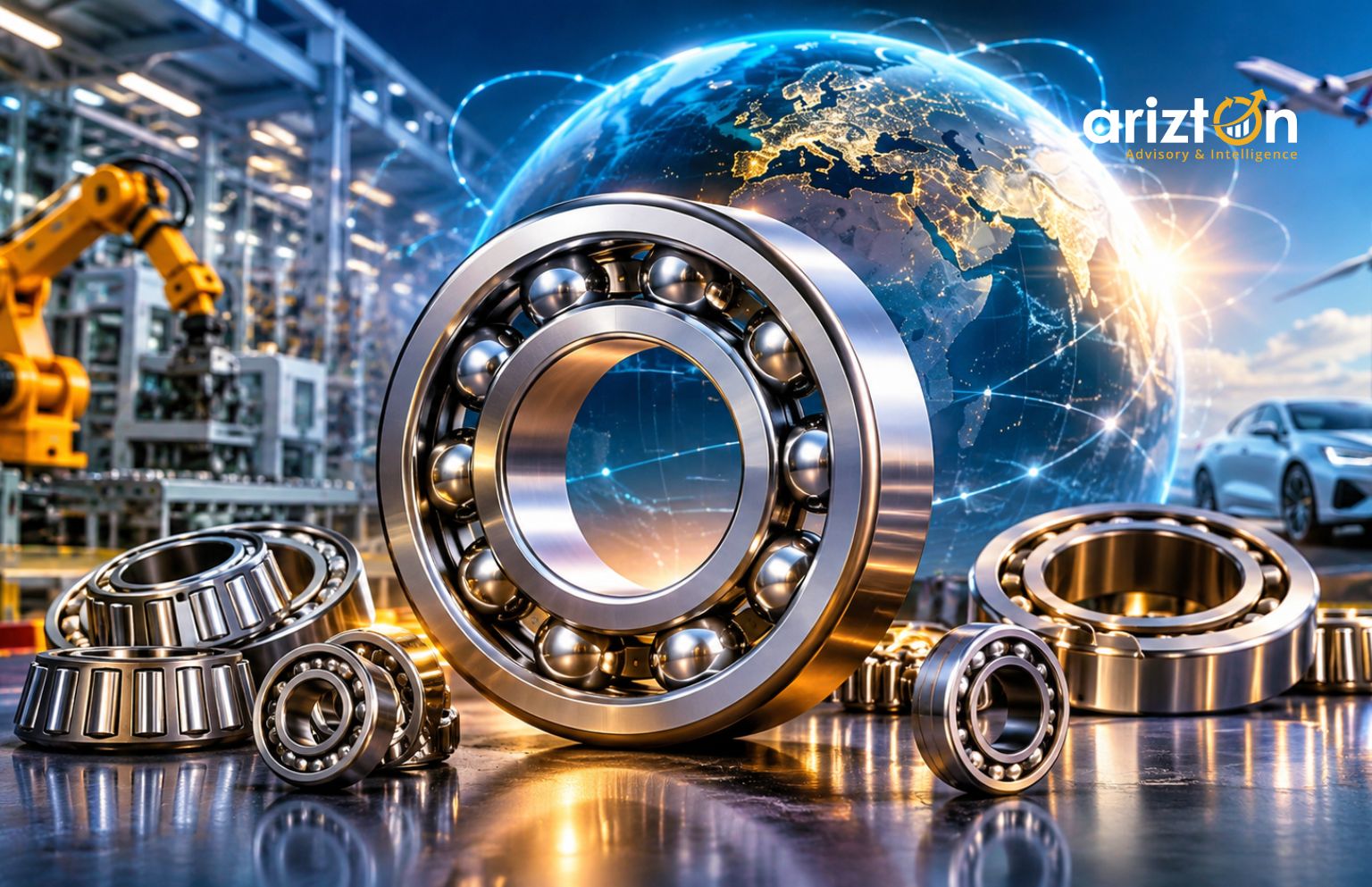
The global bearing market is highly competitive, with a small group of established international manufacturers holding strong positions through advanced technologies, extensive distribution networks, strong customer relationships, and large-scale production capabilities. At the same time, regional manufacturers continue to compete by offering cost-effective products and focusing on high-volume sales. This competitive environment creates challenges for companies looking to enter the bearing market, expand their product portfolios, or strengthen their existing market positions.
As industries such as automotive, aerospace, renewable energy, and industrial automation continue to evolve, customer expectations are also changing. Manufacturers increasingly require bearings that offer higher durability, improved operational efficiency, lower friction, and greater reliability under demanding operating conditions. The growing adoption of electric vehicles (EVs), automated machinery, and smart industrial equipment is further creating opportunities for technologically advanced bearing solutions.
However, competing primarily on price is becoming increasingly challenging, particularly for manufacturers with limited production capabilities or technological resources. Companies need to focus on product innovation, strategic partnerships, operational efficiency, and customer-specific solutions to differentiate themselves. So, how can bearing manufacturers overcome these challenges and establish a sustainable competitive advantage? Understanding the key market challenges and adopting the right business strategies can help companies identify new opportunities and strengthen their long-term growth prospects.
For Sample: https://www.arizton.com/request-sample/5226
Why Is Competition Becoming a Major Challenge for Bearing Manufacturers?
The presence of well-established international manufacturers creates significant competitive pressure for smaller and regional bearing suppliers. Leading companies benefit from strong brand recognition, established customer relationships, advanced manufacturing capabilities, and extensive global distribution networks. These advantages make it difficult for new entrants and smaller manufacturers to compete for large contracts, particularly in industries where product reliability and technical performance are critical purchasing factors.
Regional suppliers often focus on competitive pricing and high-volume production to attract customers. However, competing primarily through lower prices can put pressure on profit margins and limit investments in research, product development, and manufacturing improvements. Additionally, customers in automotive, aerospace, and industrial applications often have strict quality requirements and expect consistent product performance throughout the equipment lifecycle.
To overcome these challenges, manufacturers should avoid relying entirely on price-based competition. Instead, they can differentiate their products through specialized applications, improved material quality, customized engineering, and reliable after-sales support. Developing strong relationships with industrial buyers and demonstrating the long-term value of bearing solutions can also help manufacturers compete more effectively against established players.
Competing on price alone is no longer a sustainable growth strategy. Discover where the next opportunities lie in the global bearing market. : https://www.arizton.com/market-reports/bearings-market
How Can Product Innovation Help Manufacturers Differentiate Their Offerings?
Product innovation is one of the most effective strategies for bearing manufacturers looking to strengthen their competitive position. As industrial equipment becomes more advanced, conventional bearing solutions may not always meet the requirements of modern applications. Customers increasingly seek products that can operate under high speeds, heavy loads, temperature variations, vibration, and demanding operating conditions while maintaining efficiency and reliability.
Manufacturers can address these requirements by investing in advanced materials, improved bearing designs, low-friction coatings, and precision engineering. For instance, ceramic hybrid bearings combine ceramic rolling elements with steel rings, offering opportunities in applications where reduced weight, high-speed performance, and resistance to certain operating stresses are important. Similarly, specialized surface coatings can help reduce friction and wear in suitable operating environments, improving bearing performance and service life.
Companies should also strengthen their research and development capabilities to identify application-specific requirements. Collaborating with equipment manufacturers and industrial customers during the product development process can help suppliers design solutions that address actual operational challenges. This approach not only improves product differentiation but also creates opportunities to supply high-value bearing solutions instead of competing solely on standard product pricing.
Can Smart Bearings Create New Opportunities in the Global Bearing Market?
The growing adoption of automation, connected equipment, and predictive maintenance technologies is creating new opportunities for smart bearing solutions. Traditional bearings generally perform mechanical functions, but smart bearings equipped with embedded sensors can provide additional information about operating conditions, including temperature, vibration, and other performance indicators.
This information can help industrial operators identify abnormal operating conditions and detect potential equipment problems before they result in unexpected failures. By integrating sensor-based monitoring with industrial data systems, manufacturers can support predictive maintenance strategies, reduce unplanned downtime, and improve equipment availability.
For bearing manufacturers, developing smart products can create opportunities to move beyond conventional component supply and offer more technology-driven solutions. However, successful adoption requires investments in sensor integration, product design, data connectivity, and testing. Companies should initially focus on applications where equipment downtime can result in significant operational or maintenance costs, such as automated production facilities, heavy industrial machinery, and advanced manufacturing systems.
Manufacturers can also collaborate with automation technology providers and industrial equipment companies to develop compatible smart bearing solutions. These partnerships can help reduce development challenges while improving access to customers that are already investing in connected industrial infrastructure.
Turn market shifts into business opportunities. Explore the bearing market landscape with data-driven insights. Read Here
How Can the Growing Electric Vehicle Industry Benefit Bearing Manufacturers?
The expansion of the electric vehicle industry is creating new requirements for bearing manufacturers. EV powertrains, electric motors, transmissions, and auxiliary systems require bearings capable of supporting specific operating conditions, including high rotational speeds, electrical considerations, reduced noise, and improved energy efficiency.
As automotive manufacturers increase their investments in electric mobility, bearing suppliers have opportunities to develop specialized products that meet the technical requirements of EV platforms. Low-friction designs, lightweight materials, advanced lubrication solutions, and ceramic hybrid components can support applications where efficiency and performance are important considerations.
However, entering the EV supply chain requires manufacturers to meet demanding quality, durability, and validation requirements. Automotive customers generally evaluate suppliers based on product consistency, manufacturing capabilities, technical expertise, and their ability to support long-term production requirements.
To capture these opportunities, bearing manufacturers should strengthen their engineering capabilities and work closely with automotive original equipment manufacturers (OEMs) and Tier-1 suppliers. Early involvement in product development and design discussions can help manufacturers understand future component requirements and position their solutions for upcoming vehicle platforms.
Why Should Bearing Manufacturers Focus on Long-Term OEM Partnerships?
Building long-term relationships with OEMs and Tier-1 suppliers is an important strategy for improving business stability and securing recurring revenue. Major automotive, aerospace, industrial machinery, and renewable energy companies generally require reliable suppliers that can consistently deliver products meeting their technical and quality specifications.
Securing multi-year supply agreements can help bearing manufacturers establish predictable business relationships and improve production planning. These partnerships may also provide suppliers with opportunities to participate in new product development, understand changing customer requirements, and expand their presence across multiple applications.
However, developing strong OEM relationships requires more than competitive pricing. Manufacturers must demonstrate consistent product quality, dependable delivery schedules, technical support, and the ability to meet changing production requirements. Maintaining transparent communication and responding quickly to customer concerns can further strengthen supplier relationships.
Companies should also focus on building relationships with wind energy developers and equipment manufacturers. The growing deployment of wind energy systems creates demand for specialized bearings used in turbines and related equipment. By developing application-specific solutions and establishing long-term supply partnerships, manufacturers can strengthen their position in this important industrial segment.
How Can Manufacturers Improve Their Global Distribution and Customer Reach?
A strong distribution network plays a critical role in helping bearing manufacturers compete across international markets. Established manufacturers benefit from extensive sales networks, regional warehouses, local distributors, and technical service teams that allow them to serve customers across different industries and locations.
For smaller manufacturers, developing a comparable global network can require substantial investment. However, companies can improve market access through strategic distributor partnerships, regional representatives, and collaborations with industrial equipment suppliers. Selecting distributors with established customer relationships and technical knowledge can help manufacturers enter new markets more efficiently.
Manufacturers should also strengthen their digital presence by providing detailed product specifications, technical documentation, application information, and customer support through their websites. Digital platforms can help potential buyers evaluate products, identify suitable bearing solutions, and connect with suppliers more easily.
Additionally, companies should identify high-potential customer segments rather than expanding into multiple markets without a clear strategy. Focusing on industries where their products offer a technical or cost advantage can help manufacturers use their sales and distribution resources more effectively.
Turn competitive pressure into market opportunity. Get a Free Analyst Discussion
What Role Does Manufacturing Efficiency Play in Strengthening Market Competitiveness?
Manufacturing efficiency directly influences product quality, production costs, delivery timelines, and overall profitability. Bearing manufacturers operating in a highly competitive environment need to maintain consistent production standards while controlling manufacturing expenses.
Investments in automated production lines, precision machining, quality inspection systems, and advanced manufacturing technologies can help companies improve production efficiency and reduce defects. Digital monitoring systems can also support better equipment utilization, production planning, and maintenance management.
In addition, manufacturers should regularly evaluate their supply chains to identify opportunities to reduce material costs, improve inventory management, and minimize production delays. Strong supplier relationships and effective procurement strategies can help companies maintain a stable supply of essential raw materials and components.
However, cost optimization should not come at the expense of product quality. Bearing failures can affect the performance of entire machines and industrial systems, making reliability a critical purchasing consideration. Manufacturers should therefore balance cost efficiency with investments in quality control, testing, and product development.
How Can Bearing Manufacturers Build a Sustainable Competitive Advantage?
Building a sustainable competitive advantage requires manufacturers to combine technological innovation with strong customer relationships and operational excellence. Companies should evaluate their existing product portfolios, identify gaps in their technical capabilities, and determine which applications offer the greatest opportunities for differentiation.
Investing in smart bearings, low-friction technologies, advanced materials, and ceramic hybrid components can help manufacturers address the changing requirements of EVs, automated machinery, and other high-performance applications. At the same time, strengthening OEM partnerships and securing long-term supply agreements can support recurring business opportunities.
Manufacturers should also monitor changes in customer requirements, industrial technology adoption, and competitive strategies. Understanding where established manufacturers are investing and identifying underserved applications can help smaller suppliers develop focused market-entry and expansion strategies.
Rather than competing across every product category, companies should prioritize applications where they can demonstrate measurable value through product performance, customization, technical support, or cost efficiency. This focused approach can help manufacturers improve resource allocation and build stronger customer relationships.
Stop competing for the lowest price. Start competing for the right opportunities:
Conclusion: Are You Ready to Strengthen Your Position in the Global Bearing Market?
The global bearing market offers significant opportunities, but manufacturers must navigate intense competition, changing customer expectations, and increasing demand for technologically advanced products. Relying only on competitive pricing and high-volume production may not be sufficient to maintain long-term growth. Companies need to invest in product innovation, smart bearing technologies, advanced materials, manufacturing efficiency, and strategic OEM partnerships to strengthen their market positions.
Developing specialized bearing solutions for electric vehicles, automated machinery, and renewable energy applications can help manufacturers access high-value opportunities. Similarly, building long-term relationships with automotive suppliers and wind energy developers can improve customer retention and create more predictable revenue streams.
For companies planning to enter new markets, expand production capabilities, or strengthen their competitive strategies, understanding market dynamics and tracking key industry developments are essential. A clear view of the competitive landscape, leading manufacturers, emerging technologies, and application-level opportunities can support more informed business decisions.
Explore Arizton's Bearing Market Research to make your next strategic move with confidence: Read Here: https://www.arizton.com/market-reports/bearings-market