Old Elevators, New Demand: The Modernization Wave Reshaping the Philippines Market
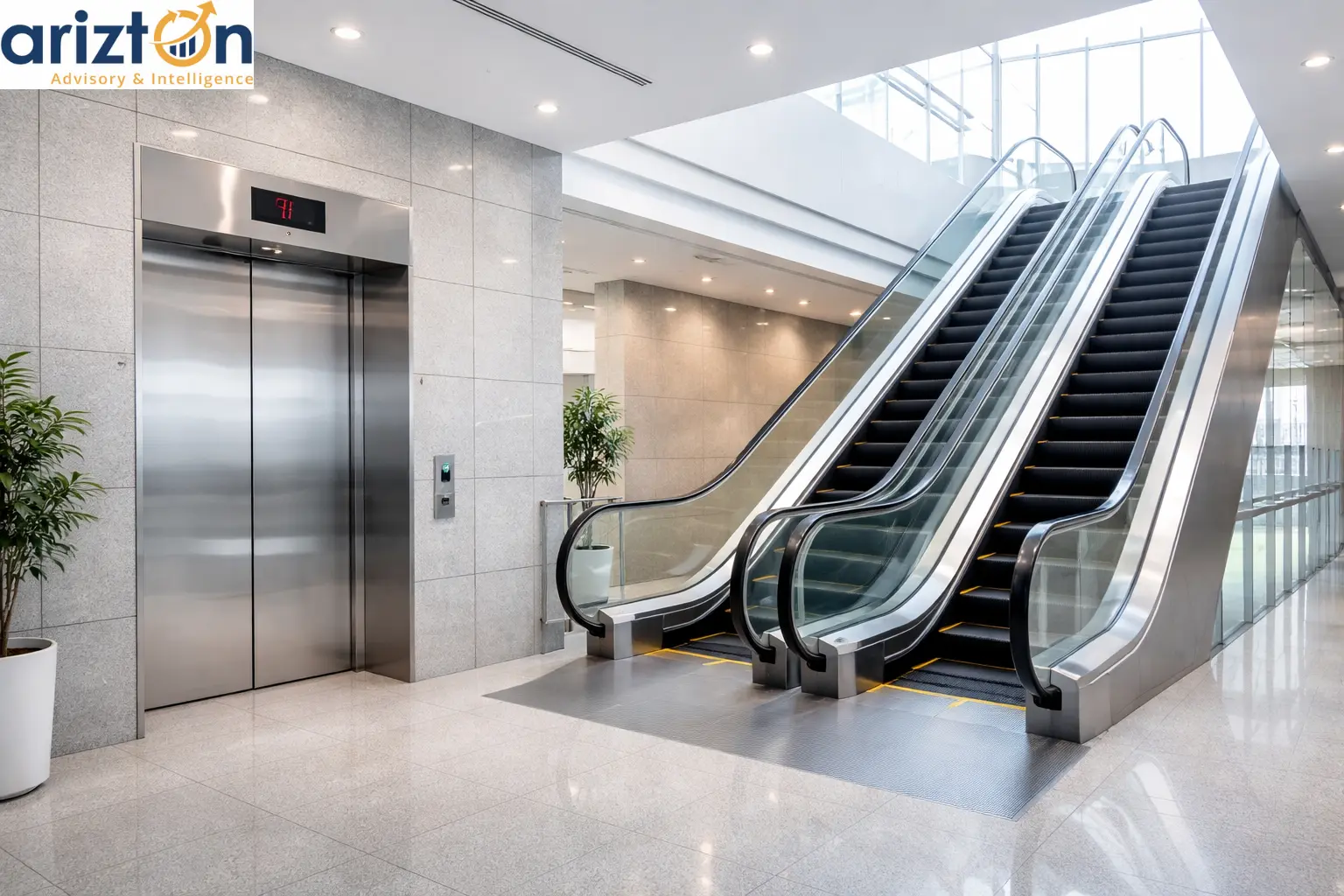
The Philippines elevator and escalator market is entering a more defined growth phase, where urban expansion, aging infrastructure, and technology adoption are converging to reshape demand. Installations reached 2.77 thousand units in 2025 and are projected to grow to 3.52 thousand units by 2031, supported by a construction sector expanding at nearly 6.5% and increasing high-rise development across key cities.
Beyond new installations, a critical shift is emerging, over 40% of elevators across Asia-Pacific are more than 25 years old, driving rising modernization demand in dense urban areas such as Metro Manila and Cebu. This is positioning the market not just for volume growth, but for a parallel expansion in upgrades, lifecycle services, and energy-efficient system adoption.
Validate what’s driving growth in the Philippines elevator market to 3.52K units by 2031
Technologies Advancement are Now Baseline Requirements in New Installations
Advanced safety technologies are now baseline requirements in the Philippines elevator and escalator market. Intelligent door systems, enhanced braking, and automated emergency features are increasingly standard, while IoT-enabled monitoring and real-time diagnostics are improving system reliability and reducing downtime. The growing adoption of AI-driven predictive maintenance is further accelerating the shift toward data-driven, long-term service models, moving the market beyond installation-led growth toward lifecycle performance optimization.
Transit and Commercial Expansion are Structurally Repositioning Escalator Demand
Escalator demand remains concentrated in commercial developments and transit infrastructure, supported by ongoing investments in retail, office, and urban transport projects. Rapid urbanization and expanding real estate activity across Metro Manila, Makati, and Quezon City are reinforcing demand across high-traffic environments. Government housing initiatives and private investments are expected to sustain installation growth, particularly in infrastructure-linked developments where consistent footfall drives long-term system utilization.
MRL Technology is Becoming the Default Specification for High-Rise Urban Development
Machine-room-less (MRL) elevators are emerging as the preferred solution due to their space efficiency and alignment with modern building design. In 2025, MRL systems accounted for a significant share of total installations, with steady growth expected as high-rise construction continues. This trend reflects a broader shift toward standardized, space-optimized systems in dense urban developments.
High-Density Residential Growth is the Primary Volume Driver Shaping Installation Patterns
The residential segment continues to drive installation volumes, supported by the rapid expansion of high-rise housing and urban residential projects. Increasing population density is making vertical living essential, reinforcing consistent demand for elevator systems across apartment and condominium developments. This positions residential construction as the primary volume driver shaping installation patterns across the market.
Global Players Command 75% Market Value, Defining the Competitive Landscape
The Philippines elevator market is relatively concentrated, with leading global players accounting for nearly 75% of total market value. This reflects strong control over large-scale, technology-driven projects, particularly in premium and high-rise developments, while smaller players remain active in more price-sensitive segments. Recent projects, such as the installation of 67 elevators and escalators at Solaire Resort North in Metro Manila, highlight continued demand for integrated vertical mobility solutions in major urban developments.
Sustainable Construction is Accelerating Demand for Energy-Efficient Systems
Sustainability is becoming a key driver in the Philippines construction and real estate sectors, supported by regulatory initiatives and rising energy costs. Green building frameworks such as BERDE are encouraging the adoption of energy-efficient designs. This is increasing demand for advanced elevator and escalator technologies, including regenerative drives, gearless traction systems, and smart control solutions that reduce energy consumption and lifecycle emissions, aligning with long-term environmental and cost-efficiency goals.
What This Signals for the Market Ahead
The Philippines elevator and escalator market is moving beyond installation-driven growth toward a more balanced model shaped by modernization demand, smart technology adoption, and infrastructure-led expansion.
For stakeholders, this means demand is no longer defined only by new construction cycles, but increasingly by lifecycle upgrades, energy efficiency requirements, and performance-driven service models. As high-rise residential projects, transit infrastructure, and aging systems converge, the market is evolving into a dual-growth opportunity, new installations alongside modernization and long-term service demand.
Get full insights on where demand is growing, which segments are leading, and how the market is evolving:https://www.arizton.com/market-reports/philippines-elevator-and-escalator-market