Global Investors are Racing into the Philippines Data Center Market: Key Strategic Questions
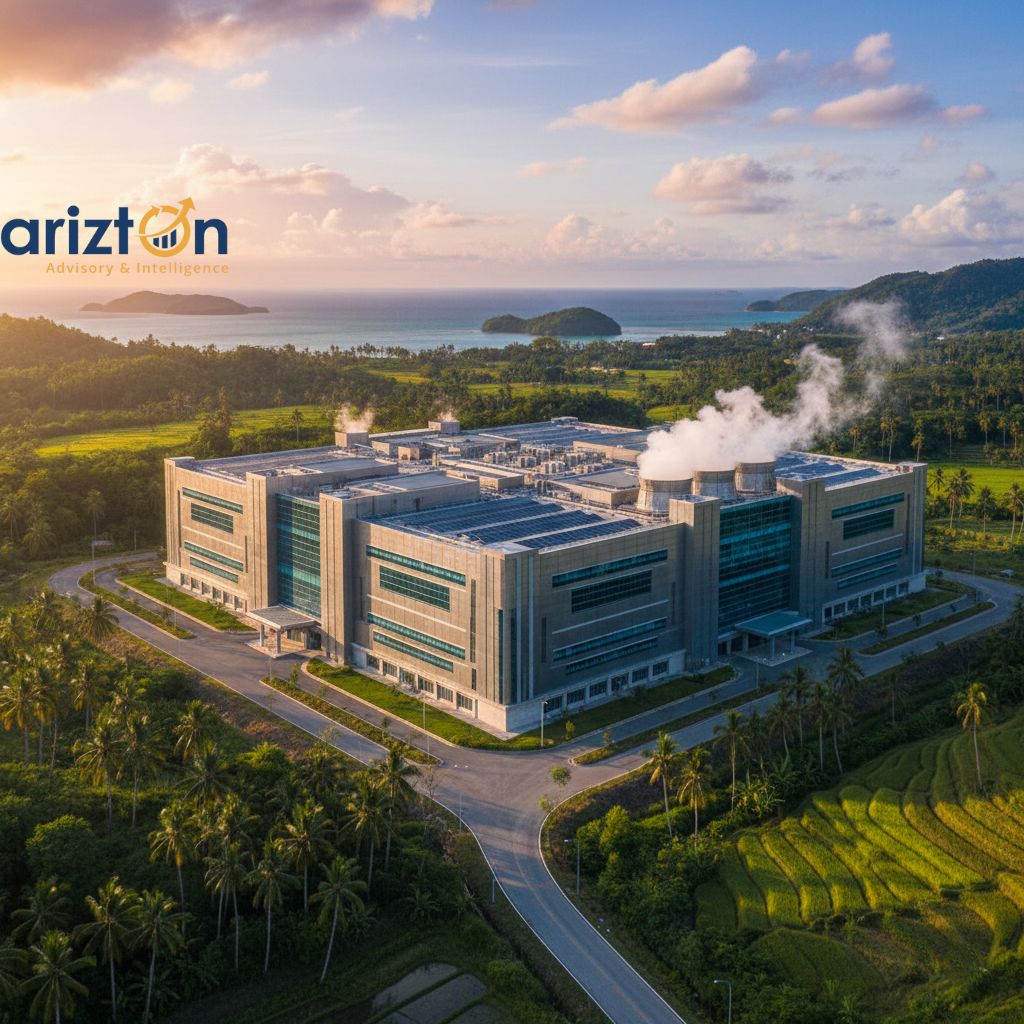
The Philippines is emerging as one of Southeast Asia’s most attractive data center destinations, supported by rapid digital transformation, rising AI and cloud adoption, and competitive cost structures, including affordable land and construction expenses.
According to Arizton’s recent research, the Philippines data center market size was valued at USD 735 million in 2025 and is projected to reach USD 2.48 billion by 2031, growing at a CAGR of 22.50%. This growth reflects the country’s increasing role as a cost-efficient alternative to mature regional hubs. Its strategic location, expanding subsea connectivity, and supportive government policies continue to attract both domestic and international investment. At the same time, a young workforce, improving energy infrastructure, and integration into the broader APAC digital corridor are strengthening long-term market fundamentals.
Structural and Investment Trends Reshaping the Philippines Data Center Market
- The Philippines is strengthening its international bandwidth through more than 21 operational submarine cables and multiple new projects under development. This expansion is reducing latency, improving reliability, and supporting the growth of cloud services, AI workloads, and cross-border data traffic.
- Rising power demand is pushing operators to integrate renewable sourcing, advanced cooling architectures, and hybrid energy models. At the same time, ESG compliance and carbon-reduction targets are influencing site selection, facility design, and long-term investment strategies, particularly among global colocation and cloud providers.
Operators are Best Positioned to Capture Long-Term Colocation Demand?
The Philippines remains an emerging colocation hub, with around 28 operational facilities concentrated mainly in Metro Manila. Key providers include ePLDT, Converge ICT Solutions, Digital Edge, Globe Telecom, ST Telemedia Global Data Centres, and Equinix, along with several regional players.
Most facilities are located in Manila due to strong network infrastructure, proximity to financial institutions and government bodies, and access to enterprise customers. Global operators are entering the market through acquisitions and partnerships, accelerating the professionalization of colocation services. Demand is primarily driven by cloud companies, banks, telecom operators, and digital platforms seeking secure, carrier-neutral facilities.
Impact of Hyperscale and Cloud Investment Influencing Local Capacity Expansion?
Cloud adoption in the Philippines is expanding rapidly as enterprises, government agencies, and SMEs modernize operations and migrate workloads to digital platforms. Nationwide fiber rollout and improving connectivity are enabling more reliable access to cloud services, while growth in e-commerce, fintech, and remote work is increasing demand for scalable infrastructure.
Providers such as Huawei Cloud and Alibaba Cloud are expanding local availability zones, strengthening data sovereignty and reducing reliance on offshore infrastructure.
Key Infrastructure Leaders Driving Market Consolidation and Expansion?
The market is led by established operators such as ePLDT, Converge ICT Solutions, Digital Edge, Globe Telecom, and ST Telemedia Global Data Centres, which together account for a significant share of operational capacity. These players are expanding through capacity additions, campus-style developments, and partnerships with cloud providers.
At the same time, emerging companies such as A-FLOW, Beeinfotech PH, and Digital Halo are strengthening competition through specialized and customized service offerings. Meanwhile, global operators such as Equinix, along with cloud leaders Alibaba Cloud and Huawei Cloud, are accelerating consolidation through acquisitions and regional expansion, supporting long-term market maturity.
Outlook: The Philippines is Emerging as a Scalable Digital Infrastructure Hub
Improvements in connectivity, power security, cloud adoption, and market consolidation are transforming the Philippines from a capacity-constrained market into a strategically positioned digital infrastructure hub.
Over the next decade, sustained growth in cloud computing, AI workloads, and enterprise digitization is expected to support large-scale deployments and attract long-term international capital. As infrastructure maturity deepens, the country is increasingly positioned as a core secondary hub within Southeast Asia’s digital economy.
Get the full analysis: https://www.arizton.com/market-reports/philippines-data-center-market-investment-analysis
Key Questions covered in this PR
- What are the leading data center providers in the Philippines?
- What are the current trends shaping the data center market in the Philippines?
- Which companies offer colocation services in the Philippines data center market?
- How is hyperscale cloud infrastructure evolving in the Philippines?