India Data Center Market: Why Capacity Planning Is Being Pulled Forward
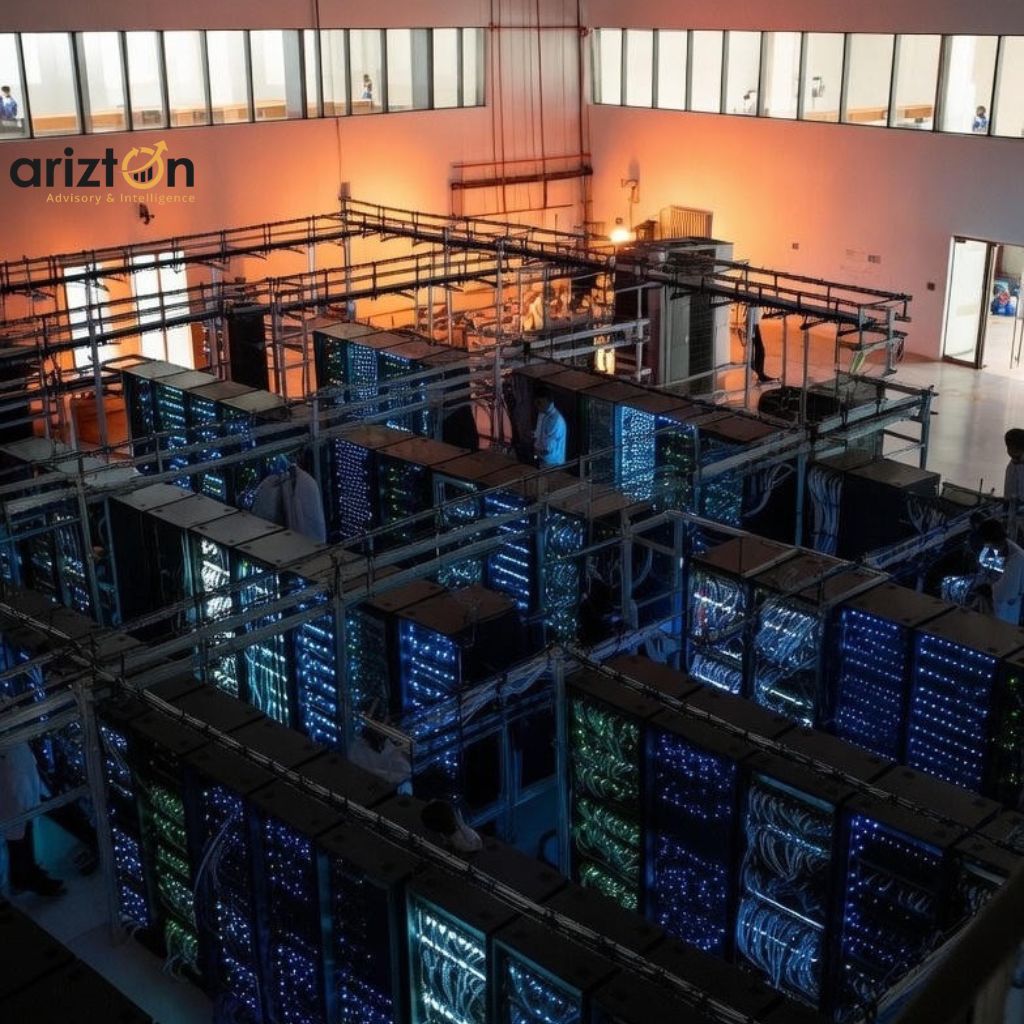
Is India ready to support AI-scale data centers, reliably, sustainably, and at cost?
The India data center market is entering a decisive scale phase as compute demand, rather than connectivity expansion, becomes the primary driver of infrastructure investment. Hyperscale cloud localization, AI workloads, and rising data sovereignty requirements are reshaping capacity planning, positioning India as a core digital infrastructure hub within Asia-Pacific.
Supported by government-backed digital initiatives, accelerating submarine and inland fiber deployments, and improving access to power and land, operators are shifting from isolated facilities toward long-duration, multi-campus data center developments. Against this backdrop, the India data center market, valued at USD 9.79 billion in 2025, is projected to reach USD 21.03 billion by 2031, growing at a CAGR of 13.59%, underpinned by sustained investments across hyperscale, colocation, and AI-ready infrastructure.
What’s Changing in the Market
- Capacity planning is shifting from reactive expansion to multi-year, multi-campus development strategies
- Power availability, energy security, and sustainability are now front-loaded considerations, not late-stage constraints
- AI workloads are driving higher rack densities and new cooling requirements, altering design economics
- Data center investment decisions are increasingly aligned with long-term compute localization policies
AI Adoption Is Redefining Data Center Demand Profiles
India’s accelerating AI adoption is reshaping how data center capacity is being designed, located, and financed. Since the launch of the National Strategy for AI in 2018, AI deployment has expanded across healthcare, agriculture, education, climate action, and enterprise operations.
Rising data volumes from BFSI, e-commerce, healthcare, media, and government platforms are increasing the need for secure, in-country data processing, while regulatory clarity under the Digital Personal Data Protection framework is strengthening confidence in local data storage and governance. This combination is driving heightened demand for AI-ready data centers across major metros and emerging hubs.
Low-Carbon Strategy Is Becoming an Investment Filter
India’s transition toward a low-carbon economy is increasingly shaping long-term data center investment strategies. The country’s commitment to achieve net-zero emissions by 2070 and expand renewable capacity to 500 GW by 2030 has created clear policy direction for infrastructure capital.
Operators are responding by securing renewable power through long-term PPAs to manage energy risk and support energy-intensive workloads. Sustainability, energy security, and cost stability are now becoming core infrastructure considerations, rather than optional add-ons.
Liquid Cooling Moves from Optional to Strategic
Higher rack densities driven by AI, machine learning, and high-performance computing are changing data center design assumptions in India. Conventional air-cooling systems are increasingly being supplemented, or replaced, by liquid cooling technologies.
Liquid cooling offers improved thermal efficiency, scalability, and energy optimization for high-density environments. As AI workloads expand, liquid-based cooling is expected to become a strategic enabler of AI-ready, energy-efficient data center infrastructure over the forecast period.
India’s Data Center Growth Is Concentrated in Key Urban Hubs
India’s data center capacity expansion remains concentrated in a few high-growth urban markets with strong digital infrastructure fundamentals.
- Mumbai, Navi Mumbai, and Pune (Maharashtra) form the country’s most mature data center cluster, supported by dense fiber networks, international connectivity, and favorable state policies.
- Noida (Uttar Pradesh) is emerging as a preferred hyperscale destination due to its industrial base and proximity to Delhi-NCR.
- Chennai (Tamil Nadu) continues to gain strategic importance as a global connectivity gateway driven by extensive submarine cable landings.
- Bengaluru (Karnataka) remains a strong enterprise and cloud-driven market, attracting sustained investments from domestic and global operators.
Outlook: Infrastructure Built for the Next Compute Cycle
The India data center market is moving beyond incremental capacity additions toward strategic, future-ready infrastructure development aligned with AI workloads, sustainability mandates, and long-term digital sovereignty requirements.
As compute localization accelerates and digital consumption deepens, India is expected to remain one of the most closely watched and actively invested data center markets globally through 2031.