U.S. Jewelry Market to Reach USD 114.55 Billion by 2031 as Metal Prices, Tariffs and Lab-Grown Diamonds Change Competitive Dynamics
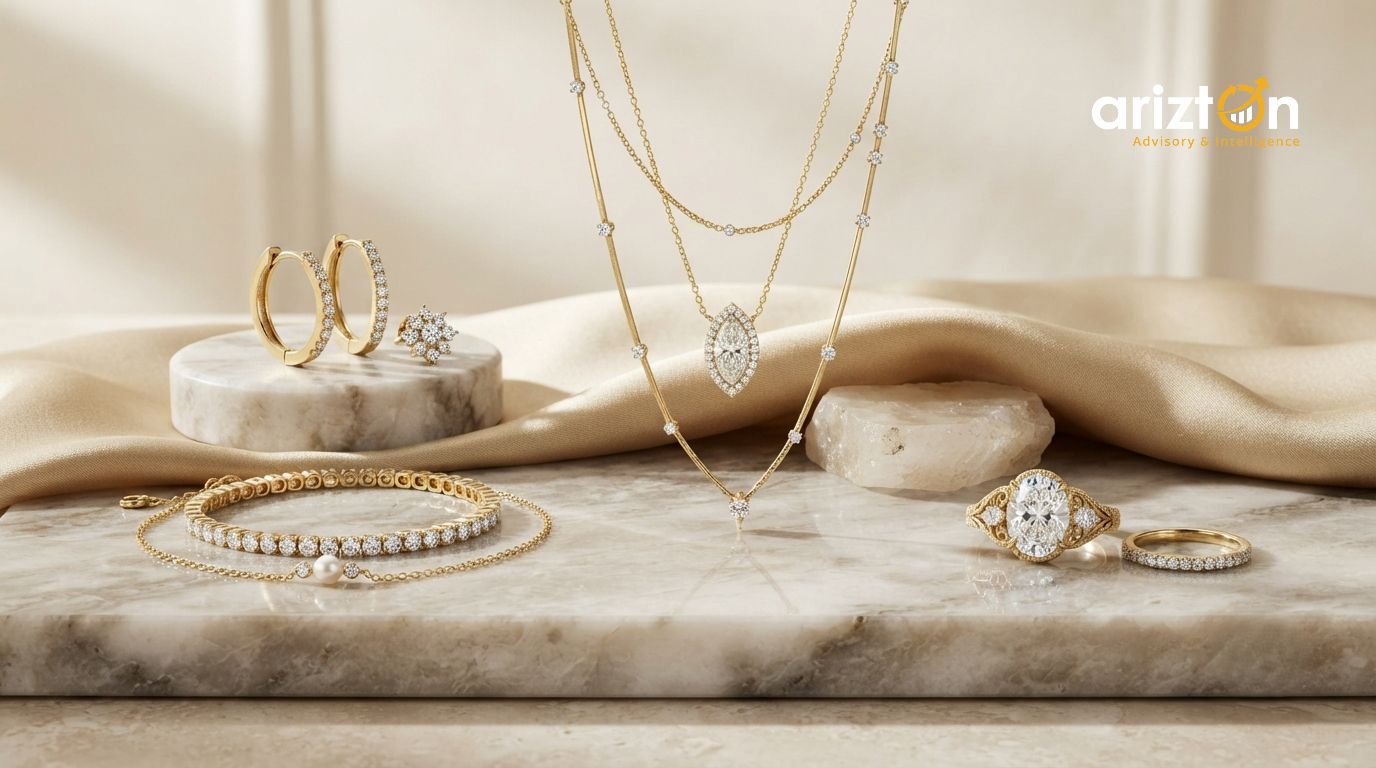
The U.S. jewelry market is expected to reach USD 114.55 billion by 2031, growing at a CAGR of 3.58%, according to Arizton's latest market analysis. The market growth is being influenced by changing precious metal prices, import costs, evolving consumer preferences, and shifts in product demand. These developments are affecting how companies compete across different jewelry categories and price segments.
Demand continues across personal expression, customization, everyday wear, bridal purchases, and occasion-led gifting. However, the market is also seeing important shifts in material preferences, with gold, silver, colored gemstones, and natural and lab-grown diamonds creating different opportunities across product categories. Arizton's analysis tracks these developments alongside market segmentation, regional demand, competitive developments, and the factors influencing the industry's growth through 2031.
Access the U.S. Jewelry Market Analysis: https://www.arizton.com/market-reports/us-jewelry-market
Key Highlights
- Market growth: The U.S. jewelry market is projected to expand from USD 92.78 billion in 2025 to USD 114.55 billion by 2031
- Gold cost pressure: A 272% increase in gold prices over a decade is reshaping jewelry production costs, retail pricing, and demand for lightweight designs.
- Silver sourcing exposure: Silver prices have climbed 291%, increasing cost uncertainty for manufacturers and retailers dependent on silver-based collections.
- Material concentration: Gold accounted for 45% of market share in 2025, making gold sourcing, inventory management, and price positioning central to market competitiveness.
- Diamond portfolio dynamics: Lab-grown diamonds accounted for 15% of independent jewelers' diamond sales by value in 2025, highlighting the pricing and revenue differences between natural and lab-grown offerings.
- Regional opportunity: The South represented approximately 37% of the U.S. jewelry market, making it a key region for retail expansion, showroom investment, and customer acquisition.
A Decade of Gold and Silver Price Movement
Gold
Gold prices increased from USD 1,118.04 per troy ounce in January 2016 to USD 4,156.08 in October 2026, a rise of approximately 272%. Prices reached a monthly high of USD 5,277.96 per troy ounce in February 2026 before declining. By October, gold was around 21% below its peak but remained significantly higher than a decade earlier.
This price shift is changing the economics of gold jewelry across the U.S. market. Higher gold costs make product weight, pricing strategy, and inventory valuation increasingly important to business performance. Manufacturers face different cost pressures depending on the gold content of their collections, while retailers must manage the price gap between premium solid-gold pieces and more accessible alternatives. Businesses with greater pricing flexibility and a broader range of product price points may have an advantage over those heavily dependent on high-weight gold collections.
Explore how gold price volatility is reshaping jewelry costs and pricing
Silver
Silver prices increased from USD 14.26 per troy ounce in January 2016 to USD 55.74 in October 2026, a gain of approximately 291%. Prices reached a monthly high of USD 93.80 per troy ounce in February 2026 before correcting by around 41% by October. Despite this decline, silver remains significantly more expensive than its pre-2025 levels.
These price movements are changing the cost dynamics of silver jewelry. Businesses with greater exposure to silver-based collections face a different cost structure from brands with portfolios concentrated in gold or other materials. Sharp fluctuations also create differences between the value of existing inventory and the cost of newly sourced stock. For manufacturers and retailers, this can influence product pricing and margins, while investors gain an important indicator of how commodity exposure may affect business performance.
See how silver price movements affect the U.S. jewelry market
Lab-Grown Diamonds: Volume Growth, Value Pressure
Lab-grown diamond jewelry sales increased in volume in 2025, but declining retail prices kept their value share at 15% of independent jewelers' diamond sales, compared with 85% for natural diamonds.
The difference between volume and value is commercially significant. Lab-grown diamonds are expanding access to diamond jewelry through lower retail price points, but higher unit sales have not translated into an equivalent share of sales value. For manufacturers and retailers, this creates two distinct market positions: natural diamonds continue to account for the larger share of sales value, while lab-grown diamonds compete through affordability and accessibility. The financial contribution of each category therefore depends not only on units sold but also on average selling prices and product positioning.
Compare the market dynamics of natural and lab-grown diamonds
Gold Remains the Leading Material, but Buying Behavior Is Shifting
Gold accounted for approximately 45% of the U.S. jewelry market in 2025. Its established position in fine jewelry, association with gifting and milestone occasions, and appeal among premium consumers continue to support demand.
However, higher gold prices are widening the price differences between product categories. Lightweight designs and smaller pieces provide more accessible solid-gold options, while gold-plated and gold-finished jewelry appeal to consumers seeking the appearance of gold at lower purchase prices. At the premium end, affluent consumers continue to support solid-gold jewelry, particularly products distinguished by craftsmanship, design, and material quality.
This creates distinct opportunities across the market. Premium brands continue to compete on material value, craftsmanship, and exclusivity, while accessible jewelry brands compete on design and affordability. For manufacturers and retailers, the balance between these segments has a direct bearing on product positioning, average selling prices, and the customer groups they can reach.
Tariffs and Regulation Add to Cost and Complexity
Tariffs and changing regulatory requirements created significant challenges for the U.S. jewelry market in 2025, increasing import costs and adding complexity to sourcing, pricing, inventory planning, and product compliance. Additional import duties, country-specific tariff rates, and the removal of duty-free de minimis treatment increased pressure on traditional manufacturing and direct-to-consumer shipping models.
Jewelry companies also faced growing requirements for supplier documentation, diamond provenance, and accurate product descriptions, particularly for laboratory-created and simulated diamonds. These developments have made country of origin, supplier relationships, and distribution routes increasingly relevant to the final cost of products entering the U.S. market.
Pandora illustrates the supply chain implications. The company faced potential exposure to a 36% U.S. import tariff on products manufactured in Thailand. According to Rapaport, Pandora began shipping some products directly to markets such as Canada and Latin America to reduce the risk of double taxation. The development highlights how tariff uncertainty can influence distribution decisions and the economics of international jewelry operations.
For manufacturers, brands, and distributors with international supply chains, differences in import duties, country of origin, shipping routes, and compliance requirements can create significant variations in landed costs. These factors influence the relative competitiveness of sourcing locations and the margins available to businesses serving the U.S. market.
Regional Analysis: The South Anchors U.S. Demand
Regional Analysis: The South Anchors U.S. Demand
Southern Region: The South accounted for approximately 37% of the U.S. jewelry market in 2025, making it the largest regional market. Population growth, expanding metropolitan areas, and diverse consumer demographics support demand across fine jewelry, bridal purchases, luxury shopping, and gifting. The region spans the Southeast and Southwest, where different consumer profiles and retail developments are shaping local competition.
Southeast: Florida is an important market for fine jewelry, bridal purchases, luxury shopping, and gifting. North Carolina is attracting investment in bridal and fine jewelry retail, while Atlanta supports contemporary retail concepts and personalized shopping experiences. Recent developments include Diamond Direct's showroom construction near Raleigh's Crabtree Valley Mall in February 2025, and Zales' launch of The Edit concept in Atlanta in January 2026, with plans to expand into Florida.
Southwest: Texas serves as a major fine jewelry and bridal retail hub. Growing metropolitan markets and an established jewelry ecosystem support demand for engagement rings, fine jewelry, and contemporary designs. Brilliant Earth has expanded its showroom presence across major Texas metropolitan areas, using appointment-based physical retail to complement digital customer acquisition. Houston also has a strong independent jewelry network, with more than 100 independent jewelers, diamond dealers, and custom designers in its Jewelry District.
The South's market concentration makes it an important region for retail competition and showroom investment. However, opportunities vary across metropolitan markets, with local demographics, purchasing preferences, and established retail networks influencing the potential for expansion.
Identify regional demand patterns and retail expansion opportunities across the U.S. jewelry market
What This Means for Stakeholders
Manufacturers: The increase in gold and silver prices creates different cost pressures depending on product material and weight. Manufacturers with substantial exposure to precious metals face greater sensitivity to commodity movements, while businesses serving multiple price segments have different opportunities to manage product costs and customer affordability. Tariff exposure adds another layer of variation to manufacturing economics.
Retailers and Jewelry Brands: Changing material costs and consumer preferences are creating a wider divide between premium and accessible jewelry categories. Solid gold, lightweight gold, gold-plated products, and natural and lab-grown diamonds serve different price segments and contribute differently to sales value. The growth of showroom concepts in the South also highlights the importance of physical retail in markets with established jewelry demand.
Suppliers and Distributors: Precious metal volatility and changing import requirements are influencing the economics of material sourcing and product distribution. Supplier competitiveness increasingly depends on material availability, sourcing origin, landed costs, and the ability to serve manufacturers and retailers across different product categories.
Investors: The projectedmarket value through 2031 presents opportunities across established and emerging jewelry categories. However, market growth alone does not determine business performance. Exposure to commodity prices, dependence on particular product categories, import costs, and the ability to maintain margins across different customer segments are important factors in assessing competitive strength.
About Us:
Founded in 2017, Arizton Advisory & Intelligence delivers data-driven market research and strategic consulting that empowers clients to make informed decisions and drive growth. Combining quantitative and qualitative insights, we provide in-depth analysis across industries including Agriculture, Consumer Goods, Technology, Automotive, Healthcare, Data Centers, and Logistics. Recognized by top-tier media, our expert team transforms complex market data into actionable strategies, helping clients anticipate trends, seize opportunities, and stay ahead of the competition.
Contact Us:
Mail: [email protected]
Contact Us: https://www.arizton.com/contact-us
Website: https://www.arizton.com/