How the Mortgage Lock-In Effect Is Rewiring the $544 Billion U.S. Home Improvement Market
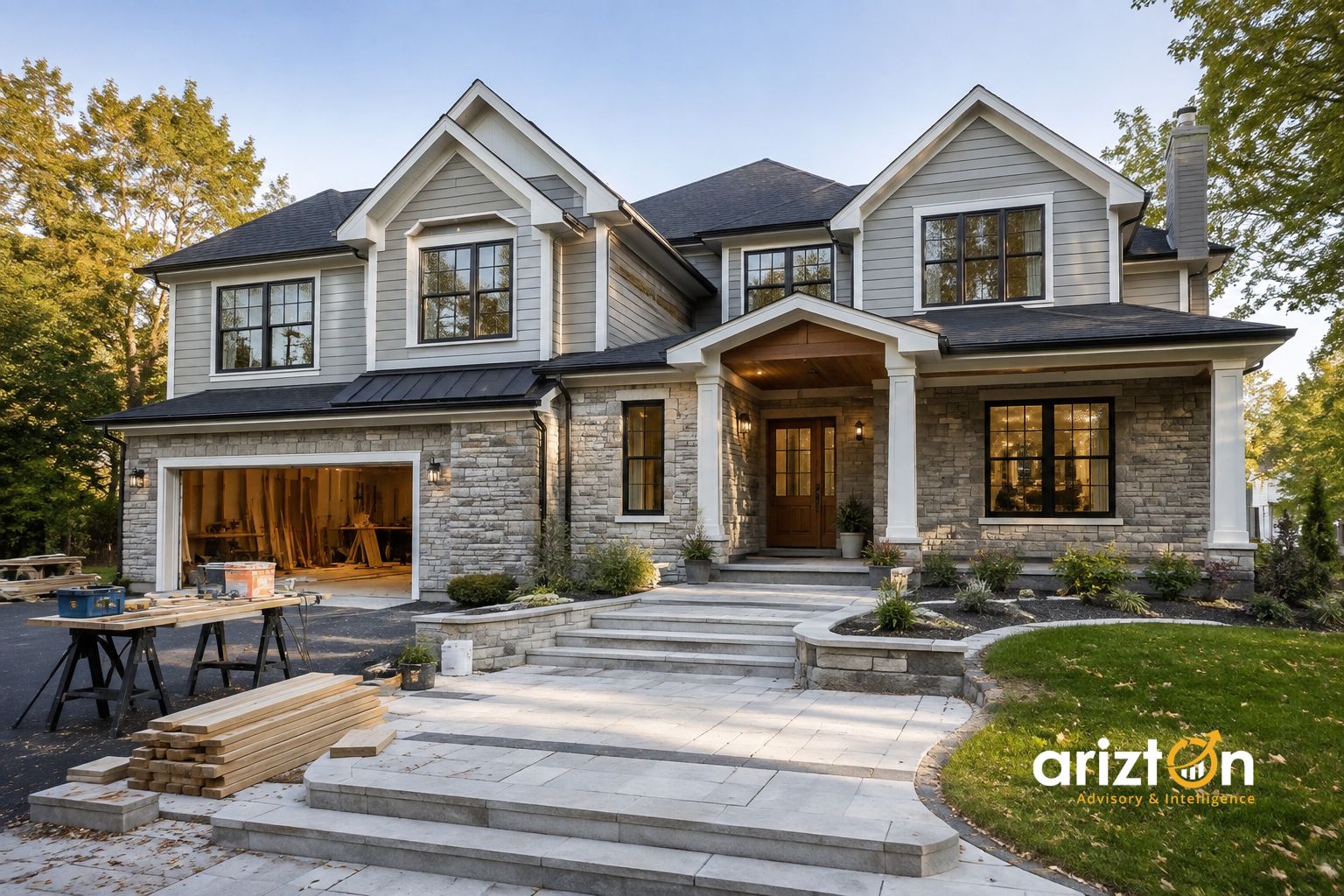
According to Arizton's latest research, the U.S. home improvement and remodeling market was valued at USD 544.04 billion in 2025 and is projected to reach USD 641.88 billion by 2031, growing at a CAGR of 2.79%. A key shift behind the market's evolution is the growing number of homeowners choosing to renovate rather than relocate. Elevated mortgage rates have made moving significantly more expensive for households holding low-rate mortgages, reinforcing investment in the homes they already own.
This shift is extending homeownership cycles and changing the nature of renovation demand. Rather than focusing primarily on discretionary upgrades, homeowners are increasingly investing in projects that improve functionality, accessibility, efficiency, maintenance, and long-term property value. An older housing stock, changing household needs, and strong homeowner equity are further strengthening this transition.
Get deeper insights into the forces reshaping the U.S. home improvement market.
Why Homeowners Are Choosing to Renovate Instead of Move
At the center of this shift is the mortgage rate lock-in effect. Millions of homeowners secured mortgage rates below 4% during 2020–2021. With prevailing rates of roughly 6–7%, purchasing a new home has become significantly less attractive, prompting many homeowners to improve the properties they already own.
The shift is reflected in homeowner renovation decisions. A Redfin-commissioned Ipsos survey of 4,000 U.S. residents found that:
- 65% of recent renovators upgraded their existing homes instead of moving.
- 71% of homeowners planning renovations intended to remodel rather than purchase a new home.
High homeowner equity and the growing need to upgrade older properties are further reinforcing this trend. Lowe's CEO Marvin Ellison has also identified these factors as important forces supporting renovation demand, as homeowners increasingly choose to remodel rather than move amid the mortgage lock-in effect.
Read More: https://www.arizton.com/market-reports/united-states-home-improvement-market
Aging-in-Place Is Expanding Long-Term Renovation Demand
Aging-in-place has become an increasingly important source of demand within the U.S. home improvement and remodeling market. Older homeowners are choosing to adapt their existing homes for long-term independent living rather than downsize or move to assisted living facilities.
According to NAHB, adults aged 65 and older account for nearly one in five Americans and own approximately one-third of all owner-occupied homes, while around two-thirds of baby boomers are mortgage-free. These demographic and financial factors provide many older homeowners with greater flexibility to invest in accessibility upgrades and major home modifications.
Rising healthcare and senior living costs, substantial home equity, and the continued mortgage lock-in effect are further strengthening this shift. Longer homeownership cycles are expanding demand for upgrades that improve accessibility, functionality, and long-term livability.
Changing Household Structures Are Driving Home Adaptation
Housing affordability pressures and elevated rental rates are also reshaping household structures. Rising living costs and childcare expenses have led more adult children to remain with or return to their parents' homes, placing additional demands on existing residential space.
This is creating a broader need for home adaptation. Renovation is increasingly being used to accommodate changing family structures, improve functionality, and support households occupying the same property for longer periods.
The shift broadens the role of home improvement beyond aesthetics. Investment is increasingly directed toward making existing homes more suitable for evolving household and lifestyle requirements.
Repair and Maintenance Provide a Resilient Demand Base
Repair and maintenance continue to form a resilient foundation for the U.S. home improvement and remodeling market. Essential activities, including plumbing, HVAC servicing, electrical repairs, and roofing repairs, remain necessary to preserve the safety, functionality, and condition of existing homes.
As homeowners extend their tenure in current properties, maintenance requirements across existing building systems become increasingly significant. These investments are recurring and closely linked to preserving the performance, safety, and long-term value of residential properties.
The combination of an older housing stock and longer homeownership cycles is reinforcing repair and maintenance as a consistent source of market demand.
What This Means for the Market
The mortgage lock-in effect is reshaping the relationship between housing mobility and home improvement. As homeowners remain in their existing properties for longer, older homes, changing household structures, and long-term living requirements are creating stronger incentives to invest.
This is shifting demand toward long-term remodeling, accessibility upgrades, functionality improvements, and essential repair and maintenance.
For the U.S. home improvement and remodeling industry, the implications are clear: as homeowners stay longer, the existing housing stock becomes an increasingly important source of investment. Rather than moving to meet changing needs, households are adapting the homes they already own.
The future of the market will be shaped not simply by how many homes are bought and sold, but by how long homeowners stay, and how much they invest while they remain.
Get the complete industry analysis, regional outlook, growth opportunities, price trends, competitive landscape, and market forecast for 2026–2031: Access the full reporthttps://www.arizton.com/market-reports/united-states-home-improvement-market
About Arizton Advisory & Intelligence:
Founded in 2017, Arizton Advisory & Intelligence delivers data-driven market research and strategic consulting that empowers clients to make informed decisions and drive growth. Combining quantitative and qualitative insights, we provide in-depth analysis across industries including Agriculture, Consumer Goods, Technology, Automotive, Healthcare, Data Centers, and Logistics. Recognized by top-tier media, our expert team transforms complex market data into actionable strategies, helping clients anticipate trends, seize opportunities, and stay ahead of the competition.
Contact Us
Mail: [email protected]
Contact Us: https://www.arizton.com/contact-us
Website: https://www.arizton.com/