Precision Parts Industry to Add $376.96 Billion in Market Value by 2031
Why Precision Parts Are Becoming a Strategic Industry to Watch
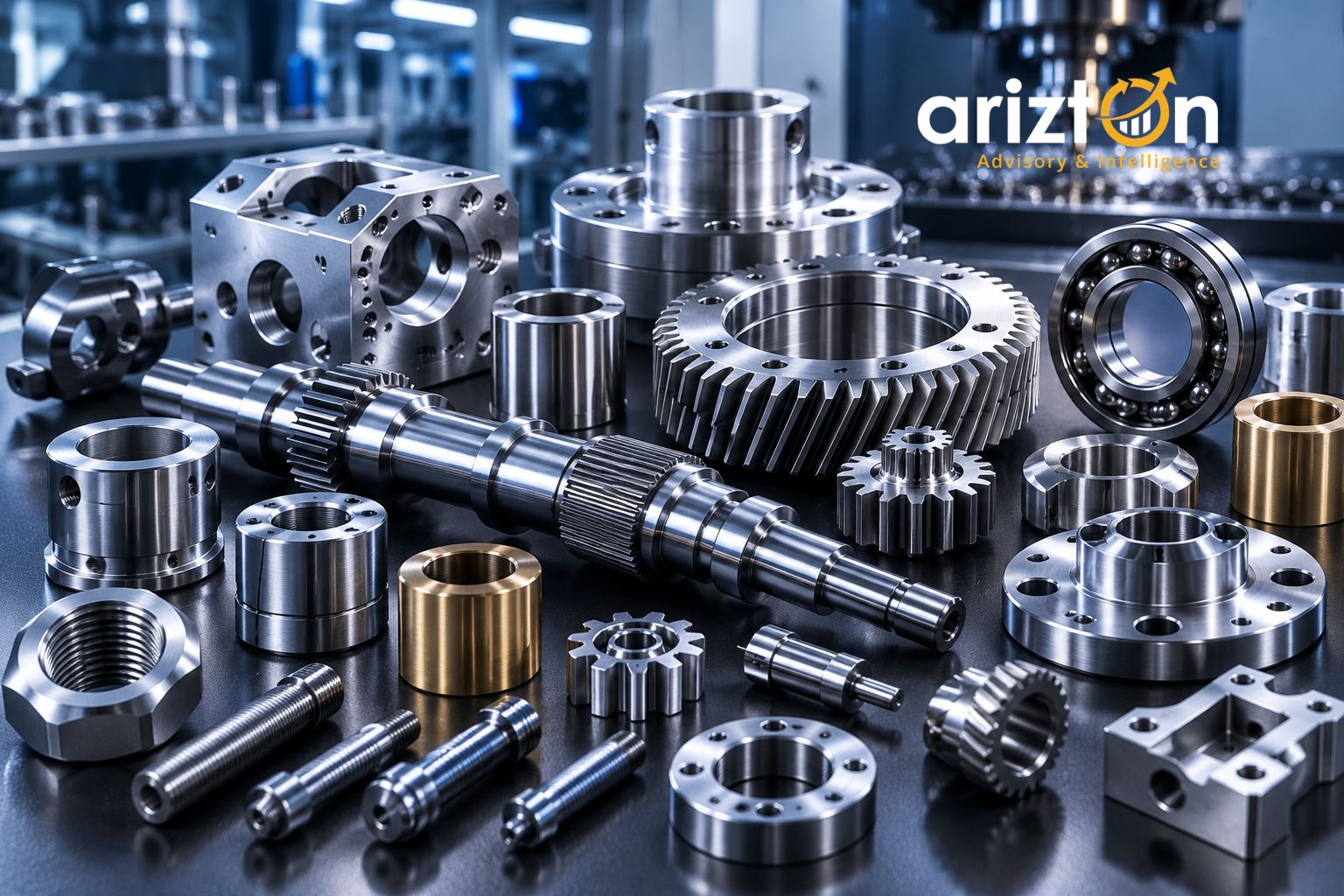
The precision parts market is shifting from competing on manufacturing scale to competing on engineering capability. As demand grows across electric vehicles, aerospace, semiconductors, medical devices, and industrial equipment, OEMs are looking for suppliers that can consistently deliver complex, high-precision components while meeting strict quality and reliability standards. In response, manufacturers are investing in automation, advanced machining, capacity expansion, and strategic partnerships to meet evolving customer requirements and support high-value applications.
At the same time, OEM sourcing strategies are evolving. Supply chain resilience, supplier diversification, and regional manufacturing have become key priorities, creating new opportunities for precision component manufacturers with strong technical expertise and long-term customer relationships. Companies serving high-growth sectors such as EVs, aerospace & defense, semiconductor manufacturing, and data center infrastructure are expected to benefit the most from this shift.
According to Arizton, the global precision parts market size was valued at USD 264.82 billion in 2025 and is projected to reach USD 376.96 billion by 2031, growing at a CAGR of 6.06% during the forecast period.
To Know More, Click: https://www.arizton.com/market-reports/precision-parts-market-size
Five Industries Driving the Next Phase of Precision Parts Growth
While automotive remains the largest end-user, the industry's growth story has become much broader.
Industrial machinery, aerospace & defense, electronics & semiconductors, medical devices, and energy are all increasing their reliance on precision-engineered components. Semiconductor fabrication equipment, AI data center infrastructure, advanced factory automation, surgical instruments, renewable energy systems, and defense modernization programs are creating sustained demand for manufacturers capable of producing increasingly complex, high-tolerance components. This diversification is strengthening the market by reducing dependence on a single industry while creating new opportunities across multiple manufacturing ecosystems.
EV Manufacturing Is Raising Precision Requirements
The global shift toward electric mobility is redefining component requirements across the automotive industry. Unlike conventional vehicles, EVs require highly engineered parts for battery systems, e-axles, electric powertrains, thermal management, and power electronics, all of which demand tighter tolerances and higher manufacturing precision.
To meet these evolving requirements, manufacturers are expanding advanced machining capabilities while strengthening partnerships with automotive OEMs. In January 2025, Linamar announced a USD 1.1 billion investment in Ontario to expand production of EV powertrain, battery, e-axle, and hydrogen fuel-cell components. Similar investments are emerging across aerospace, where next-generation aircraft and defense programs increasingly depend on lightweight, high-performance precision components.
AI Is Transforming How Precision Components Are Sourced
Artificial intelligence is changing how precision components are sourced, quoted, and manufactured.
OEMs increasingly expect instant quotations, automated manufacturability analysis, transparent pricing, and shorter lead times. In response, manufacturers are integrating AI into quoting, supplier matching, production planning, and engineering workflows to improve speed and customer experience. One example is Protolabs' launch of ProDesk in February 2026, an AI-enabled platform that delivers real-time quoting and AI-powered manufacturability analysis for CNC machining, injection molding, and 3D printing. As digital procurement becomes standard, manufacturers combining engineering expertise with AI-enabled sourcing capabilities are likely to strengthen their competitive position.
The Aftermarket Is Becoming a Long-Term Growth Opportunity
One of the industry's most resilient opportunities lies beyond new equipment production.
Aircraft, industrial machinery, commercial vehicles, and heavy equipment continue to require inspections, maintenance, repairs, and replacement components throughout their operating lives. This creates recurring demand for precision-engineered parts regardless of short-term production cycles. Recognizing this shift, manufacturers are expanding spare parts production, predictive maintenance solutions, and lifecycle services. SKF's acquisition of G Tech Instruments in March 2026 reflects the growing focus on digitally enabled reliability solutions that support customers long after equipment leaves the factory.
Why Asia-Pacific Continues to Outperform in Precision Manufacturing
Asia-Pacific's leadership in precision manufacturing is increasingly built on capability rather than cost.
Japan and South Korea continue to lead in ultra-precision engineering, China provides unmatched manufacturing scale, and India is rapidly strengthening its role as a global production hub. At the same time, government investments in semiconductors, electronics, aerospace, defense, and electric vehicle manufacturing are accelerating demand for high-value precision components across the region. This combination of engineering expertise, industrial investment, and integrated supply chains continues to strengthen Asia-Pacific's leadership in precision manufacturing.
Top Precision Parts Manufacturers and Suppliers to Watch in 2026
Competition in the precision parts market is increasingly defined by advanced manufacturing capabilities, supply chain resilience, and long-term OEM relationships rather than production scale alone.
Recent developments highlight how leading manufacturers are positioning themselves:
- Barnes completed the separation of its Aerospace and Industrial Solutions businesses to sharpen strategic focus.
- GE Aerospace awarded Barnes Aerospace a six-year contract to manufacture components for the T700/CT7 engine family, reinforcing resilient aerospace supply chains.
- Bharat Forge inaugurated an OEM-approved Landing Gear Components Machining Facility in Pune in partnership with Liebherr-Aerospace & Transportation SAS, strengthening India's position in global aerospace manufacturing.
Why This Matters Through 2031
The precision parts market is becoming increasingly technology-driven, with OEMs placing greater emphasis on engineering expertise, manufacturing precision, and long-term supply partnerships. As demand expands across EVs, aerospace, semiconductors, and industrial equipment, manufacturers that invest in advanced capabilities, automation, and lifecycle support will be better positioned to capture future opportunities.
For suppliers, OEMs, and investors, the market's direction is clear: long-term success will increasingly depend on engineering capability, manufacturing excellence, and the ability to support the evolving needs of high-growth industries.
About Us:
Founded in 2017, Arizton Advisory & Intelligence delivers data-driven market research and strategic consulting that empowers clients to make informed decisions and drive growth. Combining quantitative and qualitative insights, we provide in-depth analysis across industries including Agriculture, Consumer Goods, Technology, Automotive, Healthcare, Data Centers, and Logistics. Recognized by top-tier media, our expert team transforms complex market data into actionable strategies, helping clients anticipate trends, seize opportunities, and stay ahead of the competition.
Contact Us
Mail: [email protected]
Contact Us: https://www.arizton.com/contact-us
Website: https://www.arizton.com/