Beyond the Canvas Tent: Decoding the $1.43 Billion U.S. Glamping Revolution
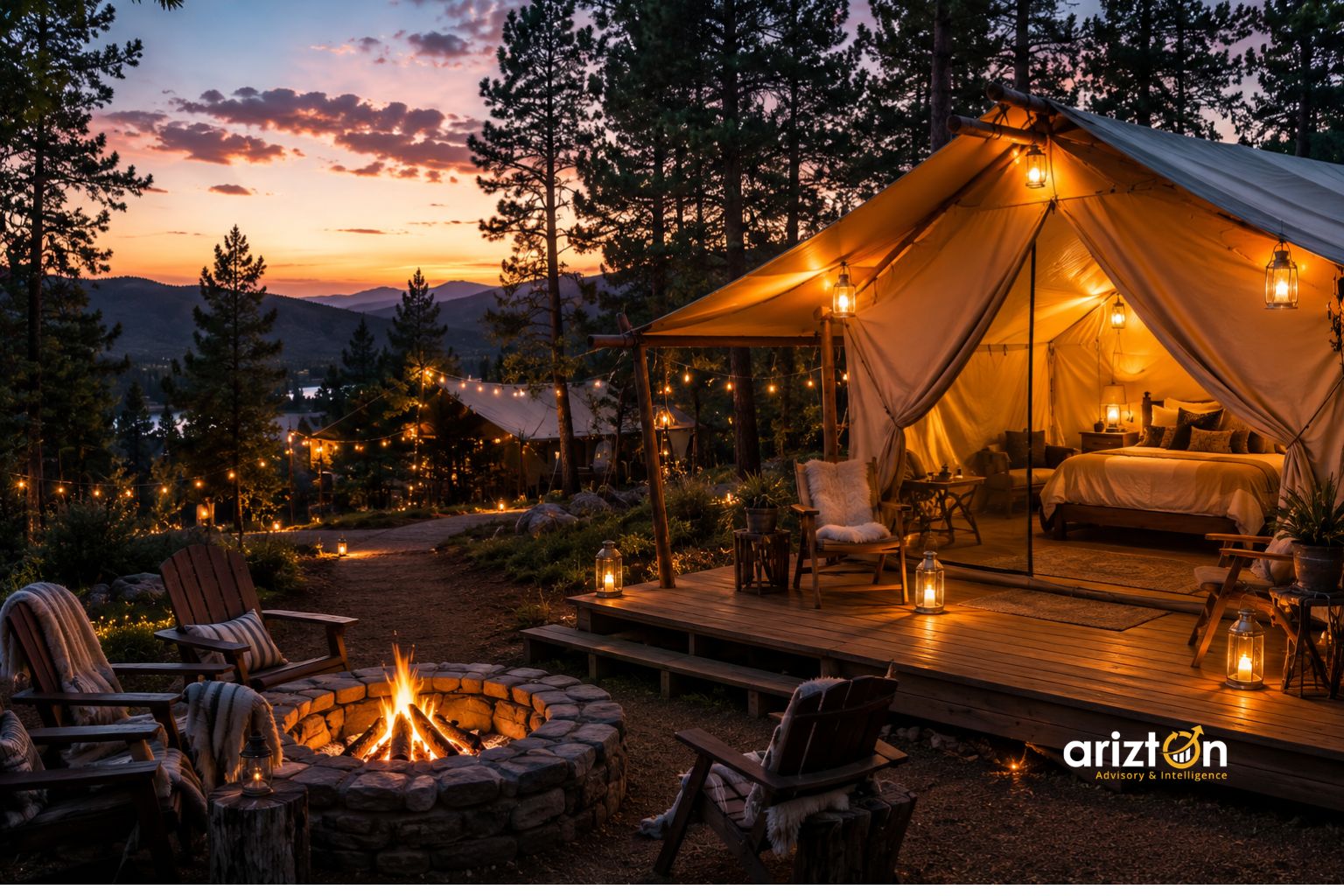
The era of viewing glamping as merely a novelty for eco-conscious weekend warriors is over. What began as an experimental blend of wilderness access and hotel-style comfort has hardened into one of the most dynamic, high-growth segments of the U.S. hospitality sector.
According to recent market analysis, the U.S. glamping market size was valued at USD 746.75 million in 2025 and is projected to reach USD 1.43 billion by 2031, expanding at a robust Compound Annual Growth Rate (CAGR) of 11.49%.
This momentum marks a fundamental shift in how Americans consume outdoor travel. The sector is maturing from seasonal, makeshift campsites into institutional-grade, year-round destinations. Driven by changing consumer priorities, technological discovery models, and institutional capital, glamping is no longer an alternative to traditional lodging it is setting the benchmark for experience-led travel.
1. From Tents to Climate-Ready Pods: What Is Driving Glamping's Architectural Evolution?
For years, the primary constraint of glamping was seasonality. Traditional canvas safari tents delivered a low barrier-to-entry for operators, but they left revenues vulnerable to winter freezes, summer heatwaves, and shoulder-season slumps.
Today, the market is undergoing a structural transition toward permanent and semi-permanent structures:
- Climate-Conditioned Cabins & Pods: In 2025, cabins accounted for nearly 49% of the U.S. glamping market share. Modern cabins offer fully insulated envelopes, radiant floor heating, integrated plumbing, and HVAC systems, allowing sites to operate 365 days a year.
- Geodesic Domes & Yurts: Combining striking visual appeal with high structural integrity against wind and snow loads, luxury domes and modern yurts command premium daily rates while delivering year-round comfort.
- Treehouses & Canopy Suites: Offering elevated daily rates, treehouse accommodations represent one of the fastest-growing architectural formats, catering heavily to couples and milestone celebratory travel.
The Operational Impact
By deploying year-round units, glamping operators have bridged the gap between traditional campsites and boutique hotels. Average occupancy rates for U.S. glamping properties reached 50–65% in 2025, closing in on the historical hotel industry baseline of ~63%. Operating year-round stabilizes cash flow, improves staff retention, and significantly boosts lifetime customer value.
How Is AI Reshaping Digital Discovery and the Glamping Booking Funnel?
The way consumers find and book outdoor lodging has fundamentally changed. Traditional search engine optimization (SEO) built around keywords like "best camping near me" is giving way to AI-driven travel discovery and visual search engines.
AI Visibility as a Competitive Advantage
Travelers are increasingly using generative AI platforms and intelligent assistants to curate itineraries based on complex, multi-layered criteria (e.g., "Find a heated dome site within a 3-hour drive of Denver that offers stargazing setups and dog-friendly trails").
Operators that structure their digital presence, schema markup, and third-party distribution for AI search engines gain disproportionate booking volume. Conversely, sites relying solely on legacy listing directories risk invisibility in the automated recommendation era.
The Shareability Engine
Social media platforms continue to act as primary discovery engines, particularly for Millennials and Gen Z (who together account for over 40% of the glamping customer base). Glamping properties are engineered specifically for visual impact: floor-to-ceiling glass walls, outdoor cedar soaking tubs, open-air fire pits, and framed views of natural landmarks. This aesthetic intentionality generates organic, user-generated content that drastically reduces customer acquisition costs (CAC).
To Know more: https://www.arizton.com/market-reports/united-states-glamping-market
What Macro Drivers Are Shaping the Future of U.S. Outdoor Lodging?
The trajectory toward $1.43 billion by 2031 is propelled by several structural shifts in consumer behavior and workforce demographics:
A. Experience-Driven Travel & Curated Programming
Modern consumers prioritize experiences over material goods. Glamping sites succeed because they don't just sell a bed; they sell an immersive environment. Leading operators curate hyper-local activities directly on-site:
- Guided night-sky photography and astronomer-led stargazing sessions.
- Sound baths, forest bathing, and wilderness yoga decks.
- Farm-to-table dining experiences featuring hyper-local ingredients and regional craft beverages.
B. The Remote Work Shift & Digital Nomads
The permanent integration of hybrid and remote work policies has erased the traditional boundary between work and leisure. Digital nomads and untethered professionals seek destinations that feature:
- Enterprise-grade satellite internet (e.g., Starlink) in secluded natural environments.
- Dedicated ergonomic workspaces built into cabins and pods.
- Mid-week stay packages that turn a standard Tuesday–Thursday into a nature-infused work retreat.
This shift has significantly flattened the weekday-versus-weekend occupancy curve that historically plagued seasonal resorts.
C. Regenerative and Eco-Conscious Tourism
Today’s traveller is hyper-aware of environmental footprint. Glamping intrinsically possesses a smaller carbon footprint than traditional high-rise hotel development:
- Off-Grid Capabilities: Solar arrays, rainwater harvesting systems, and composting toilets allow operators to build in sensitive, remote landscapes without invasive infrastructure.
- Low-Impact Construction: Prefabricated pods and elevated timber foundations preserve root systems, wildlife corridors, and natural topography.
Properties that actively measure, minimize, and communicate their environmental metrics win loyalty among high-value travellers who demand authentic sustainability over corporate greenwashing.
For Sample: https://www.arizton.com/request-sample/5180
Is the Glamping Market Entering an Era of Institutional Maturity?
Historically dominated by mom-and-pop operators and independent landowners, the U.S. glamping landscape is entering an era of institutional maturity. Over the last decade, the operating blueprint for outdoor hospitality has been fundamentally rewritten. Where the market once relied on basic seasonal bell tents running four to six months a year, modern developments now deploy insulated geodesic domes, custom winterized cabins, and year-round pods capable of operating across all 12 months.
This maturation extends far beyond physical architecture. Guest experience and back-of-house operations have evolved from basic websites with manual email bookings to automated check-ins, Starlink connectivity, and AI-driven travel discovery. Consequently, the industry's financial engine has shifted from bootstrapped local land equity toward private equity funds, institutional REITs, and major hotel brand partnerships.
Global hospitality leaders like Marriott, Hilton, and Hyatt alongside specialized outdoor platforms such as Under Canvas, AutoCamp, and Collective Retreats are aggressively expanding their footprints. Through strategic brand affiliations, soft-brand integrations, and dedicated outdoor investment funds, institutional capital is standardizing amenity suites, safety protocols, and loyalty program integrations across the market. While this institutionalization elevates the consumer experience, it also raises the bar for new entrants, demanding professional site planning, substantial capital expenditure, and sophisticated yield-management technology.
Strategic Outlook: Capitalizing on the Next Decade of Outdoor Growth
As the U.S. glamping market charges toward the USD1.43 billion mark by 2031, successful execution will depend on three operational imperatives:
- Invest in All-Weather Versatility: Transitioning away from single-season setups toward winterized, climate-controlled units is mandatory for long-term viability.
- Optimize for Natural Discovery Algorithms: Ensure site assets, amenities, and experiential offerings are structured for AI travel aggregators and conversational search platforms.
- Anchor Development in Local Culture & Ecosystems: The properties that command long-term pricing power will be those that protect their surrounding natural environment while offering authentic connection to local communities.
Glamping has officially shed its label as a fleeting travel trend. It represents a permanent evolution in global travel preferences a segment where comfort, tech-enabled seamlessness, and raw natural immersion converge to define the future of modern hospitality.