The Industrial Laser Market Is Changing—And Most Companies Are Missing It
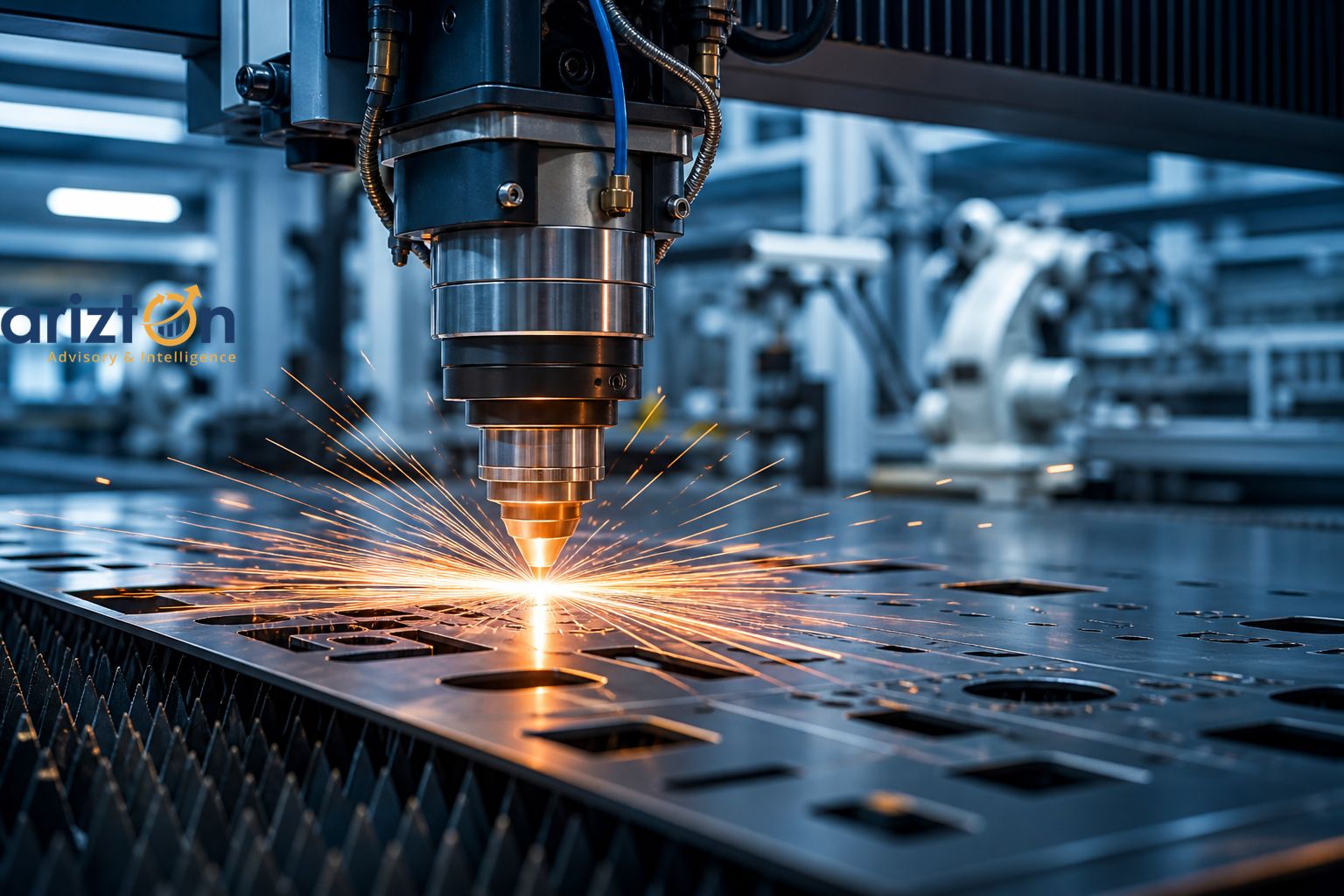
The global industrial laser market is expected to grow from $7.8 billion in 2025 to $10.9 billion by 2031, growing at a CAGR of 5.8% annually
Though it looks nothing dramatic at first glance. But when you look deeper, the story is different. A big part of the growth is coming from semiconductors and electronics.
As chip manufacturing becomes more complex, the need for precision increases. That’s where laser systems come in—they’re being used more in processing, drilling, and fine cutting.
There’s also a pipeline effect here. With new semiconductor fabs expected to come up, demand for these systems is likely to stay strong over the next few years. According to SEMI, about 18 semiconductor fabs are set to start construction in 2025, and many of these advanced facilities should be operational by 2026–2027. As these projects move forward, demand for laser processing, especially in packaging, marking, and microfabrication, is likely to increase.
Battery production, in particular, relies heavily on laser systems—for welding, cutting, and joining. As EV production scales up, so does the need for reliable and precise laser processing. The IEA reports global EV battery demand exceeded 750 GWh in 2023, with US manufacturing capacity reaching over 200 GWh in 2024 and nearly 700 GWh under construction, all are requiring laser-based welding, electrode cutting, and copper processing.
Manufacturers are focusing on:
- Thick-material throughput and automation readiness in cutting
- Higher productivity and consistent output in heavy-duty fabrication
- Beam-delivery flexibility, reflective-metal capability, and repeatable process quality in welding.
More than half of the demand comes from APAC
APAC plays a major role in shaing the demand due to
- Strong manufacturing activity
- Growth in electronics and semiconductor production
- Ongoing investments in automation
Not About the Market Size Anymore:
A lot of analysis stops at the global industrial laser market size.
But what really matters is:
- Where the real opportunities lie
- Which regions are seeing more investment
- Which types of lasers are in demand now—and likely to be in demand going forward
- Which companies are already gaining ground in the industrial laser market
Without this level of detail, it’s easy to misread where the real opportunities are.
The full report on industrial laser goes deeper into:
- Detailed forecasts (2026–2031)
- Segment-level breakdowns
- Company profiles
- Regional demand across multiple countries
If you want, you can take a look here:
https://www.arizton.com/market-reports/industrial-laser-market
You can also request a sample to see the data and structure before going further.
Reach us at [email protected].