Are Lithium-Ion Batteries Finally Ready to Replace the Gas Engine?
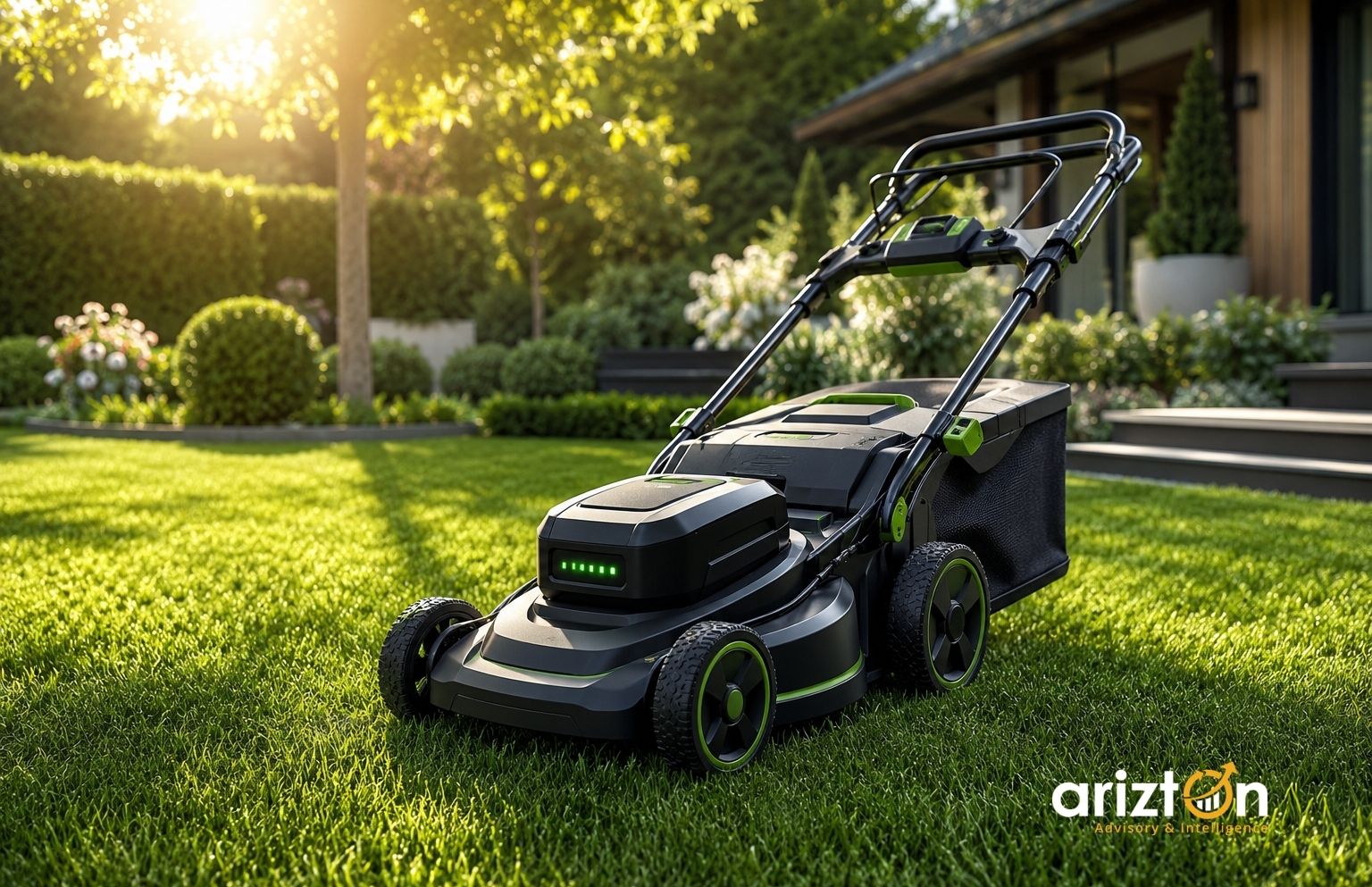
For decades, the smell of gasoline and the pull-start cord were as much a part of lawn care as the grass itself. That's changing quickly. A wave of quieter, cleaner, and increasingly powerful cordless equipment is displacing the gas mower in backyards, golf courses, and commercial landscaping fleets alike, and the shift is showing up directly in market data.
How Big Is the Battery-Powered Lawn Mowers Market?
The global battery-powered lawn mowers market was valued at USD 10.5 billion in 2025 and is projected to reach USD 19.89 billion by 2031, growing at a CAGR of 11.24%. That pace of expansion reflects a broader battery powered lawn mower market size story: homeowners, landscaping contractors, municipalities, and commercial property managers are all moving away from gasoline equipment at once, rather than one segment leading the charge.
By volume, the market is expected to hit 20,950 thousand units by 2031. North America leads in unit terms thanks to strong residential lawn ownership and established landscaping services, while Europe's volume is driven by regulation and carbon-neutral commitments, and Asia-Pacific is catching up fast on the back of urbanization and rising disposable incomes.
Key Insight: The market's growth in unit volume — not just revenue — signals that cordless mowers have moved from a premium niche into mainstream replacement territory for gas equipment.
Know More: https://www.arizton.com/market-reports/battery-powered-lawn-mowers-market
Why Are Homeowners and Landscapers Switching from Gas to Electric Mowers?
The gas vs battery lawn mowers debate has largely settled in favor of cordless equipment for most residential and light-commercial use cases. Battery mowers eliminate the gasoline, oil changes, spark plugs, and pull cords that come with internal combustion engines, while delivering zero direct emissions and noticeably lower operating noise. For contractors dealing with tightening labor pools, the appeal goes beyond emissions — push-button starts and lighter maintenance schedules mean crews spend less time on upkeep and more time mowing.
That said, the battery vs gas mower comparison isn't entirely one-sided. Battery-powered mowers still typically carry a higher upfront price than a comparable gasoline model, particularly once a high-capacity battery and dedicated charger are factored in — a real barrier for cost-sensitive buyers. Battery degradation over repeated charge cycles is another long-term consideration, especially for commercial users who run their equipment daily through the mowing season; replacing a high-voltage 56V, 60V, or 80V pack can be a meaningful secondary expense.
Bottom Line: The switch from gas to electric mower ownership pays off fastest for high-utilization users — landscapers and municipalities — who recover the higher purchase price through lower fuel, maintenance, and labor costs over the equipment's life.
What's Powering the Shift? Lithium-Ion Battery Technology in Outdoor Power Equipment
Continuous improvement in lithium-ion battery technology is the single biggest enabler behind this transition. Energy density, charging speed, thermal management, and raw power output have all advanced enough that high-voltage platforms — roughly 40V to 80V and above — now serve everything from push mowers to zero-turn commercial units. That range is what allows manufacturers to credibly market cordless equipment for larger residential lawns and demanding professional landscaping jobs, not just small suburban yards.
Battery technology in outdoor power equipment has also unlocked interchangeable battery ecosystems, where a single battery platform powers mowers, trimmers, blowers, and chainsaws — a design choice that's becoming a major purchase driver in its own right, since it reduces the number of chargers and battery types a household or crew needs to manage.
Are Chervon and Techtronic Industries Reshaping the Cordless Mower Landscape?
Two names come up constantly in searches evaluating cordless mower manufacturers: Chervon and Techtronic Industries (TTI) — and for good reason, since they represent two very different paths into the category.
Chervon, headquartered in Nanjing, China, built its reputation manufacturing tools for other companies before launching its own outdoor power brand, EGO Power+, in 2012. EGO has since become one of the most recognized names in cordless mowing, built around a single 56V ARC Lithium™ battery platform that powers its entire lineup — from budget push mowers to the commercial-grade EGO POWER+ Z6 e-Steer zero-turn mower. Chervon also owns FLEX and Skil/Skilsaw, giving it a multi-brand footprint beyond EGO's outdoor equipment focus.
Techtronic Industries, listed directly among the market's key competitors, takes a broader portfolio approach. TTI owns Ryobi — a strong value-tier cordless mower brand widely sold through big-box retail — alongside Milwaukee Tool, which has been pushing further into professional-grade battery equipment for landscaping crews. Where Chervon's strategy centers on a single premium outdoor-power ecosystem, TTI's spans multiple price tiers and end users, from DIY homeowners to commercial trade professionals.
Key Insight: Chervon and TTI illustrate the two dominant competitive strategies in cordless mowing — a focused, single-battery-platform ecosystem versus a multi-brand, multi-tier portfolio — and both approaches are gaining share as the broader market shifts away from gasoline.
What Do Electric Lawn Mower Regulations Mean for Buyers?
Electric lawn mower regulations are increasingly a demand driver in their own right, not just a policy backdrop. The clearest example is the california gas mower ban: under Assembly Bill 1346, the state banned the sale of new small off-road engines — including gas-powered lawn mowers, leaf blowers, and similar equipment — effective January 1, 2024. Existing gas mowers can still be used and resold, but anyone buying new equipment in California is now, by law, buying electric.
Other jurisdictions, including parts of Washington D.C. and Vermont, have introduced their own limits on small gas engines, and additional metro-level restrictions on gas-powered landscaping equipment continue to surface. For manufacturers and retailers, this regulatory momentum is effectively guaranteeing a floor under demand in some of the largest lawn-care markets in the country, independent of how quickly consumer preferences shift on their own.
Best Battery Mowers for Landscapers and What's the ROI for Municipalities?
For contractors evaluating the best battery mowers for landscapers, the calculation increasingly comes down to total cost of ownership rather than sticker price. A commercial battery lawn mower eliminates daily fuel purchases and much of the routine maintenance that gasoline fleets require, while push-button starting and quieter operation reduce crew fatigue across a full workday — a meaningful factor given ongoing labor shortages in the landscaping trade. Golf courses and sports arenas, in particular, are among the fastest-growing end-user segments, since precision cutting and consistent turf quality make the reliability of modern professional cordless mower landscaping equipment worth the investment.
For public-sector buyers, the battery mower roi for municipalities case is similar but adds a public-health and noise-complaint dimension. A municipal battery lawn mower program cuts fuel and engine-maintenance line items from parks and public-works budgets over time, and lower operating noise reduces resident complaints tied to maintenance schedules in parks, school grounds, and public spaces — an increasingly visible line item as more cities weigh electric mower cost savings government programs against upfront procurement costs.
Know More: Get the full breakdown of segment forecasts, regional data, and competitive benchmarking in Arizton's Battery-Powered Lawn Mowers Market Report.
Conclusion: A Market That's Moving Faster Than the Lawn Care Habits It's Replacing
The cordless lawn mower industry trends point in one direction: gasoline equipment is being phased out faster on the regulatory and commercial side than most households are replacing it on their own, but both forces are pulling in the same direction. With the market on track to grow from USD 10.5 billion in 2025 to USD 19.89 billion by 2031, and with lithium-ion battery platforms now capable of handling everything from a suburban push mower to a commercial zero-turn fleet, the question for most buyers isn't really whether to switch from gas to electric — it's which battery ecosystem, and which brand, to commit to first.