What's Driving Moms Toward Rental and Resale for Maternity Wear?
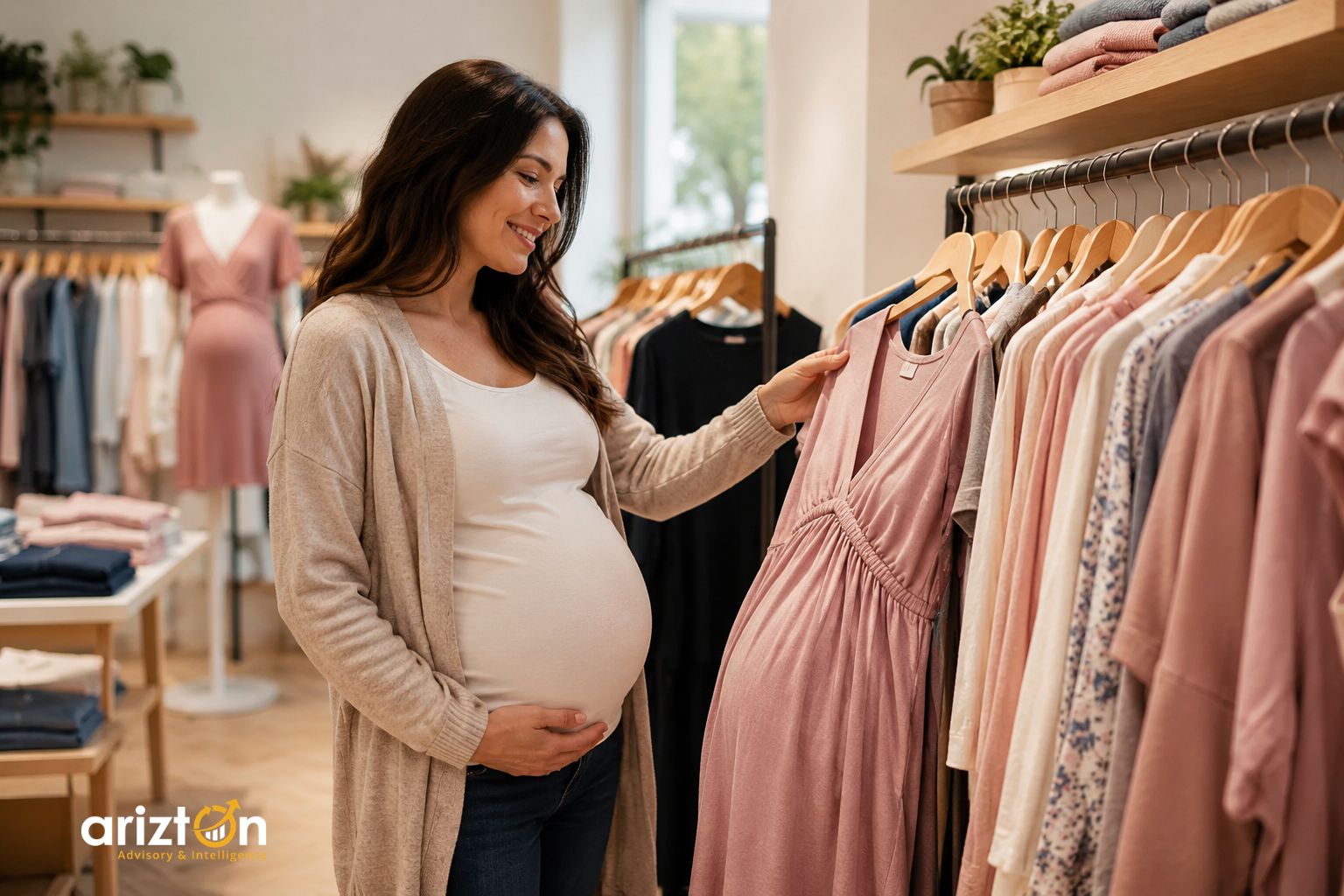
Maternity Wear Used to Expire at Delivery — Not Anymore
For decades, maternity clothing carried an unspoken expiration date: useful for nine months, then packed away, resold at a loss, or forgotten in the back of a closet. That math is starting to look outdated. As more women return to work sooner, shop online, and think harder about value per wear, the maternity apparel market is being pulled toward garments — and business models — designed to last well beyond delivery day.
How Big Is the Maternity Apparel Market?
The short answer: steady, and increasingly shaped by how long a garment stays useful.
The global maternity apparel market was valued at USD 7.23 billion in 2025 and is projected to reach USD 8.45 billion by 2031, growing at a CAGR of 2.62%. That's not explosive growth. But the more interesting story isn't the topline number — it's what's driving it: a consumer base that no longer accepts clothing built for one narrow window of a much longer journey.
Growth is expected to vary by region, with APAC and Latin America recording stronger gains as e-commerce and organized retail expand, while North America and Western Europe see more moderate growth.
Know More: https://www.arizton.com/market-reports/maternity-apparel-market
Why Is Maternity Wear Being Designed to Last Longer?
Maternity clothing is increasingly being designed for use across pregnancy, postpartum, and nursing, rather than for pregnancy alone. A garment bought in the second trimester is now expected to earn its keep well past childbirth, doing double duty as nursing wear, postpartum recovery wear, and eventually just everyday wear.
That expectation is forcing designers to rethink construction from the ground up. Rather than treating "maternity," "postpartum," and "nursing" as three separate product lines, brands are increasingly designing one adaptable garment meant to move fluidly across all three. Kindred Bravely's SoftStretch Cotton Collection and Bumpsuit's bodysuits, dresses, and loungewear are built around the same idea garments that flex from bump to postpartum to nursing without needing to be replaced at each stage. Details like discreet nursing access, adjustable waistbands, and fabric blends that hold their shape through repeated stretching are becoming standard rather than premium add-ons.
Key Insight: A garment framed as useful for a year or more can justify a higher price point than one framed as a nine-month purchase, even when the material cost is nearly identical.
How Are Rental and Resale Models Changing Maternity Fashion?
Even with longer-use design, pregnancy is still, by nature, a short season — and that mismatch is opening the door to rental and resale models. A nine-month need against a growing appetite for premium fit and fabric means many shoppers are no longer interested in owning a full maternity wardrobe outright.
Rent the Runway's subscription plans, which now include maternity brands, let shoppers rotate their wardrobe as their bodies change, without buying pieces they'll likely never wear again. A shopper can move from first-trimester basics to third-trimester occasionwear to postpartum pieces within a single subscription cycle — something a traditional owned wardrobe can't do efficiently. Resale platforms add a further layer, letting shoppers recoup some of their spend by passing pieces on to the next expecting parent once their own use is done.
- Cost efficiency: access to designer-quality pieces without a full-price, short-term wardrobe commitment
- Sustainability: a hedge against textile waste in a category defined by short individual usage windows
- Flexibility: subscription and resale models absorb monthly shifts in maternity sizing that an owned wardrobe can't
Bottom line: The category's growth isn't just about more units sold — it's about more ways to access the same garment, from ownership to rental to resale.
What Else Is Shifting Across the Maternity Apparel Market?
Daywear still accounts for around 63% of the market, but innerwear is the fastest-growing product category as comfort and specialized support take priority. Maternity bras, nursing bras, support belts, and postpartum recovery garments are gaining ground precisely because, like the longer-use daywear trend, they're increasingly designed to serve a woman through pregnancy and well into recovery rather than pregnancy alone.
Fabric choices are moving in the same direction. Cotton remains dominant for its comfort and breathability, supported by strong production out of India and the U.S., while spandex — valued for its stretch and shape retention through a changing body — is the fastest-growing fabric segment, growing at a CAGR of 3.20% from 2025 to 2031. Retail is shifting too: offline still holds the largest share since fit-sensitive categories like innerwear benefit from in-person try-on, but online is the fastest-growing channel thanks to convenience, selection, and easier comparison shopping the same channel where most rental and resale platforms operate.
- The bottom line: whether it's fabric, product mix, or retail channel, the market is converging on the same idea — clothing, and the way it's accessed, that works for more of a woman's journey, not just nine months of it.
Conclusion: A Market Rethinking What "Maternity" Wear Is For
The maternity apparel market's climb from USD 7.23 billion in 2025 to USD 8.45 billion by 2031 tells only part of the story. The more durable shift is behavioral: shoppers are no longer willing to treat maternity wear as disposable, and brands — along with rental and resale platforms — are racing to make sure it doesn't have to be. As adaptable design, circular retail models, and specialized fabrics all converge around the same idea of extending a garment's useful life, the category's next phase of growth looks set to be defined less by how many pieces are sold and more by how much value each one delivers across the full arc of pregnancy, recovery, and beyond.