The Way Consumers Buy Board Games Has Changed — Here's What's Driving The $39 Billion Market – Arizton
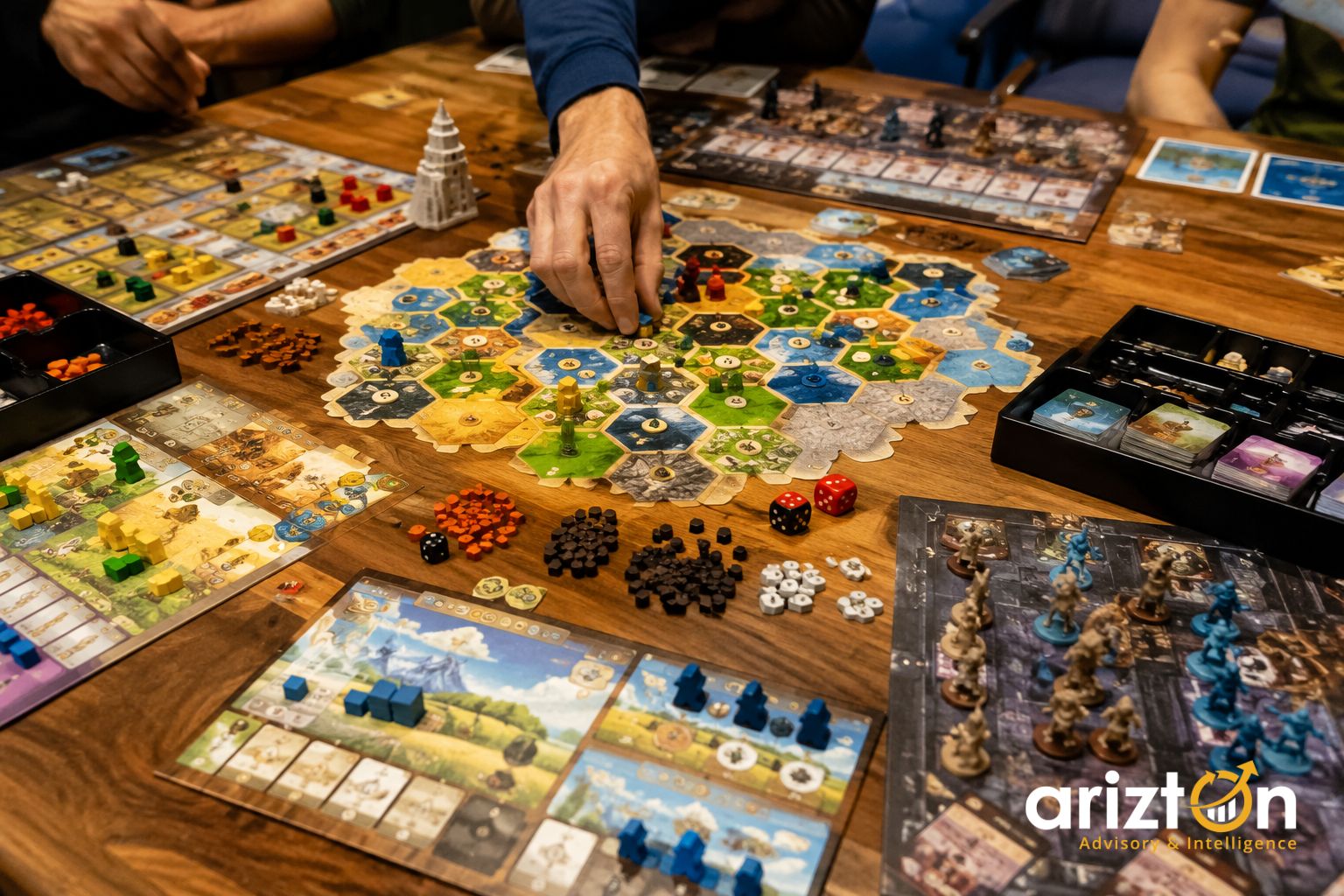
The global board games market was valued at USD 21.5 billion in 2025 and is expected to reach USD 39.46 billion by 2031, growing at a CAGR of 10.65%. Growth is extending across family, social, educational, collectible, and hobby-led formats, but the more significant change is taking place in how consumers engage with the category.
Board games are moving beyond occasional household purchases as consumers find more reasons to buy, play, and return to the category. Game nights, social occasions, learning needs, travel formats, gifting, and hobby participation are widening the role of board games across different age groups and settings. At the same time, adult spending, experience-led discovery, screen-free play, and competition from digital entertainment are changing what consumers value when choosing where to spend their leisure time and money.
To Know More, Click: https://www.arizton.com/market-reports/global-board-games-market-industry-analysis-2024
Adult Demand is Changing the Economics of the Category
The expansion of adult participation is giving the board games market a consumer base with greater purchasing power and different reasons for buying. This shift is becoming increasingly visible in both sales and spending patterns. Adults accounted for 18% of toy sales across the UK, Germany, France, Spain, and Italy in 2025, totalling USD 2.7 billion and rising 10% year over year. Recipients aged 12 and above represented 28%–35% of toy sales across EU5 and U.S. markets, while industry survey data indicates that approximately 59% of board and card gamers spend more than USD 400 annually on new games.
The category is therefore serving very different levels of engagement, from occasional family and gifting purchases to collecting, hobby participation, expansion content, and organized play. Participation is also broadening demographically, with UK Games Expo reporting an approximately 60:40 male-to-female attendance mix among 72,000 visitors in 2025, reflecting wider appeal beyond earlier hobby concentrations.
Consumers are Increasingly Discovering Games by Playing Them First
Board game cafés, clubs, and hobby spaces are changing how unfamiliar titles reach consumers. Rather than making a purchase based only on packaging, recommendations, or retail visibility, players can experience a game before deciding whether it is worth owning. This is particularly relevant for complex or premium-priced titles, where uncertainty can be a barrier to purchase.
These venues also represent a distinct source of demand, purchasing multiple copies for game libraries, events, and repeat use. At the same time, the titles they select gain exposure to consumers who may later make their own purchases, making discovery more experiential and allowing access to play to influence what eventually moves into personal collections.
The Market is Splitting Between Casual Buyers and High-Engagement Players
Consumer spending patterns point to increasingly different relationships with the board games category. A game purchased as a gift or for occasional play represents a different buying pattern from that of a committed player who regularly adds new titles to a collection.
Expansion content, collectible formats, licensed titles, board game cafés, and organized play are strengthening demand beyond the initial purchase. For committed players, engagement can continue across multiple purchases and continued participation, making the relationship with the category increasingly important alongside the number of buyers entering the market.
Screen-Free Play Is Gaining Commercial Momentum
Across 12 global markets, the games and puzzles supercategory grew 30% in 2025, compared with 7% growth for the overall global toy industry. While this reflects the broader games and puzzles category rather than board games alone, it points to strong commercial momentum behind analog and socially oriented play formats.
Families, adult buyers, and casual players are seeking leisure formats that create distance from constant device use. Board games offer a form of screen-free entertainment built around shared attention, turn-taking, conversation, and interaction within the same physical setting. Their appeal is therefore not simply that they are offline, but that participation happens together.
Physical Games Are Facing a New Value Comparison
Consumers are also comparing a one-time board game purchase with mobile games, streaming services, social platforms, and subscriptions that offer continuing novelty across large content libraries. For infrequent players and budget-sensitive households, these alternatives can appear attractive because they often involve lower upfront spending and continuous access to content.
Board games are therefore competing not only with other games on the shelf, but with a much wider range of entertainment options for the same discretionary leisure budget. This places greater importance on the value consumers see in owning and repeatedly playing a physical game.
Sustainability is Emerging as a Consumer-Facing Differentiator
Packaging communication around materials, sourcing, and certifications is giving environmentally conscious consumers another visible factor in the purchase decision. The influence of sustainability becomes more relevant when gameplay quality and visual presentation are already similar across competing products.
In those situations, sustainability can act as a tiebreaker and strengthen appeal among value-led consumers. Rather than replacing traditional purchase factors, it is becoming another way for competing products to stand apart.
Educational Use is Broadening the Role of Board Games
Board games are also being examined beyond conventional leisure settings. Academic systematic reviews have analyzed their use in collaborative science learning, with documented moderate-to-large learning effects in early childhood education settings.
This adds another dimension to a market already spanning family, social, collectible, and hobby-led demand. Educational adoption broadens the contexts in which games can be used and reinforces the category’s ability to serve different consumer and institutional needs.
Key Takeaways: What the Numbers Signal
USD 39.46 Billion by 2031
The global board games market was valued at USD 21.5 billion in 2025 and is expected to reach USD 39.46 billion by 2031, growing at a CAGR of 10.65%.
USD 2.7 Billion
Adults accounted for 18% of toy sales across the UK, Germany, France, Spain, and Italy in 2025, totalling USD 2.7 billion and rising 10% year over year.
USD 400+ Annually
Industry survey data indicates that approximately 59% of board and card gamers spend more than USD 400 annually on new games, creating a high-value segment distinct from USD 25–USD 75 gift buyers.
30% Growth
Across 12 global markets, the games and puzzles supercategory grew 30% in 2025, compared with 7% growth for the overall global toy industry.
About Us:
Founded in 2017, Arizton Advisory & Intelligence delivers data-driven market research and strategic consulting that empowers clients to make informed decisions and drive growth. Combining quantitative and qualitative insights, we provide in-depth analysis across industries including Agriculture, Consumer Goods, Technology, Automotive, Healthcare, Data Centers, and Logistics. Recognized by top-tier media, our expert team transforms complex market data into actionable strategies, helping clients anticipate trends, seize opportunities, and stay ahead of the competition.
Contact Us
Mail: [email protected]
Website: https://www.arizton.com/
Source: Arizton Advisory & Intelligence