A USD 1.43 Billion Opportunity Unfolding: The Glamping Market Investors Are Watching
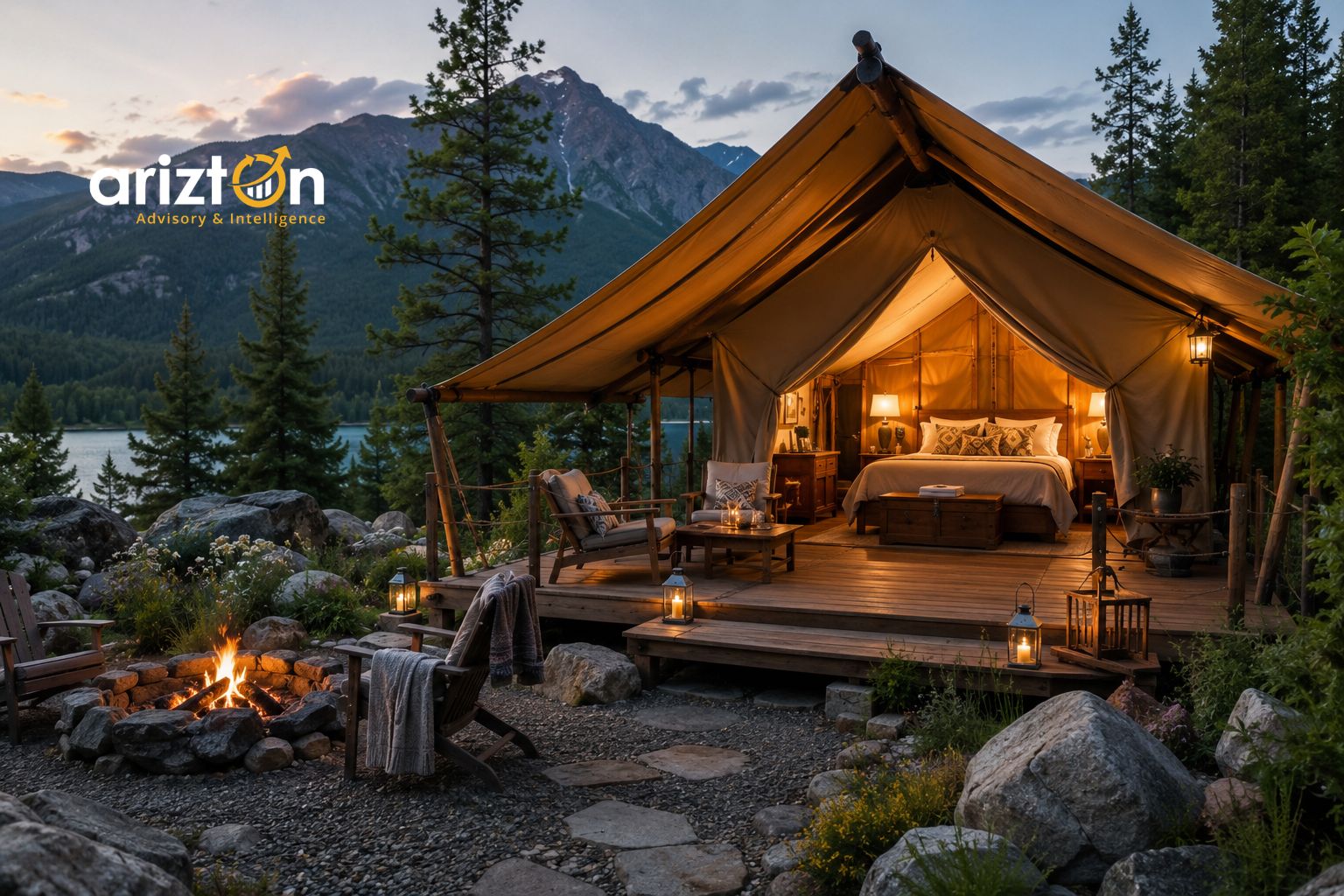
Glamping Is Becoming a Premium Hospitality Business
Glamping has evolved far beyond its origins as "luxury camping." Today, it represents one of the fastest-growing segments of the U.S. outdoor hospitality industry, combining premium accommodations with immersive nature-based experiences. As travelers increasingly prioritize memorable stays over conventional hotel rooms, operators are benefiting from stronger pricing power, longer guest stays, and growing investor interest.
According to Arizton, the U.S. glamping market size was valued at USD 746.75 million in 2025 and is projected to reach USD 1.43 billion by 2031. This growth reflects a broader transformation in the hospitality sector, where experience driven travel is creating new opportunities for developers, property owners, and outdoor hospitality brands.
Explore the Latest Industry Analysis Now: https://www.arizton.com/market-reports/united-states-glamping-market
The Experience Economy Is Redefining Outdoor Hospitality
Travelers today are seeking more than accommodation—they are looking for experiences that create lasting memories. This shift is encouraging operators to design destinations around wellness, outdoor recreation, local culture, and personalized guest experiences rather than simply providing a place to stay.
Luxury cabins, geodesic domes, treehouses, yurts, and safari tents are attracting growing demand by combining modern comfort with unique natural settings. Whether through wellness retreats, guided adventures, stargazing, or locally inspired activities, these curated experiences help operators differentiate their properties while supporting premium pricing and stronger guest loyalty. As experience-led tourism continues to expand, glamping is strengthening its position within the premium hospitality market.
The Next Booking Starts Online
The customer journey increasingly begins online. Social media, AI-powered travel recommendations, and visually driven booking platforms are transforming how travelers discover and compare destinations, giving distinctive properties a significant competitive advantage.
According to HotelTech Report, 83% of travelers use social media to plan their trips, while visually appealing accommodations such as treehouses, cabins, domes, and yurts naturally generate higher engagement across digital platforms. Millennials and Gen Z continue to shape this trend by favoring authentic, shareable travel experiences that blend comfort with nature. For operators, digital visibility has become as important as location. Strong online storytelling, compelling visuals, and seamless digital booking experiences are increasingly influencing occupancy rates and customer acquisition.
Year-Round Operations Are Unlocking New Revenue Opportunities
The business model for glamping is moving beyond seasonal camping. Across the U.S., operators are investing in permanent cabins, insulated pods, and climate-ready accommodations that enable year-round operations while meeting growing guest expectations for comfort and convenience.
This evolution is creating more stable revenue streams by extending occupancy beyond peak summer months. Investments in high-speed connectivity, dedicated workspaces, and modern amenities are also attracting remote workers and digital nomads seeking longer stays in nature. As seasonal limitations decline, glamping is becoming a more resilient and scalable hospitality business.
Consumer preferences reflect this shift. Cabins accounted for approximately 49% of the U.S. glamping market in 2025, while the 2026 State of Glamping Report by RMS found that 66% of guests prefer cabin-style accommodations, highlighting growing demand for permanent, premium outdoor lodging.
Sustainability Is Becoming More Than a Brand Promise
Sustainability has become an integral part of the glamping value proposition. Rather than focusing solely on minimizing environmental impact, many new developments are embracing regenerative tourism through resource-efficient construction, renewable energy integration, water conservation, and environmentally responsible operations.
Changing traveler expectations continue to reinforce this trend. According to RMS, 89% of travelers consider sustainability when booking a holiday, encouraging operators to view environmental responsibility not simply as a marketing initiative but as a long-term competitive advantage. Sustainable development is increasingly strengthening both brand value and long-term investment potential across the outdoor hospitality sector.
Industry Competition Is Entering a New Phase
The U.S. glamping market remains fragmented, with competition spanning dedicated glamping operators, independent property owners, outdoor hospitality companies, and global hotel brands. As the market matures, established hospitality companies are entering the segment through strategic partnerships and specialized outdoor accommodation concepts, reflecting growing confidence in glamping as part of the broader premium travel industry.
At the same time, digital booking platforms continue to play an increasingly important role in shaping operator visibility and customer reach. Together with continued investment in premium accommodations and evolving traveler preferences, these developments are positioning the U.S. glamping market for sustained long-term growth.
To Know More, Click: https://www.arizton.com/market-reports/united-states-glamping-market
Nature Remains the Market's Strongest Competitive Advantage
Access to nature remains the foundation of the U.S. glamping market. Destinations located near forests, mountains, lakes, deserts, and national parks continue to attract strong consumer demand by offering immersive outdoor experiences without sacrificing modern comfort.
The Western U.S. remains the country's largest glamping market, accounting for approximately 73% of total revenue in 2025. Its concentration of iconic national parks, outdoor recreation destinations, and established tourism infrastructure continues to support investment in premium outdoor resorts and eco-tourism developments.
Meanwhile, the South is emerging as the fastest-growing regional market. Lower land costs, expanding tourism infrastructure, favorable weather conditions, and increasing investment in family-oriented resorts and outdoor recreation are creating attractive opportunities for developers and operators looking to expand across the U.S.
Future of the U.S. Glamping Market
The U.S. glamping market is entering a new phase of growth as experience-driven travel continues to reshape the hospitality industry. What was once considered a niche outdoor accommodation option is evolving into a scalable business model supported by premium pricing, year-round operations, digital booking channels, and growing investment in purpose-built destinations.
Looking ahead, continued innovation in accommodation formats, greater adoption of sustainable development practices, and the integration of technology into the guest experience are expected to strengthen the market's long-term outlook. As travelers increasingly seek unique, nature-based stays without compromising on comfort, glamping is well positioned to become one of the most attractive and resilient segments within the broader outdoor hospitality industry.