Precision Agriculture: The $17B Shift Toward Smarter Farming
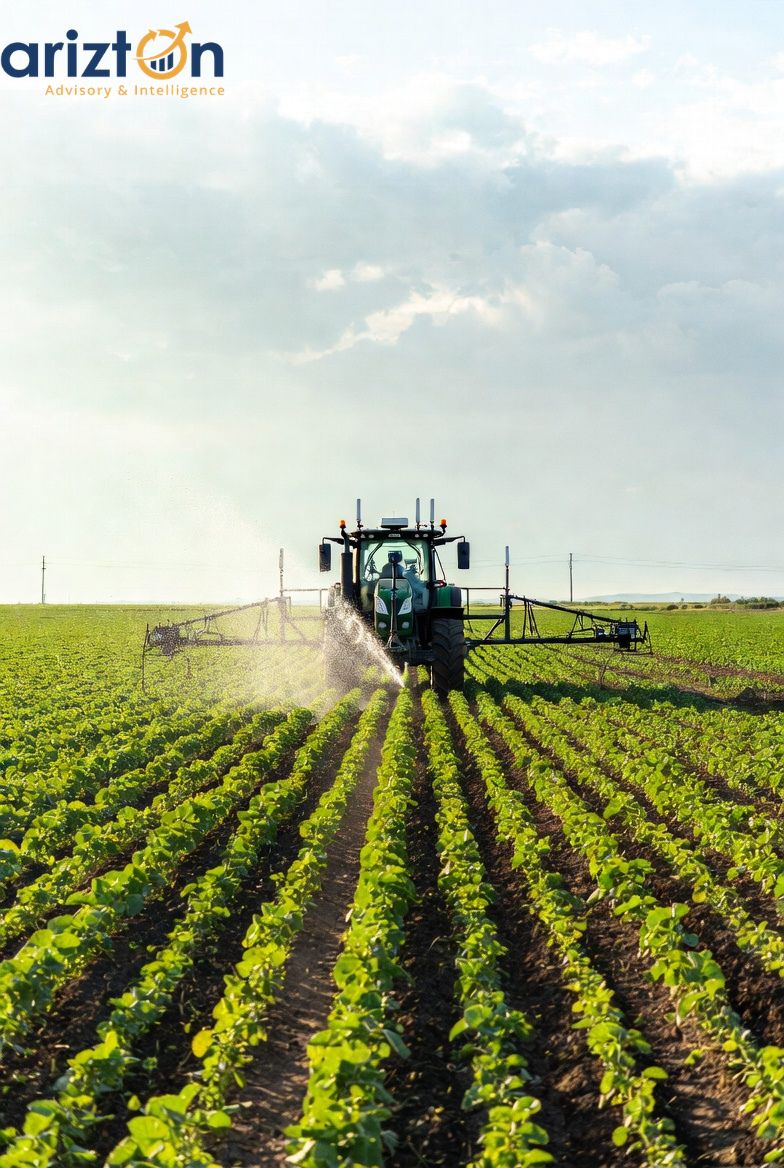
Precision agriculture is transitioning from a collection of standalone tools into an integrated digital farming platform for modern agriculture. Today’s market is consolidating around smart farming technologies that combine GNSS guidance, sensing, imaging, agricultural automation systems, and farm management software into unified, data-driven workflows.
According to Arizton research, the global precision agriculture market was valued at USD 9.50 billion in 2025 and is projected to reach USD 17.29 billion by 2031, growing at a CAGR of 10.50%. This growth reflects accelerating demand for scalable, data-driven farm management solutions that directly impact profitability.
Efficiency is no longer optional. It is becoming the foundation of competitiveness.
From Mechanization to Intelligent Operations
Farming is moving beyond mechanization toward intelligent, connected operations. Auto-guidance and steering have become standard, reducing overlaps, minimizing waste, and simplifying field operations. However, most farms operate mixed-brand fleets, driving demand for interoperable platforms that allow data to move seamlessly across equipment ecosystems. Rather than replacing entire fleets, many growers are modernizing through retrofit kits that enable automated seeding, spraying, and flow control. Interest in lightweight and electric implements is also rising. Modernization today is about flexibility, compatibility, and incremental upgrades, not wholesale replacement.
The Four Forces Accelerating Adoption
AI-Enabled Agronomy ss Becoming Operational.
Remote sensing, predictive analytics, and variable-rate application are now embedded into everyday workflows, not pilots, not experiments. Satellite imagery and connected platforms let farmers anticipate stress, manage variability, and standardize best practices. That reduces input leakage and improves yield consistency.
Sustainability has Become Measurable.
Water efficiency, nutrient optimization, and soil stewardship are no longer abstract goals. Precision monitoring lets these outcomes be tracked, validated, and reported. As climate and environmental policies tighten, digital tools are becoming essential for compliance and market access, not just good optics.
Food System Resilience is Rising in Importance.
Supply chains increasingly demand traceability and lower environmental footprints. Precision agriculture supports this through data-backed nutrient management, irrigation scheduling, and field-level documentation.
Automation is Redefining Labor Economics.
Autonomous tractors, robotic weeders, and drone-based imaging systems are reducing dependence on manual labor. When connected to digital platforms, these tools enable faster response times and more consistent crop management.
Together, these drivers are transforming precision agriculture from a productivity tool into a strategic operating system.
Discover How the Precision Agriculture Market Is Evolving and Where It’s Headed by 2030
Where Investment Momentum Is Building
North America continues to lead, large-scale farming systems, high equipment penetration, expanding rural connectivity. Incentive programs increasingly reward traceability and measurable performance, which reinforces demand for monitoring and verification tools.
Asia-Pacific is the fastest-growing region. Government-led digital agriculture programs in Japan, South Korea, and Australia have moved from pilot stages to scaled deployment, creating structured pathways for adoption across diverse farm sizes.
In both regions, connectivity and data infrastructure are proving as important as the machinery itself.
Competition Shifts from Products to Platforms
The competitive landscape remains fragmented, spanning equipment manufacturers, software developers, sensor providers, and regional integrators.
Market leadership is increasingly determined by ecosystem depth rather than individual product portfolios.
Leading players, including John Deere, AGCO Corporation, CNH Industrial, Trimble, and Topcon, are expanding integrated hardware-software platforms that secure data flows across the entire farm lifecycle.
Smaller firms continue to compete through specialization in guidance, sensing, and analytics. However, long-term scalability depends on access to data infrastructure, cybersecurity frameworks, digital talent, and trusted distribution networks.
Partnerships with cooperatives, input suppliers, financial institutions, and governments are becoming central to expansion strategies.
Converting Digital Capability into Financial Performance
Precision agriculture delivers sustainable value only when digital capability converts into recurring revenue, margin expansion, and operating leverage. Well-integrated precision farming solutions enable lower fertilizer and chemical consumption, improved yield stability, reduced labor dependency, higher equipment utilization, and stronger pricing power through differentiated services.
Over time, these gains compound. Farms that consistently apply data-driven decision-making are better positioned to absorb climate shocks and price volatility. Profitability is no longer driven by output alone, it's driven by how efficiently resources are deployed.
The Next Phase: Scalable, Practical Innovation
The next growth cycle will be defined by practical innovation.
Momentum will increasingly come from solutions designed for specialty crops, mid-sized farms, and controlled-environment agriculture. Modular hardware, mobile-first software, and scalable pricing models will be critical.
AI-based advisory systems will evolve from analytics dashboards to real-time decision engines. Sustainability metrics will be embedded into product design. Platform partnerships will deepen interoperability across hardware, software, and cloud ecosystems.
In emerging markets, localization will be decisive. Cost-optimized equipment, dealer partnerships, and government collaboration will shape adoption speed. After-sales services, remote diagnostics, and continuous software upgrades will become central to long-term customer relationships.
Precision agriculture is shifting from equipment ownership to platform participation. From productivity gains to margin protection. From isolated tools to connected ecosystems.