What’s Driving Southeast Asia's Data Center Construction Market: AI, Cloud, Sustainability, and the Hyperscale Frontier Taking Shape
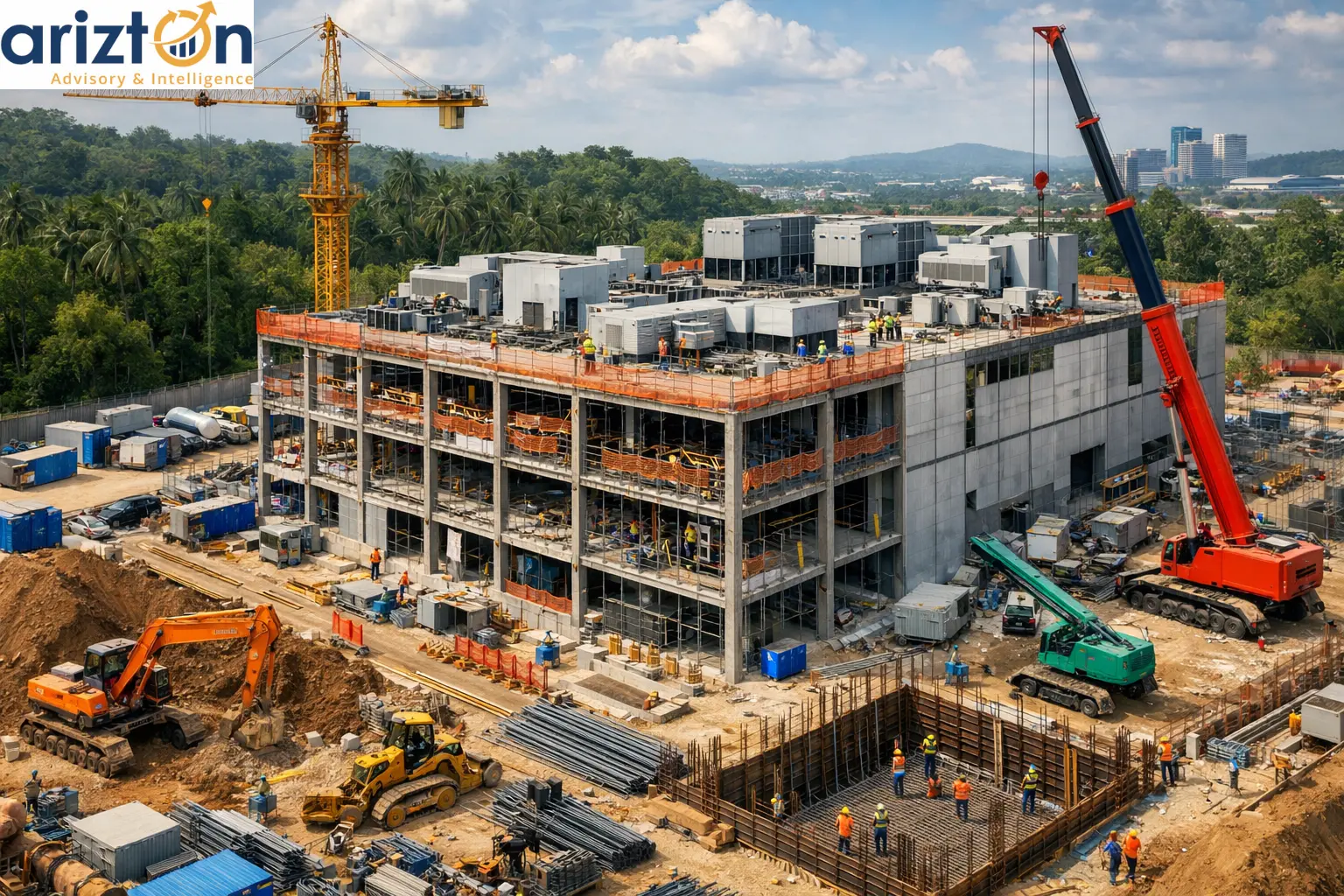
The Southeast Asia data center construction market is entering a phase of sustained expansion, projected to grow from USD 6.59 billion in 2025 to USD 17.65 billion by 2031, at a CAGR of 17.83%.
This growth is not cyclical. It reflects a structural shift in how digital infrastructure is being built across the region. Rising data consumption from mobile, video, e-commerce, and fintech are strengthening baseline demand, while 5G rollout is increasing the need for low-latency, edge-ready infrastructure.
More importantly, AI adoption and enterprise digital transformation are increasing compute intensity, positioning the Southeast Asia data center construction market as a key growth region within the global data center infrastructure landscape.
Explore complete insights on major drivers of data center expansion in Southeast Asia.
What’s Driving Data Center Expansion in Southeast Asia
AI & Digitalization – Driving a Shift in Infrastructure Intensity
AI adoption is fundamentally changing infrastructure requirements. Enterprises and governments across Southeast Asia are scaling AI and machine learning workloads, driving a sharp increase in compute intensity. This is pushing data center construction toward high-density, power-intensive, and low-latency environments that require stronger power systems, advanced cooling, and higher resilience standards. As a result, the Southeast Asia data center construction market is shifting from traditional colocation builds to AI-ready, high-performance data center infrastructure, increasing both the scale and complexity of construction projects.
Impact: Capacity expansion is now driven by compute intensity rather than user growth.
Cloud Adoption – Expanding the Infrastructure Footprint Across Markets
Cloud adoption is expanding both demand and geographic deployment. Enterprise digital transformation, e-commerce growth, and cloud-native applications are accelerating hyperscale data center investments in Southeast Asia. At the same time, data localization requirements and government cloud strategies are anchoring infrastructure within national markets.
This is extending the Southeast Asia data center construction market beyond traditional hubs, accelerating development in Malaysia, Indonesia, and the Philippines, and creating a distributed, multi-country infrastructure footprint.
Impact: Infrastructure is decentralizing across ASEAN, aligned with regulatory and user proximity requirements.
Sustainability & Energy – Redefining Site Selection and Project Viability
Sustainability and energy availability are defining project viability. Rising energy consumption from data centers is driving stricter renewable energy targets and efficiency standards across Southeast Asia. Policies in markets such as Indonesia and Singapore are directly linking approvals to energy sourcing and environmental compliance.
Site selection is increasingly determined by access to reliable and sustainable power, shifting development toward locations where energy and regulatory conditions are aligned.
Impact: Power availability has become the primary constraint shaping data center deployment.
Where Hyperscale Capital Is Concentrating in Southeast Asia
Hyperscale investment is increasingly concentrated in the Singapore–Johor–Jakarta corridor.
Singapore remains a key hub but is constrained by power and land. As a result, large-scale developments are shifting to Johor (Malaysia) and Jakarta (Indonesia). This corridor is now one of the fastest growing hyperscale ecosystems globally, with Google, Meta, Microsoft, and AWS actively expanding.
Malaysia is leading this shift, accounting for 57% of regional hyperscale investment in 2025 and expected to maintain strong share through 2031. This reflects favorable infrastructure conditions, strong cloud demand, and continued hyperscaler investment.
The key takeaway is clear: capacity is moving toward markets where projects can be executed faster, especially where power, land, and approvals are easier to secure.
Market Outlook: Execution-Driven Growth
The Southeast Asia data center construction market is increasingly shaped by execution capability rather than demand availability. While AI adoption, cloud expansion, and digitalization continue to increase infrastructure requirements, the pace and location of capacity deployment are determined by infrastructure readiness, energy access, and regulatory alignment.
This is changing how the market is structured. Capacity is concentrating in locations that can support large-scale deployment through reliable power access, predictable approvals, and alignment with sustainability requirements.
The market is moving toward an execution-led model, where infrastructure development is governed by practical constraints around power, land, and regulation, rather than demand alone.
Further insights and detailed forecasts are available in the full report: https://www.arizton.com/market-reports/southeast-asia-data-center-construction-market