Southeast Asia's Mobile Crane Market Has a 2031 Target — 3,592 Units. What's Driving It?
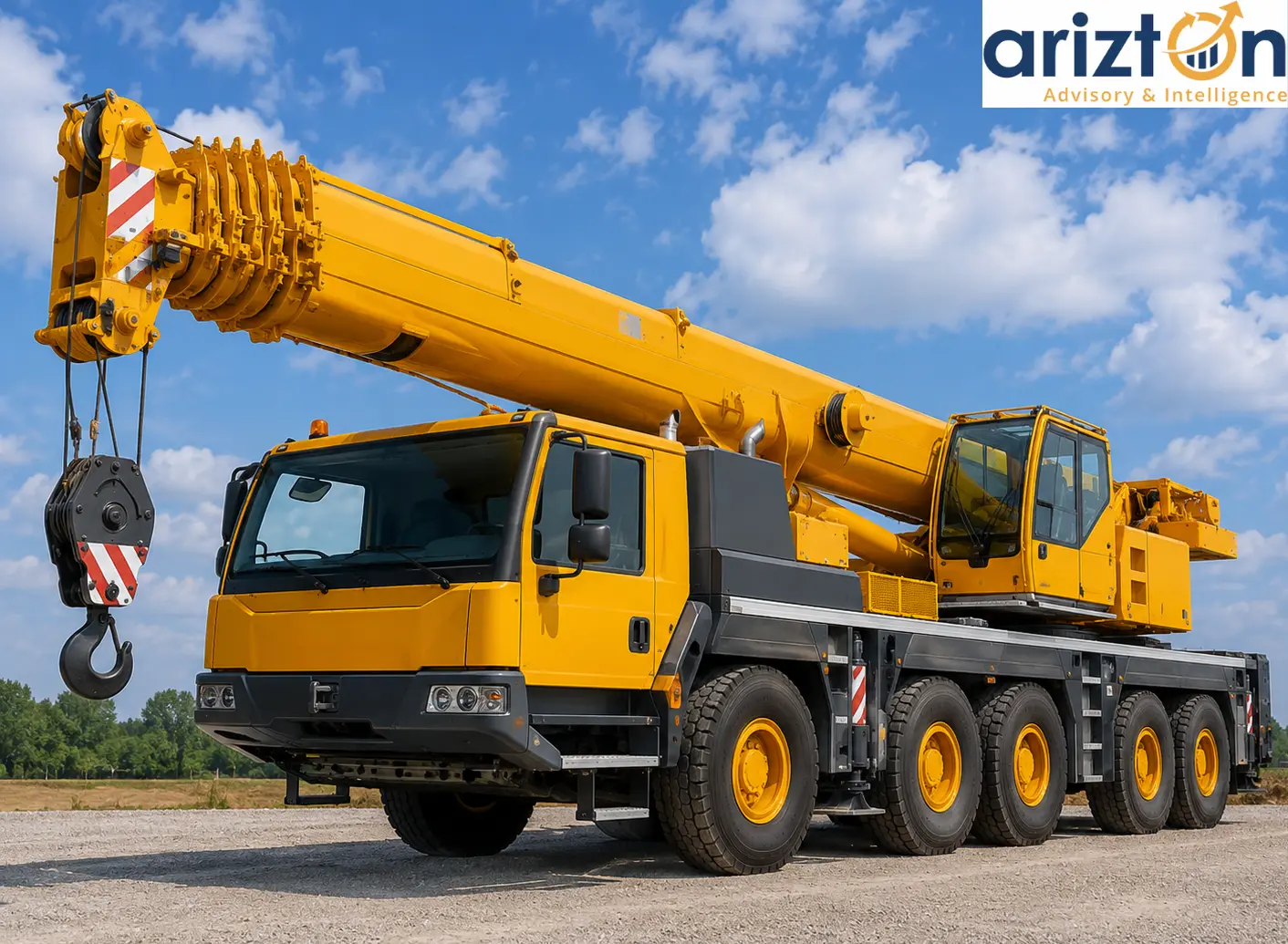
Where Mobile Crane Demand Is Concentrating Across Southeast Asia
The Southeast Asia mobile crane market is seeing demand concentrate more around transport, industrial, and energy infrastructure than broad construction activity. Metro rail expansion, port modernization, industrial corridor development, petrochemical investments, and large energy projects across Indonesia, Vietnam, and the Philippines are increasing demand for cranes used over longer project periods and heavier lifting work. Contractors involved in these projects are prioritizing equipment that can move efficiently between sites and support faster execution. Demand is becoming more concentrated around fewer but larger infrastructure projects with higher equipment intensity.
According to Arizton, the Southeast Asia mobile crane market size was estimated at 2,532 units in 2025 and is expected to reach 3,592 units by 2031, growing at a CAGR of 6.00% during the forecast period.
See what’s shaping the next phase of crane demand across Southeast Asia.
ASEAN Infrastructure Pipelines are Creating Longer-Term Equipment Demand
One of the clearer shifts shaping ASEAN crane demand 2026 is the growing number of infrastructure projects already moving into execution rather than remaining in planning stages. The Master Plan on ASEAN Connectivity 2025 continues to support investments in transport links, industrial corridors, ports, airports, and regional logistics infrastructure, creating longer project timelines and more consistent equipment requirements across member countries. Unlike short construction cycles, these large ASEAN infrastructure projects are increasing crane utilization over extended periods, particularly in transport, logistics, and industrial developments where lifting requirements remain high throughout multiple phases of execution.
Construction Growth is Becoming More Infrastructure-Led
The construction growth across Southeast Asia is becoming less about volume and more about project scale. Across ASEAN construction, larger transport networks, industrial parks, airports, and mixed-use developments are increasing the need for heavier lifting and longer equipment deployment periods. Projects such as Indonesia’s Nusantara capital city, combined with rapid urban expansion in Jakarta, Manila, and Ho Chi Minh City, are changing how cranes are used on-site, with contractors managing tighter timelines, larger materials, and more complex site movement. With regional construction output expected to grow by 6–8% in 2025 and public project pipelines exceeding USD 750 billion, crane utilization is increasingly tied to fewer but larger and more execution-heavy developments.
Mobility is Winning in Southeast Asia’s Crane Market
The mobile crane market Southeast Asia is seeing a shift divide in crane preference depending on the type of project. Truck cranes continue to be widely used in roads, utilities, and urban infrastructure because contractors value equipment that can move quickly between sites and be deployed faster. Meanwhile, crawler cranes remain important in ports, bridges, petrochemical facilities, and energy projects where heavier lifting and better stability are needed. This shows that crane demand is becoming more linked to project requirements, with contractors choosing equipment based on the kind of work being executed rather than using the same crane across every project.
Contractors are Becoming More Selective About Crane Ownership
Across ASEAN construction, many contractors are becoming more selective about when it makes sense to own cranes and when it makes more sense to rent them. SMEs and mid-sized players are increasingly using rental fleets for project-based work, especially when lifting needs change from one project to another or equipment demand is temporary. This is gradually changing buying behavior in the mobile crane market Southeast Asia, with greater preference for flexible financing, rent-to-own options, and service support rather than large upfront equipment purchases. The shift suggests contractors are placing more value on equipment access and utilization than ownership alone.
What’s Worth Watching in Southeast Asia’s Crane Market
- Infrastructure-heavy projects are becoming the main demand center, particularly across transport, ports, industrial zones, and energy developments where crane utilization stays higher for longer periods.
- Renting is increasingly replacing ownership for project-based work, especially among SMEs and mid-sized contractors managing capital costs and changing lifting requirements.
- Mobility is shaping crane preference, with truck cranes continuing to lead in fast-moving infrastructure work, while crawler cranes remain critical for heavy-lifting environments.
- Port expansion and regional trade activity are creating new demand pockets, particularly for cranes supporting logistics hubs, container terminals, and shipyard development.
Explore the projects, equipment shifts, and contractor trends shaping Southeast Asia’s crane market.