Where Are the Biggest Investment and Expansion Opportunities in the Latin America Data Center Colocation Market?
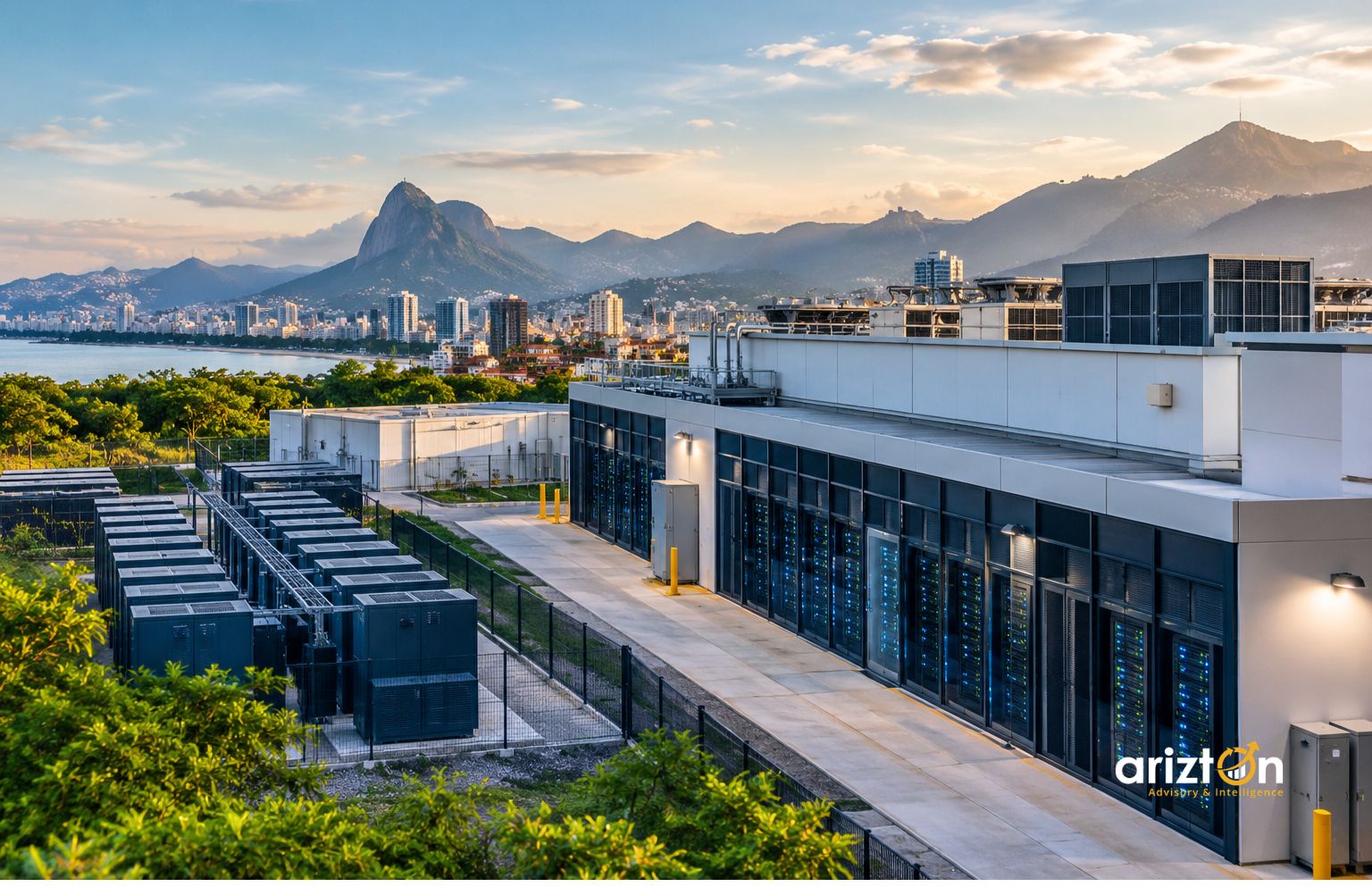
The Latin America data center colocation market is gaining momentum as hyperscale cloud providers, AI infrastructure developers, and enterprises increase their demand for scalable, high-performance data center capacity. With the market projected to grow from USD 2.18 billion in 2025 to USD 5.10 billion by 2031, at a CAGR of 15.20%, the region presents significant opportunities for colocation providers, infrastructure investors, and technology companies seeking to expand their presence in emerging digital markets. Increasing cloud adoption, rising AI workloads, and growing requirements for reliable digital infrastructure are encouraging vendors to expand existing facilities, develop new campuses, and strengthen their regional footprints.
Learn More: https://www.arizton.com/market-reports/latin-america-data-center-colocation-market-size
Which Established Vendors Are Leading the Competitive Landscape?
The Latin America data center colocation market features a diverse group of established operators, including Ascenty, Cirion Technologies, Claro, EdgeConneX, Elea Data Centers, Equinix, GTD, HostDime, IPXON Networks, KIO Data Centers, NextStream (Actis), ODATA (Aligned Data Centers), Quantico Data Center, Scala Data Centers, Takoda Data Centers, and Tecto Data Centers. These companies contribute to the region's infrastructure development through colocation services, carrier-neutral facilities, hyperscale capacity, and connectivity solutions.
Brazil remains a major investment destination, accounting for approximately USD 11.53 billion, or 49.8%, of the region's projected cumulative data center investment of USD 23.15 billion between 2026 and 2031. This concentration creates substantial opportunities for operators with established facilities, access to power, and the ability to deliver capacity at scale. Meanwhile, Mexico and other Latin American markets are attracting interest as businesses seek additional infrastructure locations to support cloud services, enterprise workloads, and regional digital expansion. For vendors, competitive differentiation increasingly depends on scalable capacity, power availability, connectivity, operational reliability, and the ability to meet customers' evolving infrastructure requirements.
For Sample: https://www.arizton.com/request-sample/5153
How Are Strategic Acquisitions and Facility Expansions Creating New Growth Opportunities?
Strategic investments and facility expansions are reshaping the competitive environment, allowing vendors to strengthen their market positions and capture growing demand for colocation capacity. In April 2026, I Squared Capital announced its acquisition of a majority stake in Elea Data Centers, one of Brazil's largest carrier-neutral data center platforms. The transaction highlights continued investor interest in established regional infrastructure platforms and the potential to scale operations in a market benefiting from rising digital infrastructure requirements.
Facility development is also supporting growth in Mexico. In August 2025, ODATA, part of Aligned Data Centers, announced the launch of the first phase of its QR04 data center facility in Querétaro, with an initial IT power capacity of 12 MW and a planned total capacity of 24 MW upon full construction. Such developments demonstrate how operators are expanding capacity to accommodate cloud and enterprise requirements while creating additional opportunities for customers seeking reliable colocation services. For businesses evaluating infrastructure partners, these investments can improve access to scalable capacity and strengthen the range of available deployment locations.
Why Are New Entrants and AI Infrastructure Projects Increasing Market Competition?
The entry of new operators and infrastructure developers is broadening the competitive landscape and creating additional investment opportunities. Emerging participants include 247 Data Centers, Ada Infrastructure, Atlantic Data Centers, Ava Telecom, CloudHQ, Fermaca Networks, Layer 9 Data Centers, MDC Data Centers, OpenAI and Sur Energy, Surfix Data Center, and Terranova. Their participation reflects growing interest in Latin America as a destination for digital infrastructure development, supported by expanding cloud requirements, AI adoption, and demand for high-capacity computing environments.
A notable development emerged in October 2025, when the Argentinian government introduced the Stargate Argentina initiative to support a large-scale facility intended to host OpenAI's future AI workloads. OpenAI and Sur Energy signed a Letter of Intent for a project targeting up to 500 MW of capacity, with an estimated investment of USD 25 billion. The initial 100 MW phase was expected to become operational in 2027. The project highlights the scale of investment being considered for AI infrastructure in the region, although its proposed capacity and investment should be distinguished from operational facilities and completed deployments.
For colocation providers, these developments create opportunities to secure enterprise and hyperscale customers, expand power-intensive infrastructure, and develop differentiated offerings for AI workloads. However, realizing these opportunities will depend on financing, power availability, construction timelines, and the successful delivery of planned capacity.
What Factors Will Determine Vendor Success in the Latin America Data Center Colocation Market?
Although the market offers attractive growth prospects, vendors must navigate construction costs estimated at USD 7 million to USD 10 million per MW, depending on location. Land availability, labor expenses, inflation, and access to reliable power can influence project economics and development schedules. These considerations increase the importance of disciplined capital allocation, strategic site selection, and efficient infrastructure planning.
Vendors that can secure suitable locations, manage development costs, and deliver scalable capacity are well positioned to capitalize on the region's expanding digital infrastructure requirements. Established operators can leverage existing facilities and customer relationships, while new entrants may compete through targeted investments, specialized infrastructure, and partnerships. For enterprises and hyperscale customers, the expanding vendor base offers more opportunities to evaluate providers based on capacity, connectivity, reliability, scalability, and deployment timelines.
As the Latin America data center colocation market advances toward USD 5.10 billion by 2031, competition is expected to intensify around infrastructure expansion, investment execution, and the ability to support increasingly demanding digital workloads. Businesses seeking to enter or expand within the region can benefit from understanding vendor positioning, announced capacity additions, strategic transactions, and emerging investment hubs to identify suitable partners and assess future growth opportunities.