Sweden, Norway and Finland Are Quietly Building the Data Center Infrastructure That Will Power Europe's AI Decade!
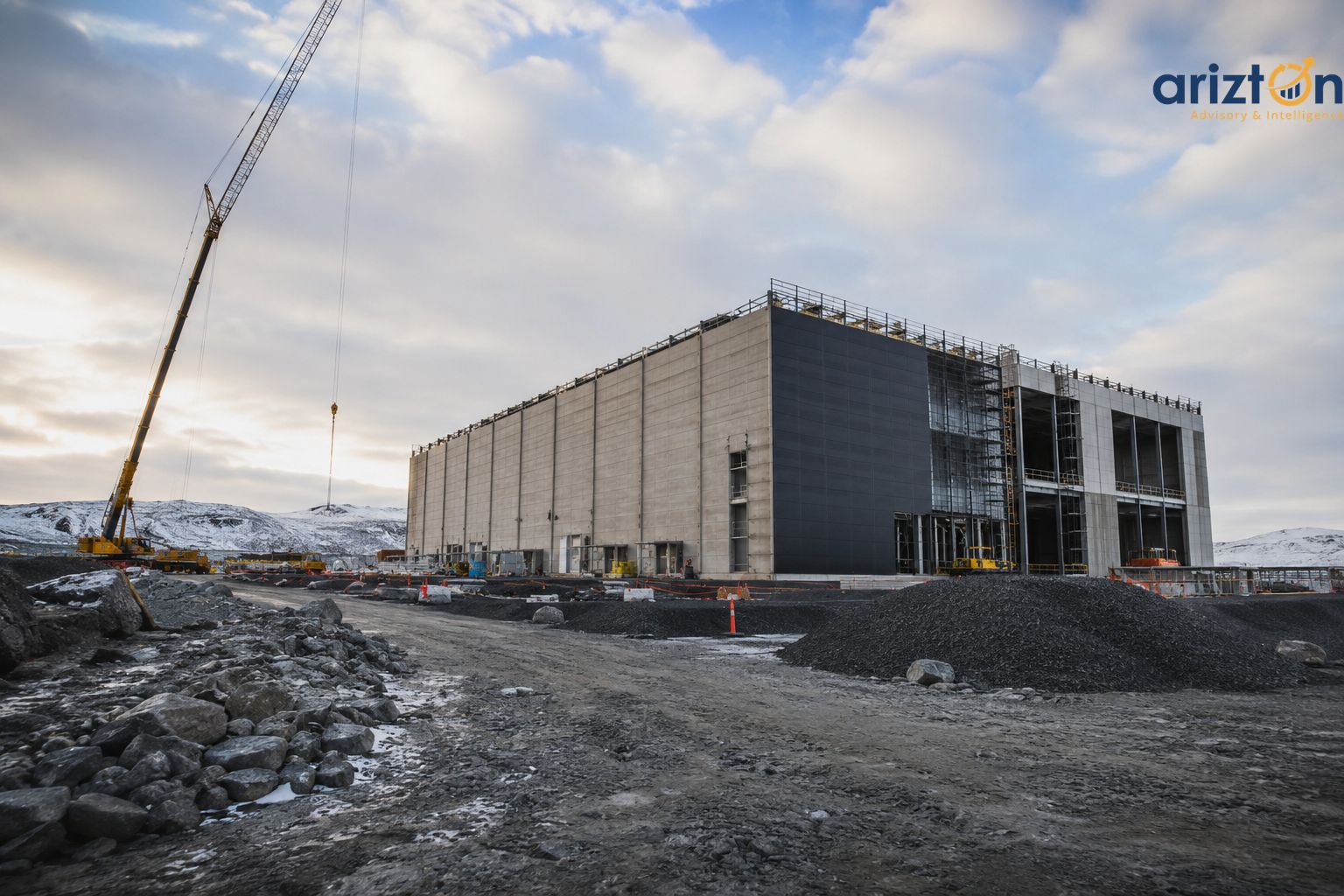
Nordic data center construction market overview
The Nordic data center construction market has entered a period of extraordinary acceleration. Valued at USD 4.12 billion in 2025, analysts project the market to nearly triple to USD 13.81 billion by 2031 — a compound annual growth rate of 22.34%. This growth is not incidental: it reflects a convergence of structural advantages that no other region on earth can match simultaneously.
Cheap, abundant renewable electricity. Naturally cold climates that slash cooling costs. Politically stable, well-connected jurisdictions. And a growing roster of hyperscale tenants — AWS, Google, Microsoft, Oracle — that have made the Nordics a core pillar of their European infrastructure strategies.
Key investment geography: Oslo, Stockholm, and Helsinki have emerged as the three primary development corridors, concentrating the bulk of new construction activity, land acquisition, and power capacity announcements through 2026.
Sweden, Norway & Finland: Powering the AI Infrastructure Race
Sweden dominates the Nordic data center construction market by a wide margin, accounting for roughly 44–45% of both investment share and power capacity in 2025. Norway and Finland follow as established second-tier markets, while Denmark and Iceland are gaining momentum.
Sweden's lead is underpinned by Stockholm's position as one of Europe's top-five colocation markets, strong digital infrastructure, and rapid adoption of cloud services and AI platforms among Swedish enterprises. Google launched a new cloud region in Stockholm in March 2025, further cementing the capital's hyperscale credentials.
Norway's growth story centres on energy economics — the country's hydropower-dominated grid delivers some of Europe's lowest industrial electricity prices. Government support through Free Trade Zones and competitive industrial land pricing has made Norway attractive for large-footprint, energy-intensive facilities. In January 2026, UpCloud launched a new cloud region in Stavanger at Green Mountain's data center, powered entirely by renewable energy.
Finland is advancing rapidly on the back of its cloud-first public sector policy and a remarkably high enterprise AI adoption rate: as of December 2025, the European Investment Bank reported that nearly 66% of Finnish companies were using generative AI tools.
Know More: https://www.arizton.com/market-reports/nordic-data-center-construction-market-2025
Renewable Energy & Green Data Center Power
Sustainability is not a marketing afterthought in Nordic data centers — it is a structural competitive advantage. The region's electricity grids are dominated by hydropower, wind, and geothermal sources, enabling operators to achieve carbon intensity figures that would be impossible in Central Europe or the US.
Iceland stands apart even within the Nordics: the island nation generates approximately 20 terawatts of renewable energy annually, with nearly 100% of its electricity sourced from renewables. This has made Iceland a magnet for energy-intensive, high-density computing workloads.
- Power Purchase Agreements: AWS signed PPAs with OX2 for ~472 MW of Finnish onshore wind in April 2025 to power its Helsinki-region facilities.
- District heating recovery: Microsoft, Meta, Apple, and atNorth are routing server waste heat into municipal networks across Denmark.
- HVO generators: Hydrotreated Vegetable Oil is replacing diesel in backup generators, driven by strict EU environmental rules.
- Carbon removal credits: Microsoft committed to purchasing 1.1M tons of carbon removal credits from Hafslund Celsio's Oslo CCS facility in July 2025.

Hyperscale Data Center Construction: Design & Structure
Hyperscale facilities — typically defined as data centers exceeding 10,000 square metres and 20 MW of IT load — are the primary driver of new construction activity in the Nordic market. These facilities are designed from the ground up for massive compute density, operational automation, and renewable energy integration.
Key design priorities for Nordic hyperscale: Multi-story construction to maximise land efficiency in urban-adjacent sites; integrated renewable energy interconnection; high-density rack infrastructure; modular expansion capability; and district heating integration where municipal networks exist.
The colocation sector remains the backbone of Nordic data center investment. Major operators active in the market include Equinix, Digital Realty, STACK Infrastructure, EcoDataCenter, Conapto, atNorth, Green Mountain, Bulk Infrastructure, Borealis Data Center, and dozens of others. New entrants — including Brookfield, GARBE Data Centers, Evroc, QTS Data Centers, and Scale42 — are actively entering the market.
Future
Two structural forces sit at the core of this Nordic data center construction market growth. First, the region's renewable energy economics are becoming a global benchmark — with hydropower, wind, and geothermal sources delivering low-cost, low-carbon electricity that hyperscale operators cannot replicate elsewhere in Europe, making the Nordics the default destination for any operator with serious sustainability commitments. Second, the AI infrastructure buildout is reshaping what data centers must be capable of: higher rack densities, liquid cooling, and AI-optimised construction specifications are no longer optional upgrades but baseline requirements — pushing new build costs toward USD 12 to 20 million per megawatt and sustaining a construction pipeline that will keep the region's 22.34% CAGR firmly intact through 2031.