


143 pages

6 tables

43 charts

27 company

6 segments

5 region

16 countries
Purchase Options
Global Protein Supplements Market Research Report 2025-2030
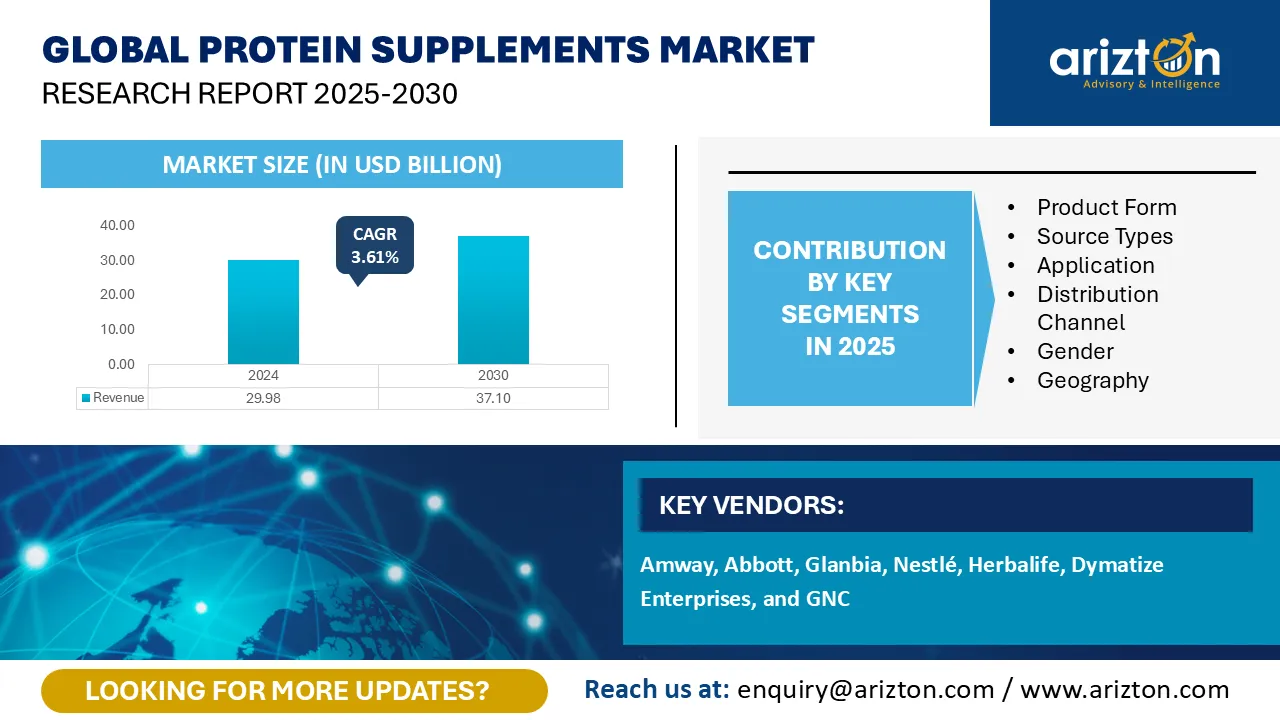
THE GLOBAL PROTEIN SUPPLEMENTS MARKET SIZE IS EXPECTED TO REACH USD 37.10 BILLION BY 2030 FROM USD 29.98 BILLION IN 2024, GROWING AT A CAGR OF 3.61% DURING THE FORECAST PERIOD.
The Global Protein Supplements Market Size, Share, & Trends Analysis Report By
- Product Form: Protein Powders, Ready-to-Drink Beverages, Protein Bars, and Others
- Source Types: Animal-based, Plant-based, and Others
- Application: Functional and Non-functional
- Distribution Channel: Supermarkets & Hypermarkets, Online, Pharmacies & Drug Stores, Specialty Stores, and Others
- Gender: Male and Female
- Geography: North America, Europe, APAC, Latin America, and Middle East & Africa
Industry Analysis Report, Regional Outlook, Growth Potential, Price Trends, Competitive Market Share & Forecast 2025–2030.
This report includes market data points, ranging from trend
analyses to market estimates & forecasts that you can customize
GLOBAL PROTEIN SUPPLEMENTS MARKET REPORT SCOPE
| REPORT ATTRIBUTE | DETAILS |
|---|---|
| Market Size (2030) | USD 37.10 Billion |
| Market Size (2024) | USD 29.98 Billion |
| CAGR (2024-2030) | 3.61% |
| HISTORIC YEAR | 2021-2023 |
| BASE YEAR | 2024 |
| FORECAST YEAR | 2025-2030 |
| SEGMENTS BY | Product Form, Source Types, Application, Distribution Channel, Gender, and Geography |
| GEOGRAPHIC ANALYSIS | North America, Europe, APAC, Latin America, and Middle East & Africa |
| KEY PLAYERS | Amway, Abbott, Glanbia, Nestlé, Herbalife, Dymatize Enterprises, and GNC |
PROTEIN SUPPLEMENTS MARKET ANALYSIS
The global protein supplements market size was valued at USD 29.98 billion in 2024 and is expected to reach USD 37.10 billion by 2030, growing at a CAGR of 3.61% during the forecast period. The global protein supplements market has evolved into one of the most dynamic segments of the nutrition industry. Once associated primarily with sports and bodybuilding, it has now become a key component of everyday wellness and preventive health. This growth is driven by changing lifestyles, increasing awareness of healthy nutrition, and the rising popularity of high-protein diets. The market continues to expand as consumers seek plant-based and sustainable protein sources, personalized functional blends, and convenient formats such as powders, bars, and ready-to-drink beverages.
Today, protein supplements extend far beyond traditional powders. The category now includes capsules, tablets, chewables, gummies, bars, ready-to-drink (RTD) beverages, and even functional coffees and cereals—each tailored to specific lifestyle needs. A major shift in the industry has been the rapid adoption of plant-based protein supplements. Once considered less effective than animal-derived proteins, modern formulations using pea, rice, hemp, pumpkin seed, and algae proteins have been refined for better taste and bioavailability. These innovations are attracting not only vegans and lactose-intolerant consumers but also those pursuing more sustainable and environmentally responsible diets.
The digital transformation of retail has further accelerated market growth. E-commerce platforms such as Amazon, iHerb, and brand-owned websites now account for a significant share of global sales. They allow brands to bypass traditional retail channels, introduce new products quickly, and connect directly with target audiences through data-driven marketing. Subscription models, verified customer reviews, and AI-powered recommendations enhance both convenience and consumer trust—solidifying e-commerce as a core growth channel for the protein supplements industry.
PROTEIN SUPPLEMENTS MARKET TRENDS
The global protein supplements market is rapidly moving beyond its traditional powder-centric identity, embracing a wide range of functional and novel formats to cater to evolving consumer preferences for convenience, variety, and lifestyle fit. Ready-to-drink (RTD) protein beverages and gummies are emerging as innovative delivery methods that make protein intake more accessible and enjoyable.
The growing adoption of plant-based diets and flexitarian lifestyles is driving a significant shift in the protein supplements market toward plant-derived sources such as pea, soy, rice, hemp, and quinoa. Beyond catering to vegans and vegetarians, these products appeal to consumers seeking allergen-free, lactose-free, and environmentally sustainable alternatives to dairy-based proteins.
As consumers become more informed and health-conscious, personalized protein supplementation is emerging as a powerful trend, supported by advances in nutrition science, artificial intelligence, and wearable technology. Customization extends beyond formulation to flavor profiles, serving sizes, and delivery formats, often offered through subscription services that adapt to changing user needs over time.
Consumers are increasingly scrutinizing ingredient lists, driving the demand for clean-label protein supplements that are transparent, minimally processed, and free from artificial additives. Clean-label formulations prioritize recognizable, natural ingredients, often highlighting organic certification, non-GMO sourcing, and the absence of artificial sweeteners, colors, or preservatives.
MARKET DRIVERS
The global protein supplements market is being propelled by a rising focus on fitness, active living, and body composition goals such as muscle gain, fat loss, and improved athletic performance. Increased participation in gym memberships, group fitness activities, and sports has boosted demand for high-quality protein sources that support muscle recovery and growth. Beyond the athletic population, more consumers are adopting protein supplementation as part of a balanced diet, integrating powders, shakes, and functional snacks into their daily routines.
Public understanding of nutrition has grown significantly, with macronutrients, especially protein, gaining recognition as critical to overall health, not just athletic performance. Widespread access to health content via social media, wellness blogs, and influencer-led campaigns has educated consumers on protein’s role in muscle repair, satiety, weight management, and immune support. This awareness has expanded the market beyond sports enthusiasts to include general wellness seekers, busy professionals, and even children’s nutrition.
E-commerce and direct-to-consumer (D2C) platforms have transformed protein supplement distribution, enabling brands to reach global audiences without the need for traditional retail channels. Online shopping offers convenience, broader product variety, subscription models, and direct engagement through brand-owned websites and marketplaces like Amazon. Digital platforms also allow for advanced products and protein blends tailored via an online quiz and for brands to leverage influencer marketing, targeted ads, and real-time consumer feedback.
An expanding aging demographic is turning to protein supplements as a preventive and supportive measure against sarcopenia (age-related muscle loss) and bone density decline. Protein aids in maintaining lean muscle mass, improving strength, and supporting overall mobility, which are crucial for healthy aging. Many older consumers are also drawn to protein products fortified with calcium, vitamin D, and collagen for joint and bone health.
INDUSTRY RESTRAINTS
While consumer demand for high-quality, clean-label, and functional protein supplements is rising, the premium nature of these products often limits accessibility, especially in price-sensitive markets. Premium formulations such as organic plant-based proteins, grass-fed whey, and collagen peptides command higher prices due to costly sourcing, processing, and certification requirements.
The popularity of protein supplements has attracted counterfeit and substandard products to the market, especially in regions where e-commerce dominates and regulatory enforcement is inconsistent. These fake products often imitate well-known brands but contain lower-quality protein, harmful additives, or mislabeled nutritional content, posing health risks and eroding consumer trust.
Common protein sources such as whey (dairy-based), soy, and nuts can cause allergic reactions or digestive discomfort for certain consumers. Lactose intolerance affects a major global population to varying degrees. Similarly, soy allergies, though less common, restrict the reach of soy protein in some markets. Even non-allergic users may experience bloating, gas, or discomfort from certain protein blends due to additives or fiber content.
The protein supplements market faces a patchwork of regulations worldwide, covering everything from permissible health claims to ingredient sourcing and labeling requirements. For instance, the European Food Safety Authority (EFSA) enforces strict rules on nutritional claims, while the U.S. Food and Drug Administration (FDA) regulates supplements.
SEGMENTATION INSIGHTS
INSIGHTS BY PRODUCT FORM
The protein powders product form holds the largest share of the global protein supplements market in 2024, accounting for over 46%. Protein powders are concentrated protein sources in powdered form. And have expanded beyond the gym to become part of daily nutrition routines. Consumers now use them as breakfast meal replacements, baking ingredients, or mid-day snacks. This versatility has been amplified by the rise in at-home consumption, where people sought convenient, nutrient-dense foods that could be stored and prepared quickly.
Protein powders deliver more protein per serving than most other supplement forms, and scoop sizes can be adjusted to meet specific needs. This flexibility appeals to consumers. On a cost-per-gram basis, powders are cheaper than ready-to-drink shakes or bars. Bulk packaging and online discount sales make them even more attractive, especially for daily users or price-sensitive markets. Additionally, powders don’t require refrigeration and can last for months when stored properly. This makes them ideal over other product forms.
INSIGHTS BY SOURCE TYPES
In the global protein supplements market, the source types segment is classified into animal-based, plant-based, and others. The animal-based protein supplements segment remains the largest and most established source category in the global market. Its leadership position is supported by the fact that animal-derived proteins are complete; they provide all nine essential amino acids in ideal proportions for human health. This makes them especially effective for muscle growth, recovery, and overall nutrition.
One of the primary growth drivers for this segment in the protein supplements market is its superior nutritional profile and strong scientific validation. Whey protein, for example, is rapidly absorbed and rich in branched-chain amino acids (BCAAs), which are critical for muscle protein synthesis after workouts. Casein digests more slowly, providing a steady release of amino acids.
INSIGHTS BY APPLICATION
The functional application segment holds the largest global protein supplements market share in 2024 and is projected to continue the trend during the forecast period. The functional segment is increasingly shaping industry growth, as consumers seek products that offer benefits beyond general nutrition. This segment spans multiple areas, including sports and performance nutrition, weight management, clinical and medical nutrition, cosmeceuticals (beauty and fitness), and immune, gut, joint, and brain health.
Sports and performance nutrition remains the largest and most established application, driven by athletes, gym-goers, and active lifestyle consumers who prioritize muscle recovery, endurance, and strength gains. This demand is bolstered by rising participation in organized sports, fitness challenges, and recreational activities.
Weight management applications center on protein’s ability to promote satiety, support calorie control, and preserve lean mass during weight loss. Rising obesity rates, coupled with the popularity of high-protein diets such as keto and paleo, have amplified this market’s appeal.
INSIGHTS BY DISTRIBUTION CHANNEL
The supermarkets & hypermarkets distribution channel held the largest share in the global protein supplements market in 2024. Supermarkets and hypermarkets are often the single largest offline channel for protein supplements because they combine mass reach, frequent shopper traffic, and a one-stop shopping mission.
Unlike specialist supplement stores, supermarkets attract mainstream buyers, parents, office workers, older adults, and casual gym-goers who want convenience, price, and trusted brands. That mainstreaming of protein is why grocery chains carve out shelf space in dairy aisles, ambient grocery, and chilled cabinets rather than leaving everything to specialist retailers.
Also, supermarkets typically carry popular mass-market protein brands in various formats, such as powders, ready-to-drink shakes, and protein bars are often placed in health, sports nutrition, or functional food aisles. For example, chains like Walmart in the U.S. or Tesco in the UK stock brands such as Optimum Nutrition and MuscleTech alongside private-label options, catering to both premium and budget segments.
INSIGHTS BY GENDER
In the global protein supplements market, the gender segment is classified into male and female. The female segment is the fastest-growing segment in the market with a CAGR of 3.93%. Women are showing a significant and rising interest in protein supplements due to a combination of physiological, lifestyle, and health-related factors. Hormonal fluctuations during different life stages, such as menstruation, pregnancy, postpartum recovery, and menopause, can influence energy needs, muscle maintenance, and overall metabolic health. These changes often drive women to seek targeted nutritional support, making protein supplementation an important part of their wellness routines.
During pregnancy and lactation, women face increased nutritional demands to support both their own health and the growth and development of their baby. Adequate protein intake during this period is essential for tissue repair, hormone production, and maintaining muscle mass, prompting many expectant and nursing mothers to turn to high-quality protein powders or ready-to-drink options.
Moreover, women are increasingly engaging in strength training, high-intensity workouts, and endurance sports, creating a need for supplements that aid muscle recovery and support lean muscle growth. Furthermore, the prevalence of conditions such as age-related muscle loss and fatigue during menopause reinforces the role of protein in maintaining strength and vitality.
PROTEIN SUPPLEMENTS MARKET REGIONAL ANALYSIS
In 2024, North America accounted for the most dominant share in the global protein supplements market, accounting for over 35%. North America remains the dominant force in the global protein supplements market, driven by a deeply ingrained fitness culture, high awareness of dietary health, and a strong presence of industry players offering innovative products. Demand is sustained by aging populations focused on muscle preservation, along with clean-label and functional nutrition trends.
Europe holds a significant share of the global protein supplements market, characterized by its health-conscious population and growing preference for organic, vegan, and sustainably sourced protein supplements. Countries like Germany, the UK, and the Netherlands are frontrunners, with plant-based formulations gaining traction among eco-aware consumers.
The APAC region is experiencing the fastest growth in the global protein supplements market, fueled by rising urbanization, disposable incomes, and the growing fitness obsession among millennials and Gen Z. Markets such as China, India, Japan, and Southeast Asia are seeing a surge in demand for both whey and plant-based proteins, often localized in flavor and format.
Latin America’s protein supplements market is emerging steadily, with increased health awareness and expanding gym culture driving growth in countries like Brazil and Mexico. Despite a limited market size, rising middle-class income, and improved access to products via digital platforms, are opening new opportunities.
The Middle East and Africa represent the smallest but increasingly promising region in the global protein supplements market. Growing health and wellness trends, fitness center proliferation in urban centers, and rising disposable income are driving awareness and consumption. Demand is particularly influenced by halal-certified, whey-based products tailored to local dietary preferences.
VENDOR INSIGHTS
The global protein supplements market is highly fragmented but brand-led, with a top tier of global portfolios and a long tail of fast-moving challengers. Global leaders, including retailer private labels, have also grown into credible competitors in powders, bars, and RTDs, pressuring price points. Also, competition is increasingly format- and science-driven. Beyond classic whey isolates/concentrates, leaders are expanding plant proteins like pea, soy, rice, faba, and hemp. And clear vegan beverages for lighter sensory profiles. RTD technology has advanced with UHT-stable protein systems, improved viscosity control, heat-stable flavors, and better sweetness architectures.
Vendors in the protein supplements market are turning towards online and DTC platforms by leveraging subscription, bundling, loyalty, and creator partnerships; mass brands scale through club packs and EDLP pricing. Social and influencer marketing are central, but paid media costs and privacy changes push brands toward owned communities, apps, and first-party data.
Key Developments in the Global Protein Supplements Market
- In May 2025, Danone launched a new protein shake under its Oikos yogurt brand, gaining strong traction among consumers and users of weight-loss drugs such as Wegovy. According to Shane Grant, Danone’s global deputy CEO, the company is positioning itself to tap into the rapidly expanding USD 7 billion protein shake market.
- April 15, 2024, Glanbia announced that it had reached an agreement with the shareholders of Aroma Holding Company and its related entities to acquire Flavor Producers. The deal includes an initial payment of USD 300 million, along with additional deferred consideration.
SNAPSHOT
The global protein supplements market size is expected to grow at a CAGR of approximately 3.61% from 2024 to 2030.
The following factors are likely to contribute to the growth of the global protein supplements market during the forecast period:
- Rise in Focus Towards Fitness & Changing Lifestyle
- Rise in Consumer Awareness
- Growth in Digital & E-Commerce
- Aging Population
Base Year: 2024
Forecast Year: 2025-2030
The report considers the present scenario of the global protein supplements market and its market dynamics for 2025−2030. It covers a detailed overview of several market growth enablers, restraints, and trends. The study covers both the demand and supply sides of the industry. It also profiles and analyzes leading companies and several other prominent companies operating in the industry.
Key Company Profiles
- Amway
- Business Overview
- Product Offerings
- Key Developments
- Key Strategies
- Key Strengths
- Key Opportunities
- Abbott
- Glanbia
- Nestlé
- Herbalife
- Dymatize Enterprises
- GNC
Other Prominent Company Profiles
- Iovate Health Sciences International
- Business Overview
- Product Offerings
- Bright Lifecare
- THG
- Vitaco
- BellRing Brands
- MusclePharm
- CytoSport
- Quest Nutrition
- Bloom
- Raw Organic Whey
- Weider Global Nutrition
- NOW Foods
- Nutra Holdings
- WOODBOLT DISTRIBUTION
- Naked Nutrition
- Melaleuca
- True Nutrition
Segmentation by Product Form
- Protein Powders
- Ready-to-Drink Beverages
- Protein Bars
- Others
Segmentation by Source Types
- Animal-based
- Plant-based
- Others
Segmentation by Application
- Functional
- Non-functional
Segmentation by Distribution Channel
- Supermarkets & Hypermarkets
- Online
- Pharmacies & Drug Stores
- Specialty Stores
- Others
Segmentation by Gender
- Male
- Female
Segmentation by Geography
- North America
- The U.S.
- Canada
- APAC
- China
- India
- Japan
- South Korea
- Europe
- Germany
- The U.K.
- France
- Italy
- Latin America
- Brazil
- Mexico
- Middle East & Africa
- Turkey
- South Africa
- Saudi Arabia
- UAE
PROTEIN SUPPLEMENTS MARKET FAQs
How big is the global protein supplements market?
What is the growth rate of the global protein supplements market?
What are the significant trends in the protein supplements industry?
Which region dominates the global protein supplements market share?
Who are the key players in the global protein supplements market?
Exhibit 1: North America: Protein Supplements Market by Country 2024 ($ Billion)
Exhibit 2: APAC: Protein Supplements Market by Country 2024 ($ Billion)
Exhibit 3: Europe: Protein Supplements Market by Country 2024 ($ Billion)
Exhibit 4: Latin America: Protein Supplements Market by Country 2024 ($ Billion)
Exhibit 5: Middle East & Africa: Protein Supplements Market by Country 2024 ($ Billion)
Exhibit 6: Global Protein Supplements Market 2021–2030 ($ Billion)
Exhibit 7: Global Protein Supplements Market by Protein Powders 2021–2030 ($ Billion)
Exhibit 8: Global Protein Supplements Market by Ready-to-Drink Beverages 2021–2030 ($ Billion)
Exhibit 9: Global Protein Supplements Market by Protein Bars 2021–2030 ($ Billion)
Exhibit 10: Global Protein Supplements Market by Others 2021–2030 ($ Billion)
Exhibit 11: Global Protein Supplements Market by Animal-Based 2021–2030 ($ Billion)
Exhibit 12: Global Protein Supplements Market by Plant-Based 2021–2030 ($ Billion)
Exhibit 13: Global Protein Supplements Market by Others 2021–2030 ($ Billion)
Exhibit 14: Global Protein Supplements Market by Functional 2021–2030 ($ Billion)
Exhibit 15: Global Protein Supplements Market by Non-Functional 2021–2030 ($ Billion)
Exhibit 16: Global Protein Supplements Market by Supermarkets & Hypermarkets 2021–2030 ($ Billion)
Exhibit 17: Global Protein Supplements Market by Online 2021–2030 ($ Billion)
Exhibit 18: Global Protein Supplements Market by Pharmacies & Drug Stores 2021–2030 ($ Billion)
Exhibit 19: Global Protein Supplements Market by Specialty Stores 2021–2030 ($ Billion)
Exhibit 20: Global Protein Supplements Market by Others 2021–2030 ($ Billion)
Exhibit 21: Global Protein Supplements Market by Male 2021–2030 ($ Billion)
Exhibit 22: Global Protein Supplements Market by Female 2021–2030 ($ Billion)
Exhibit 23: Protein Supplements Market in North America 2021–2030 ($ Billion)
Exhibit 24: Protein Supplements Market in the US 2021–2030 ($ Billion)
Exhibit 25: Protein Supplements Market in Canada 2021–2030 ($ Billion)
Exhibit 26: Protein Supplements Market in APAC 2021–2030 ($ Billion)
Exhibit 27: Protein Supplements Market in China 2021–2030 ($ Billion)
Exhibit 28: Protein Supplements Market in India 2021–2030 ($ Billion)
Exhibit 29: Protein Supplements Market in Japan 2021–2030 ($ Billion)
Exhibit 30: Protein Supplements Market in South Korea 2021–2030 ($ Billion)
Exhibit 31: Protein Supplements Market in Europe 2021–2030 ($ Billion)
Exhibit 32: Protein Supplements Market in Germany 2021–2030 ($ Billion)
Exhibit 33: Protein Supplements Market in the UK 2021–2030 ($ Billion)
Exhibit 34: Protein Supplements Market in France 2021–2030 ($ Billion)
Exhibit 35: Protein Supplements Market in Italy 2021–2030 ($ Billion)
Exhibit 36: Protein Supplements Market in Latin America 2021–2030 ($ Billion)
Exhibit 37: Protein Supplements Market in Brazil 2021–2030 ($ Billion)
Exhibit 38: Protein Supplements Market in Mexico 2021–2030 ($ Billion)
Exhibit 39: Protein Supplements Market in Middle East & Africa 2021–2030 ($ Billion)
Exhibit 40: Protein Supplements Market in Turkey 2021–2030 ($ Billion)
Exhibit 41: Protein Supplements Market in South Africa 2021–2030 ($ Billion)
Exhibit 42: Protein Supplements Market in Saudi Arabia 2021–2030 ($ Billion)
Exhibit 43: Protein Supplements Market in UAE 2021–2030 ($ Billion)
LIST OF TABLES
Table 1: Global Protein Supplements Market by Geography 2021−2030 ($ Billion)
Table 2: Global Protein Supplements Market by Product Form 2021−2030 ($ Billion)
Table 3: Global Protein Supplements Market by Source Types 2021−2030 ($ Billion)
Table 4: Global Protein Supplements Market by Application 2021−2030 ($ Billion)
Table 5: Global Protein Supplements Market by Distribution Channel 2021−2030 ($ Billion)
Table 6: Global Protein Supplements Market by Gender 2021−2030 ($ Billion)
CHAPTER – 1: Global Protein Supplements Market Overview
- Executive Summary
- Key Findings
- Key Developments
CHAPTER – 2: Global Protein Supplements Market Segmentation Data
- Product Form Market Insights (2021-2030)
- Protein Powders
- Ready-to-Drink Beverages
- Protein Bars
- Others
- Source Types Market Insights (2021-2030)
- Animal-based
- Plant-based
- Others
- Application Market Insights (2021-2030)
- Functional
- Non-functional
- Distribution Channel Market Insights (2021-2030)
- Supermarkets & Hypermarkets
- Online
- Pharmacies & Drug Stores
- Specialty Stores
- Others
- Gender Market Insights (2021-2030)
- Male
- Female
CHAPTER – 3: Global Protein Supplements Market Prospects & Opportunities
- Global Protein Supplements Market Drivers
- Global Protein Supplements Market Trends
- Global Protein Supplements Market Constraints
CHAPTER – 4: Global Protein Supplements Market Overview
- Global Protein Supplements Market - Competitive Landscape
- Global Protein Supplements Market - Key Players
- Global Protein Supplements Market - Key Company Profiles
CHAPTER – 5: Appendix
- Research Methodology
- Abbreviations
- Arizton
Select a license type that suits your business needs
Single User Licence
- Report accessible by one user only
- Free 10% or 3 days of customization
- Free post-sale service assistance
- Continuous support through email
5 User Licence
- Report accessible by 5 users within the organization
- Free 15% or 4.5 days of customization
- Continuous support through email and telephone
- Free analyst hour
- Free Upgrade: If an updated report published within 180 days of purchase, you will get the revised report free of charge
Corporate Licence
- Free Datasheet worth $1500
- Report accessible by the entire organization
- Free 20% or 6 days of customization
- Free post-sale service assistance
- Continuous support through email and telephone
- Direct access to lead analysts
- Free analyst hour
- Free Upgrade: If an updated report published within 180 days of purchase, you will get the revised report free of charge
Datasheet Licence
- Report accessible by 1 user only
- Free 15% or 32 hours of customization
- Free post-sale service assistance
- Direct access to lead analysts
Frequently Asked Questions
How big is the global protein supplements market?
What is the growth rate of the global protein supplements market?
What are the significant trends in the protein supplements industry?
Which region dominates the global protein supplements market share?
Who are the key players in the global protein supplements market?
Other RELATED Reports



Global Plant-based Collagen Supplement Market - Focused Insights 2025-2030
Published : May 2025